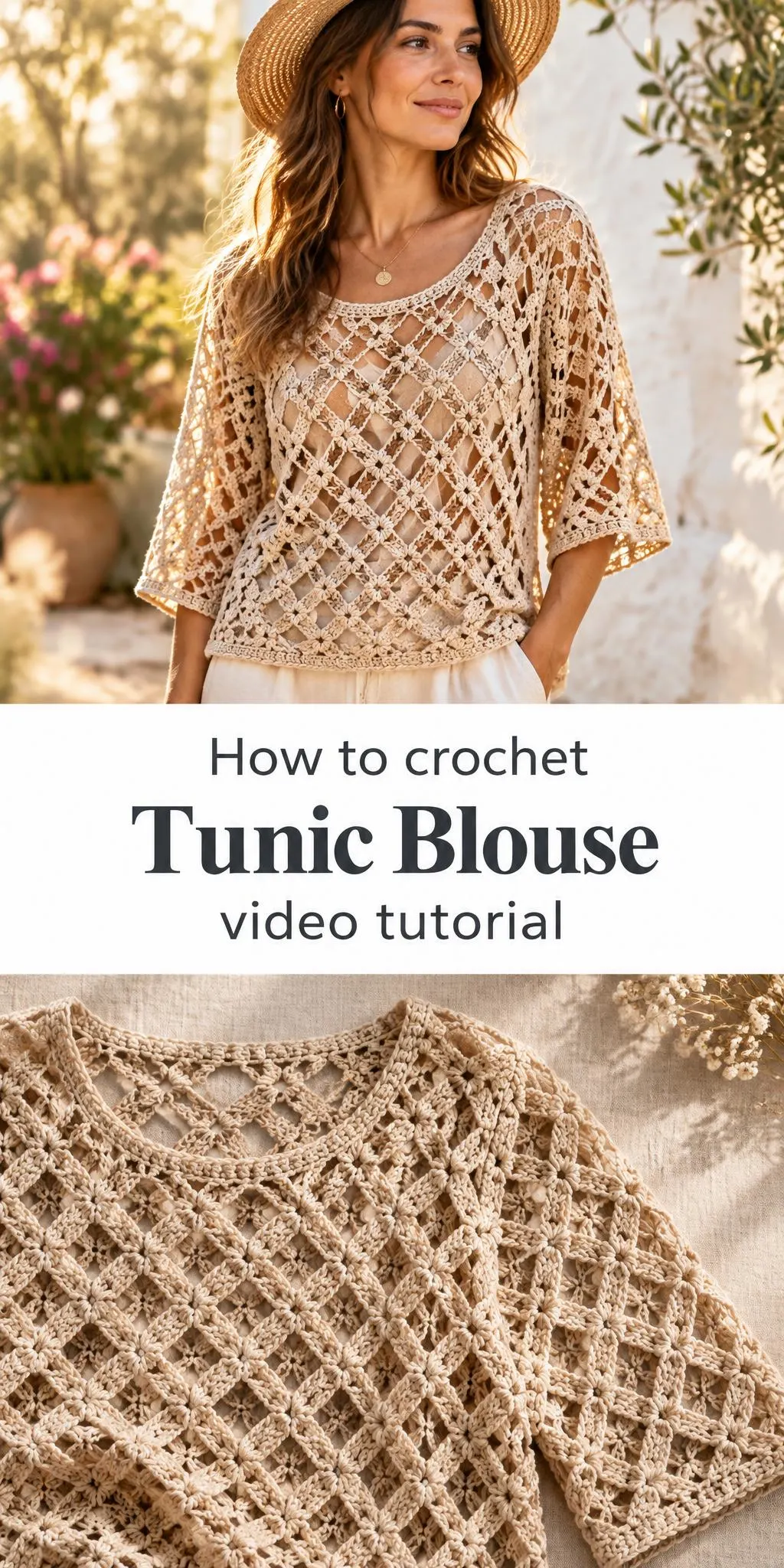
A crochet tunic blouse brings together open lacy texture and a relaxed, wearable silhouette, making it one of the most versatile handmade pieces you can add to your wardrobe. This design stands out for its diamond-shaped openwork, its soft neutral tone, and the way the textured panels catch light as you move.
In this post
Why the Crochet Tunic Blouse Deserves a Place in Your Wardrobe
The finished fabric is the first thing you notice. Rows of tightly worked stitches form raised, rounded blocks, and between them open diamond-shaped windows let air pass through. The effect is light without looking flimsy, and the contrast between dense and open areas gives the surface real depth.
Beyond its look, a tunic blouse is simply practical. Its longer, loose-fitting body covers the hips comfortably and works equally well over slim trousers, a midi skirt, or leggings. Because the openwork breathes, it suits warm afternoons and layered evenings alike, which is exactly why handmade crochet tunics remain so popular.
Choosing Materials for a Tunic Blouse
For a garment like this, cotton or a cotton-blend yarn is a reliable choice. Cotton has good stitch definition, so the diamond pattern and raised blocks stay crisp rather than blurring together. It also holds its shape well, which matters when a garment hangs from the shoulders.
Softer blends with a little acrylic or bamboo can offer more drape and a gentler sheen, though they may stretch more over time. Choose a yarn weight that is light enough to keep the openwork airy but substantial enough to support the tunic’s length. Always work a small swatch first, and select a hook size that produces a fabric you find comfortable to handle, neither stiff nor loose.
Understanding the Diamond Openwork Texture
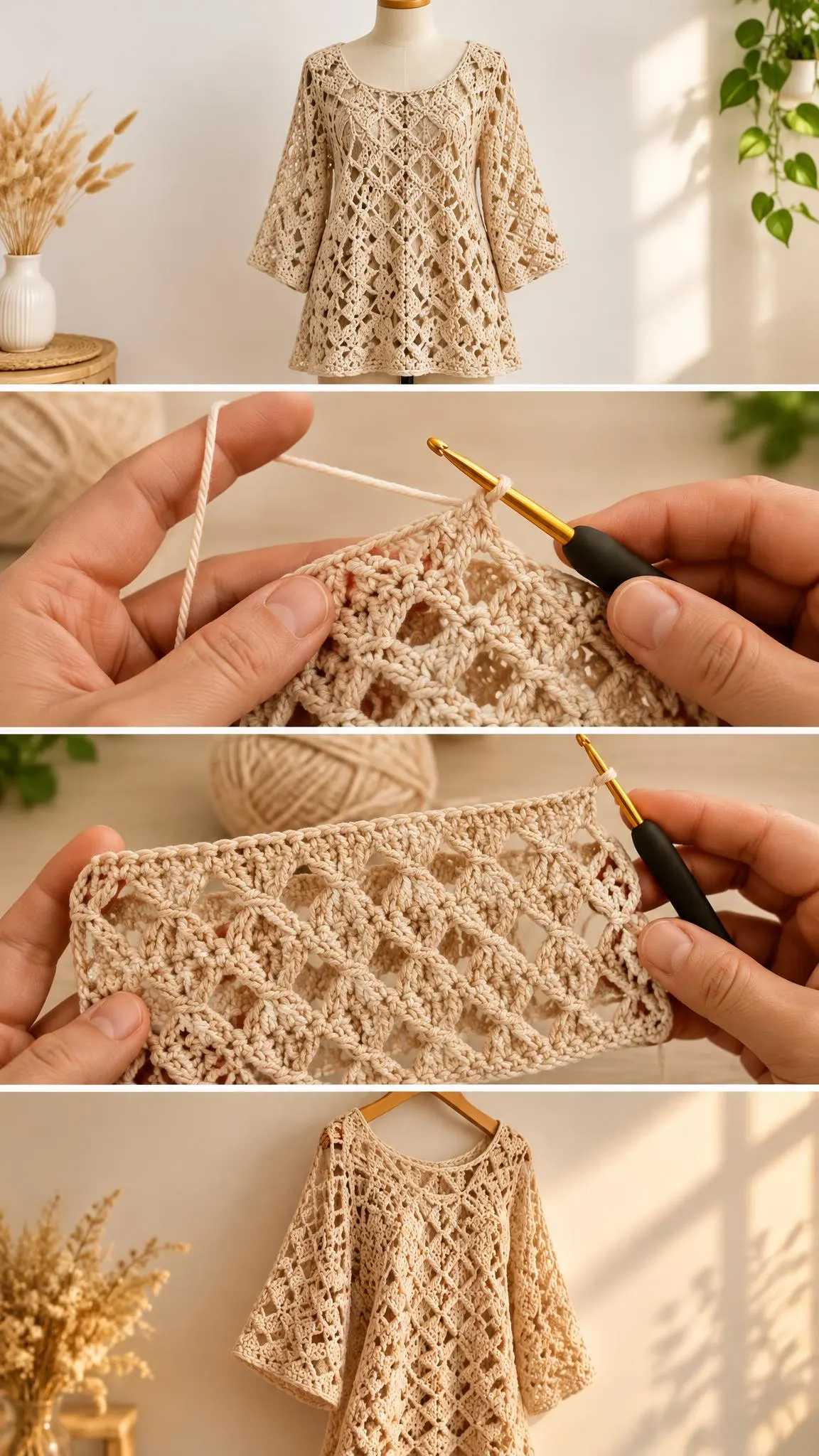
The defining feature of this blouse is its repeated diamond motif. Solid, textured blocks alternate with open spaces that give the fabric its lattice-like character. Each block is built up densely, so the surface looks almost woven, while the openings create a delicate pattern across the body and sleeves.
To keep the pattern consistent, pay close attention to the count of stitches within each repeat. Small variations in tension can distort the diamonds, causing them to lean or shrink. Working evenly and checking your stitch count at the end of each row helps the motif stay symmetrical from hem to shoulder.
Working With Tension and Repeats
Consistent tension is especially important in openwork. If you pull the yarn too tightly, the open spaces will shrink and the fabric may curl at the edges. If you work too loosely, the blocks lose definition and the garment grows baggy.
Practice the repeat on a short sample before committing to the full tunic. Once you find a rhythm, the pattern becomes almost meditative, and you will begin to see the diamonds forming naturally as you progress.
Shaping the Tunic Body and Neckline
A tunic blouse depends on its shaping to look polished. The body should widen gently from the underarm to the hem, and the neckline should sit comfortably without gaping. Many crocheters begin with the back panel, then add the front, adjusting the neckline depth to suit personal preference.
Sleeves and armholes also influence how the garment feels to wear. Shorter, wider sleeves suit a casual, airy look, while longer ones create a softer, more layered effect. Trying the piece on as you go, or measuring against a favorite garment, is the simplest way to achieve a comfortable fit.
Styling Your Handmade Tunic Blouse
This blouse works well in many settings. Wear it over a simple camisole and high-waisted jeans for a relaxed daytime look, or pair it with a slip dress for an effortless layered outfit. In cooler weather, a fitted tank underneath keeps the openwork from feeling too exposed.
Accessories help the piece shine. Woven straw bags, delicate gold jewelry, and tan sandals complement the warm neutral tone, while a bright lipstick or a colorful scarf can offer welcome contrast. Think about how the blouse will be used, whether for beach days, dinners, or weekend errands, and choose your pairings accordingly.
Finishing Touches and Care
Neat finishing turns a good project into a polished garment. Weave in every loose end carefully, and check that seams and edges lie flat. A consistent border around the hem and neckline frames the openwork and prevents the fabric from rolling.
Blocking is worth considering. Gently shaping the finished tunic on a flat surface can even out the diamonds and refine the silhouette. Always check the care requirements of your chosen yarn before washing, and lay the blouse flat to dry to protect its shape.
Take your time with this project, and pause whenever a section feels unfamiliar. Following the video below will guide you through each stage, and you can replay sections as often as you need to build confidence with the texture. With patience, you will end up with a tunic blouse that feels both special and genuinely wearable.
Follow us on Pinterest and subscribe to the Newsletter so you don’t miss a thing!
Tutorial and photos of this tunic blouse by: Crochet Knitting Sort.