These crochet bolero patterns are for women who want a polished layer over formal dresses without hiding the outfit underneath. The list covers lace, mesh, shell stitch, and lightly textured boleros that work with satin slips, chiffon gowns, cocktail dresses, and fitted column dresses. Each idea focuses on shape, yarn choice, stitch texture, and how the bolero sits on the shoulders, sleeves, and neckline.
Use the list to match the bolero to the dress you already own. Look for sleeve length, crop length, drape, and how much structure you want at the shoulders. For formal wear, the best choices usually use fine cotton, bamboo blends, or soft wool blends with small-to-medium hooks so the finish stays neat and flattering.
In this post
Chic Crochet Bolero Patterns For Formal Dresses
1. Classic Lace Crochet Bolero in Ivory
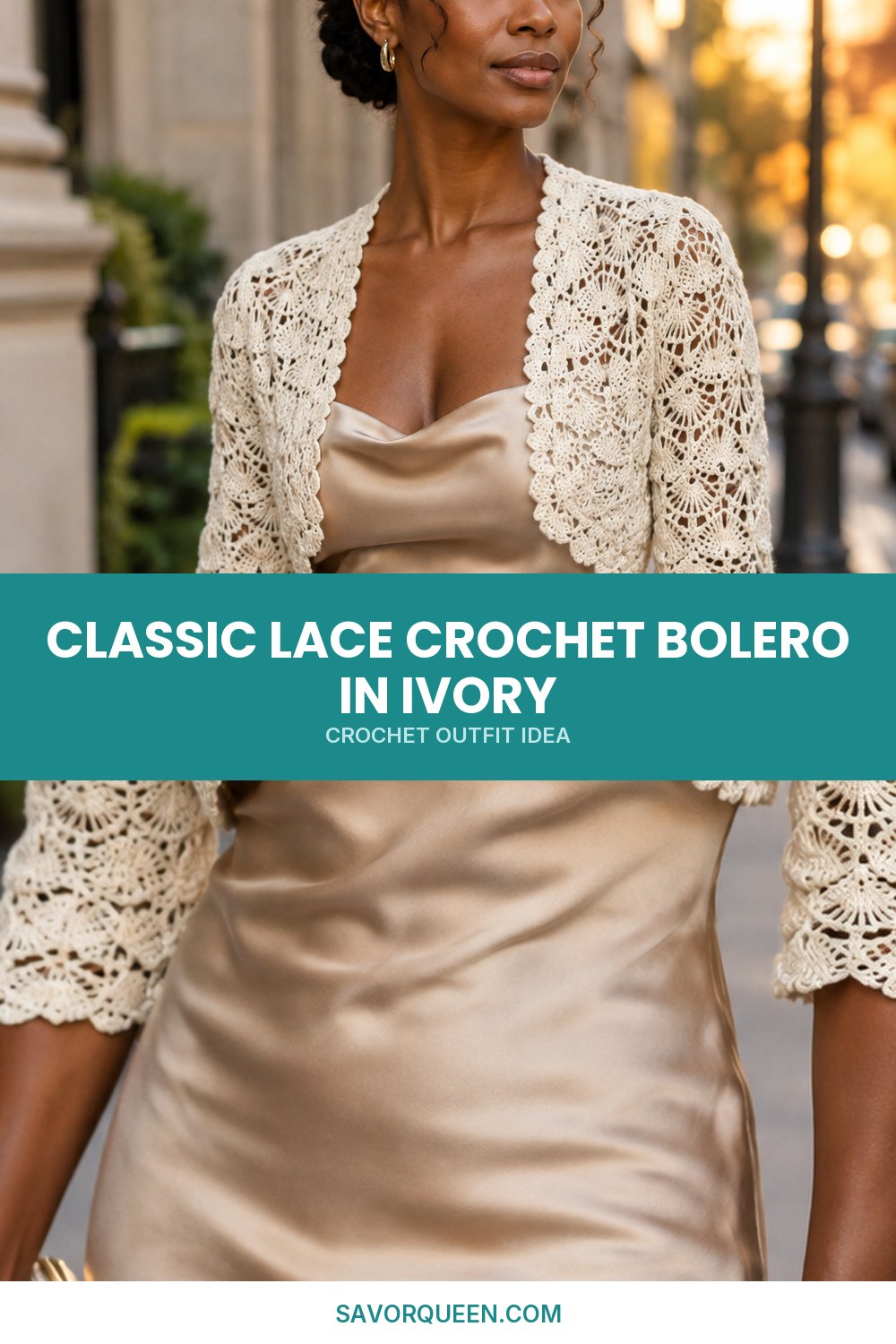
This classic bolero uses a light lace fabric with shell stitches, chains, and small openwork panels for a refined finish. A fingering to sport weight cotton or bamboo-cotton blend keeps it airy and smooth against formal fabric, while a 3.5 mm to 4 mm hook gives the lace enough definition. The shape is cropped at the waist with bracelet-length sleeves, so it sits cleanly over a strapless or straight-neck dress. Soft ivory works well with white, champagne, blush, and deep navy.
Quick notes: yarn fingering cotton, hook 3.5 mm, skill level intermediate.
Wear it with a satin midi dress and heels for weddings, graduations, or evening dinners where you want a little upper-arm coverage. The delicate stitch pattern looks best when the dress has a simple surface, like silk or crepe. Practical tip: block the bolero flat with pinned edges so the lace opens evenly and the sleeves keep their shape.
2. Shell Stitch Crochet Bolero in Blush
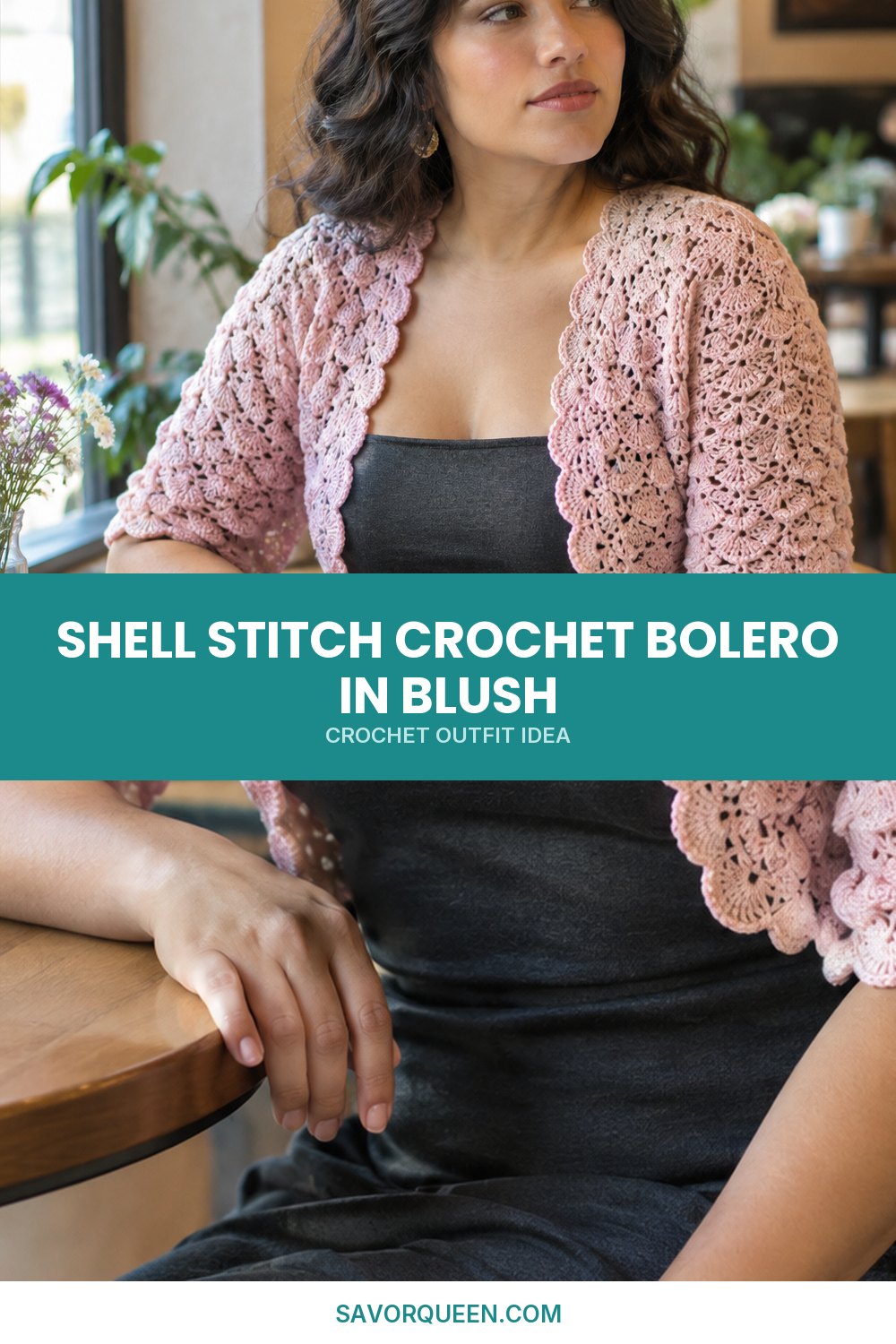
This shell stitch bolero has gentle scalloped rows that create a soft, romantic edge without looking bulky. Fine cotton in sport weight gives it a clean surface, and a 4 mm hook helps the shells stand out while keeping the fabric flexible. The fit is slightly relaxed through the back with narrow sleeves, making it easy to layer over dresses with cap sleeves or wide necklines. Blush pink pairs especially well with dove gray, cream, silver, and floral prints.
Quick notes: yarn sport cotton, hook 4 mm, skill level easy.
Style it with a fit-and-flare cocktail dress and low block heels for showers, receptions, or a daytime formal event. The scalloped hem adds detail when the dress itself is simple. Practical tip: if your yarn grows in blocking, work a small swatch first so the bolero lands at the right cropped length.
3. Mesh Sleeve Crochet Bolero in Silver Gray
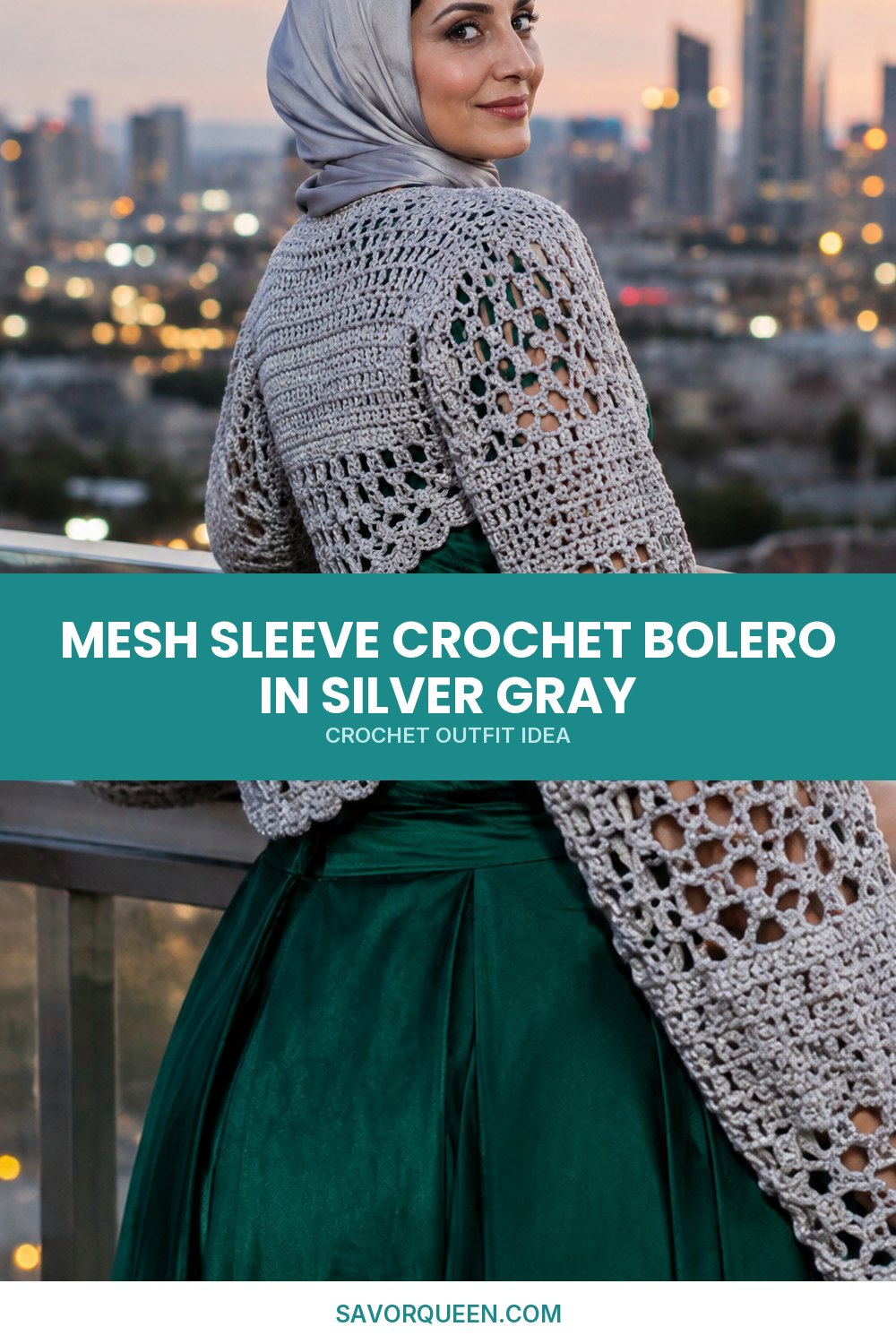
This bolero uses a fine mesh fabric with double crochet and chain spaces, giving it a light layer that still feels polished. Sport weight bamboo-cotton or a smooth cotton blend works well, especially in silver gray, pewter, or soft charcoal. A 4 mm to 4.5 mm hook creates a fluid drape without loose gaps. The body stays close to the upper back, while the sleeves open slightly at the forearm for a modern line that works with sleeveless formal dresses.
Quick notes: yarn bamboo-cotton sport, hook 4.5 mm, skill level intermediate.
Pair it with a black column gown or a jewel-toned midi dress for evening events where you want coverage without heaviness. The subtle sheen of silver gray looks strong under indoor lighting. Practical tip: choose smooth yarn rather than fuzzy blends so the mesh reads cleanly in photos and under dressy lighting.
4. Long-Sleeve Crochet Bolero in Deep Plum
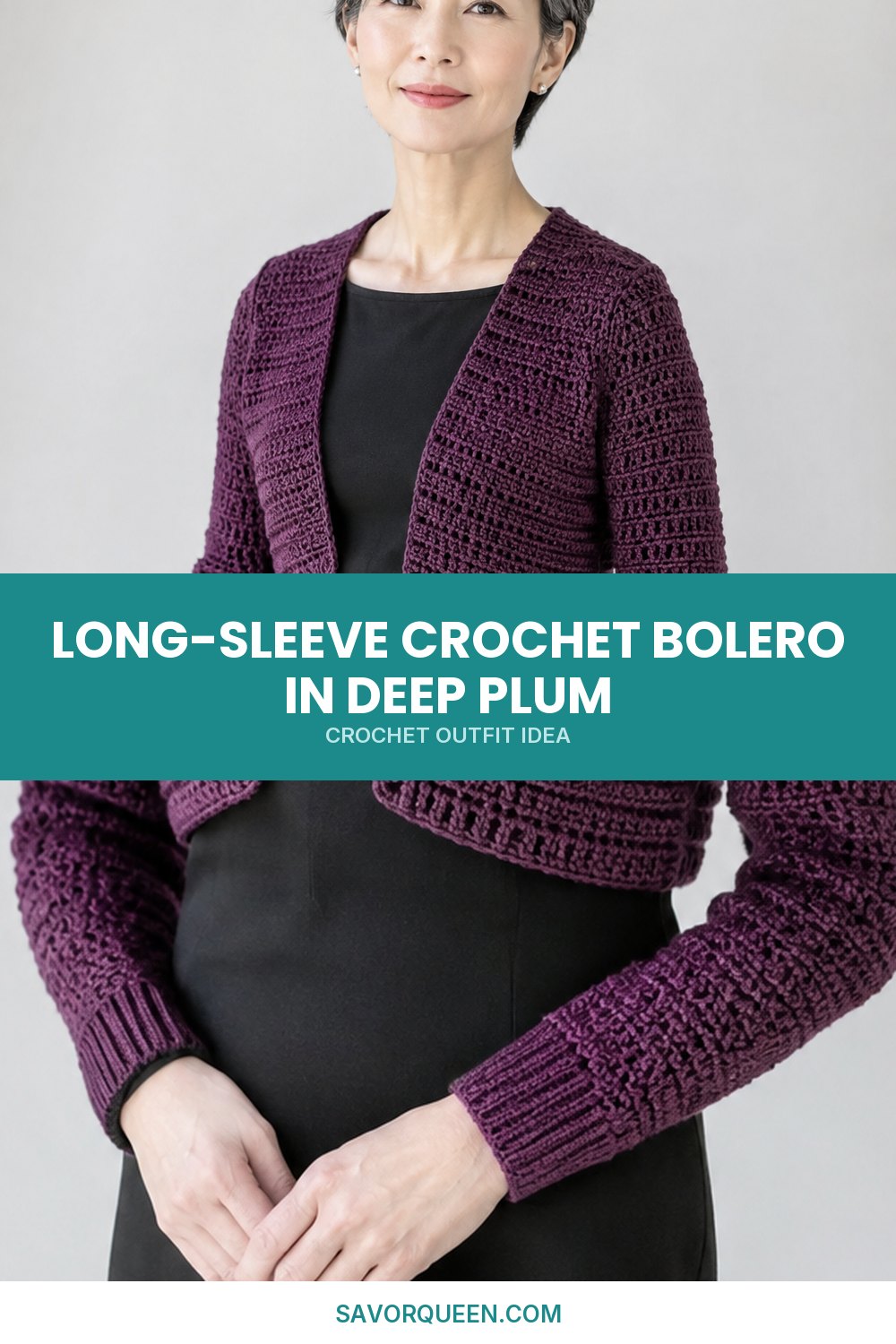
This long-sleeve bolero is made with close, even stitching so it feels dressy and structured. A light worsted cotton-bamboo blend or wool-silk blend gives enough body for the sleeves to keep their line, and a 4.5 mm hook balances firmness with drape. The stitch pattern can use half double crochet with subtle ribbing at the cuffs and hem, creating a tailored shape that works over fitted dresses. Deep plum gives it a rich formal tone that pairs well with black, gold, silver, or midnight blue.
Quick notes: yarn light worsted cotton-bamboo, hook 4.5 mm, skill level easy.
Wear it with a sleek sheath dress and pointed pumps for formal dinners, winter weddings, or theater nights. The longer sleeve makes it a good choice when you want more coverage without a cardigan look. Practical tip: keep the sleeve seam smooth and narrow, since bulky seams can show through fitted dress fabric.
5. Granny Square Crochet Bolero in Soft Gold
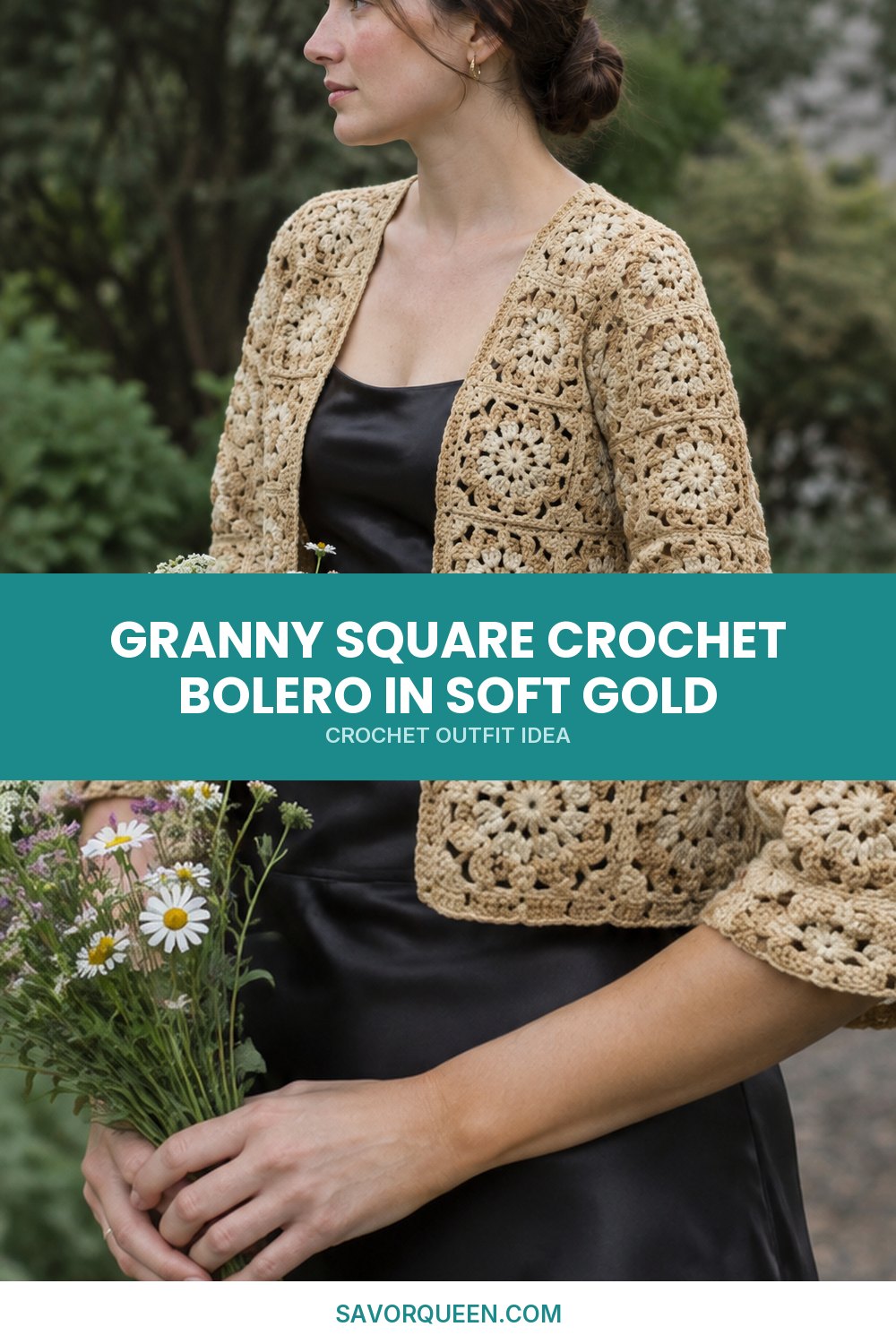
This bolero uses joined mini granny squares for a patterned surface that still feels refined when kept small and evenly blocked. Sport weight cotton or cotton-acrylic blend gives the squares crisp edges, and a 4 mm hook helps the motifs stay consistent. The fit is boxier through the back, with short sleeves and a tidy cropped hem, so it layers well over sleeveless dresses without pulling at the shoulders. Soft gold, cream, and muted beige keep the look formal rather than bohemian.
Quick notes: yarn sport cotton-acrylic, hook 4 mm, skill level easy.
Pair it with a simple black dress or a satin slip dress for a gallery opening, cocktail hour, or a wedding guest outfit. The square layout adds interest when the dress is plain. Practical tip: join the squares with a flat seam or slip-stitch join so the bolero lies smoothly over the bust and back.
6. Scalloped Crochet Bolero in Midnight Navy
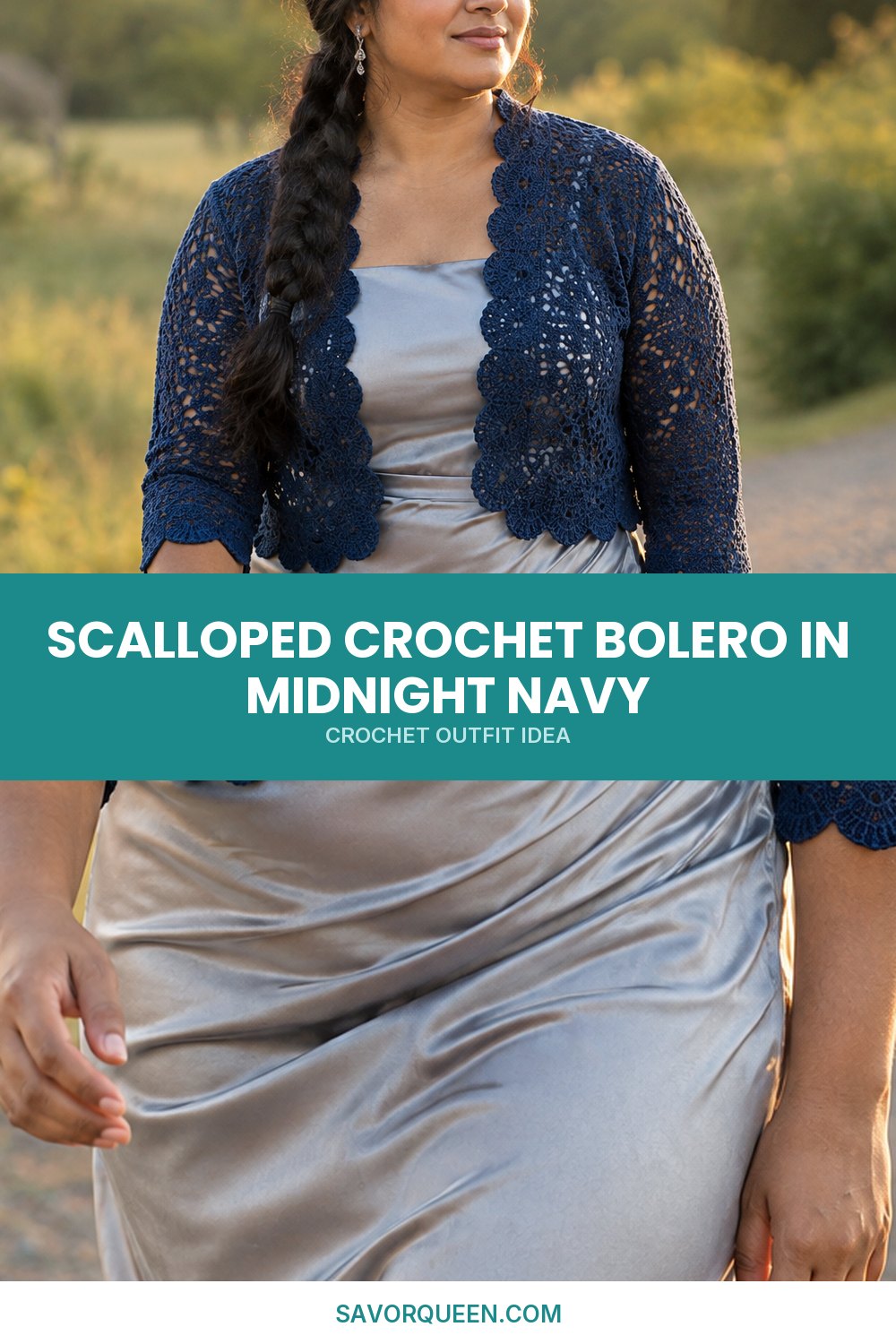
This scalloped bolero uses shell rows and picot edging to create a formal finish with a soft curve at the hem and cuffs. A fine merino blend or merino-cotton blend in fingering weight gives it warmth and drape, and a 3.75 mm hook helps the edge details stay crisp. The fit is close through the shoulders with a slightly wider front opening so it frames the neckline of a dress instead of covering it. Midnight navy is a strong alternative to black and looks elegant with silver jewelry or pearls.
Quick notes: yarn fingering merino blend, hook 3.75 mm, skill level intermediate.
Wear it over a floor-length gown for evening receptions, holiday parties, or a dressy dinner in cooler weather. The curved edging helps soften sharp dress lines and adds movement when you walk. Practical tip: use a light hand when steaming or blocking, since wool blends can flatten if overworked.
7. Fan Stitch Crochet Bolero in Sage Green
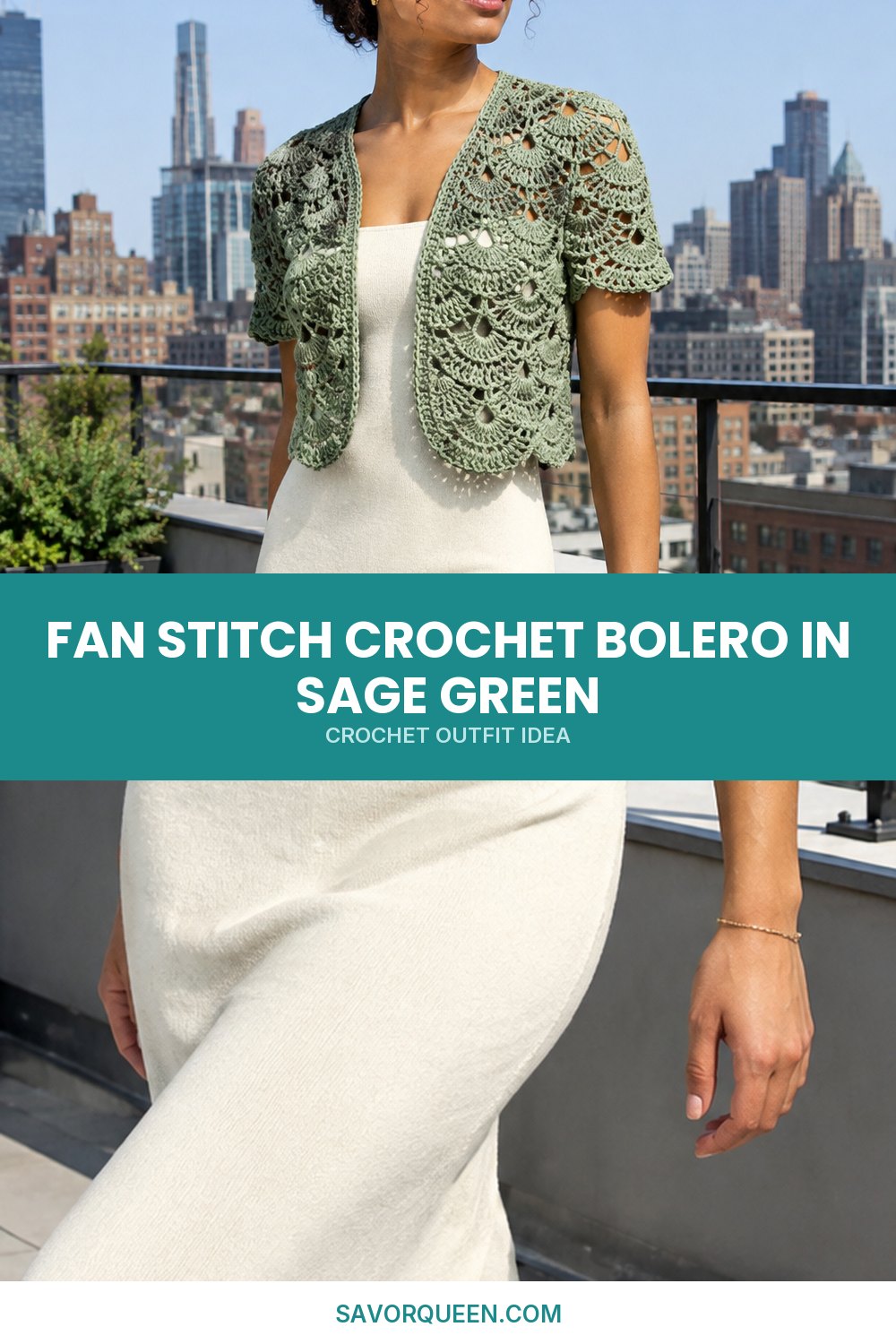
This fan stitch bolero has a graceful, layered texture that feels dressy without being heavy. Cotton or bamboo-cotton in sport weight keeps the fans crisp and breathable, and a 4 mm hook gives the open pattern enough structure. The bolero is lightly fitted at the shoulders with a cropped body and narrow sleeves, so it works over dresses that already have shape at the waist. Sage green brings a soft, modern color story that pairs well with cream, taupe, dusty rose, and muted gold.
Quick notes: yarn sport bamboo-cotton, hook 4 mm, skill level intermediate.
Style it with a midi dress and strappy heels for spring weddings, bridal showers, or rooftop dinners. The fan motif looks best when the dress is in a smooth fabric like satin or crepe. Practical tip: keep the yarn consistent across the body and sleeves, since color shading can make the stitch texture look uneven in openwork patterns.
8. Ribbed Crochet Bolero in Charcoal Black
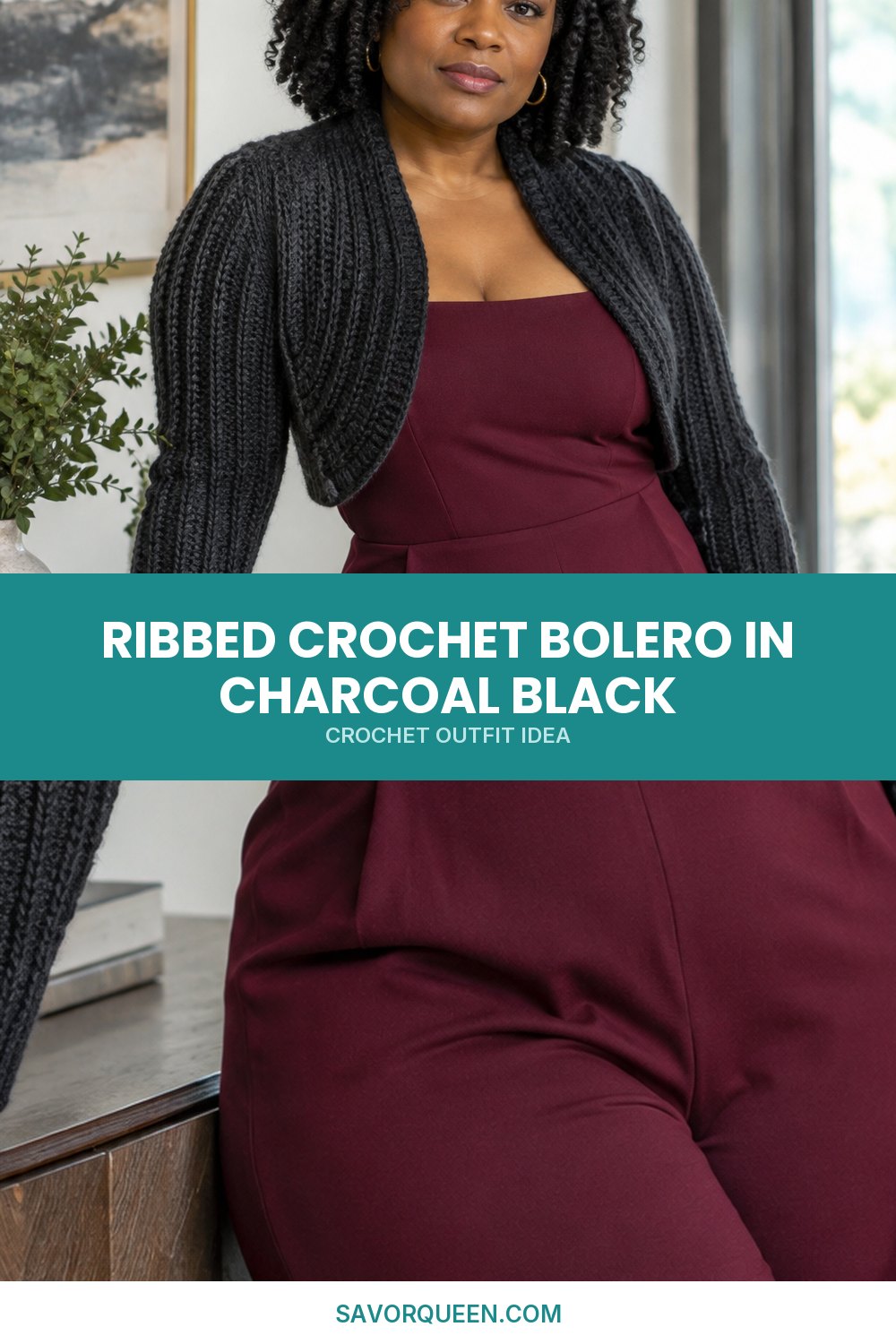
This bolero uses ribbing, post stitches, and clean borders to create a more tailored look than lace. A light worsted wool-acrylic blend or cotton-wool blend gives the piece enough body to hold the ribbed structure, and a 5 mm hook works well for a firm but comfortable fabric. The fit hugs the upper back and shoulders, with sleeves that stay close to the arm for a sharp silhouette. Charcoal black makes it easy to wear with almost any formal dress color.
Quick notes: yarn light worsted wool-acrylic, hook 5 mm, skill level easy.
Pair it with a fitted midi dress or a modern jumpsuit for winter weddings, work events, or formal dinners. The ribbed texture gives a sleek finish when you want less ornament and more shape. Practical tip: test the stretch in a small ribbing sample, since some blends grow more than others after wearing.
9. Picot Edge Crochet Bolero in Rose Quartz
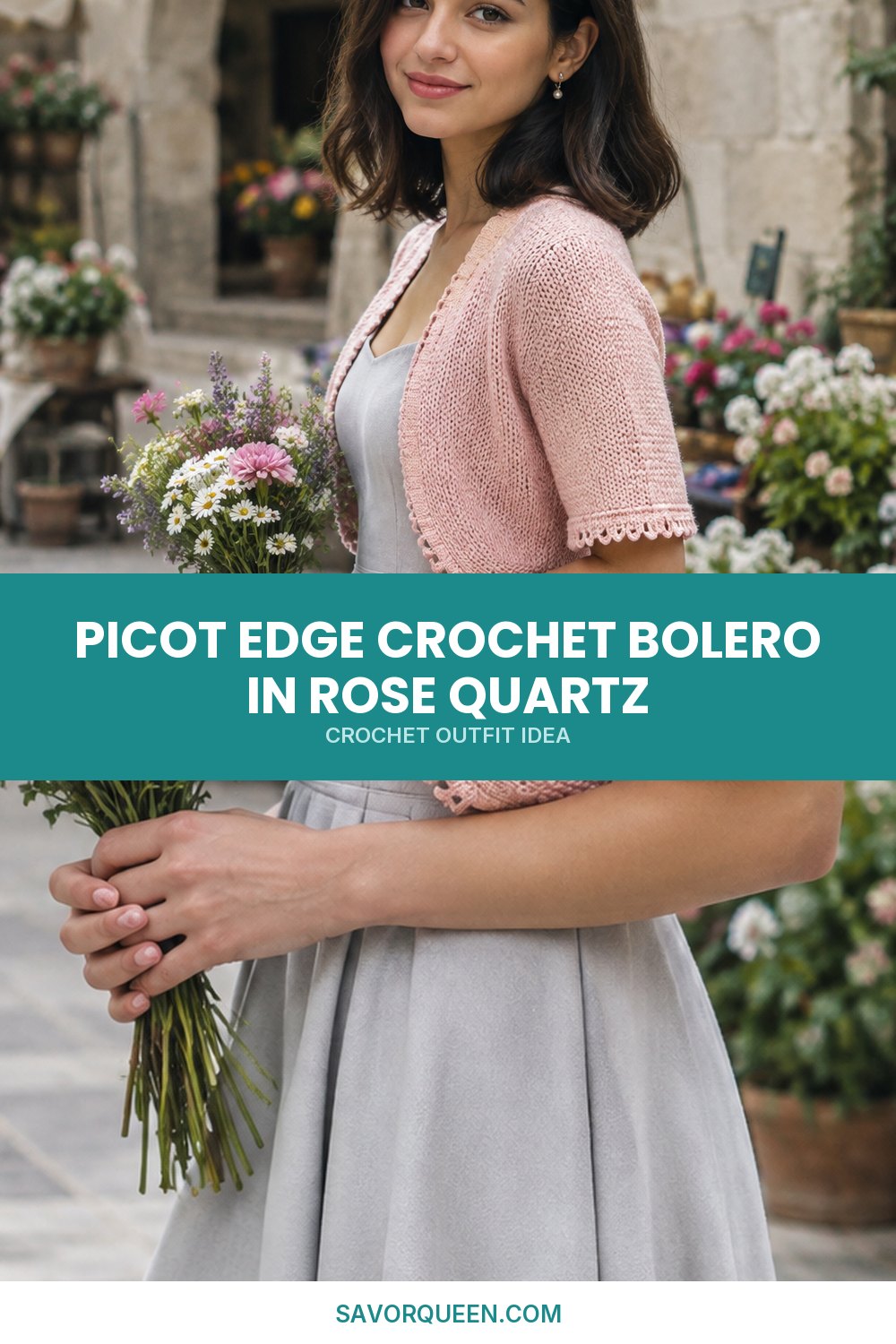
This bolero features simple rows with picot edging at the sleeves, front opening, and hem for a refined feminine finish. Fine cotton in fingering weight or a cotton-viscose blend keeps the fabric light and smooth, and a 3.5 mm hook gives the edges definition. The body stays lightly fitted and cropped, with short sleeves that work well when the dress already has cap sleeves or thin straps. Rose quartz brings a soft pink tone that pairs well with ivory, silver, and pale gray.
Quick notes: yarn fingering cotton-viscose, hook 3.5 mm, skill level easy.
Wear it with a tea-length dress and heels for bridal showers, formal lunches, or spring ceremonies. The picot finish adds interest without competing with beading or lace on the dress. Practical tip: keep the edge tension even, since picots can twist if the last loop is pulled too tight.
10. Openwork Crochet Bolero in Pearl White
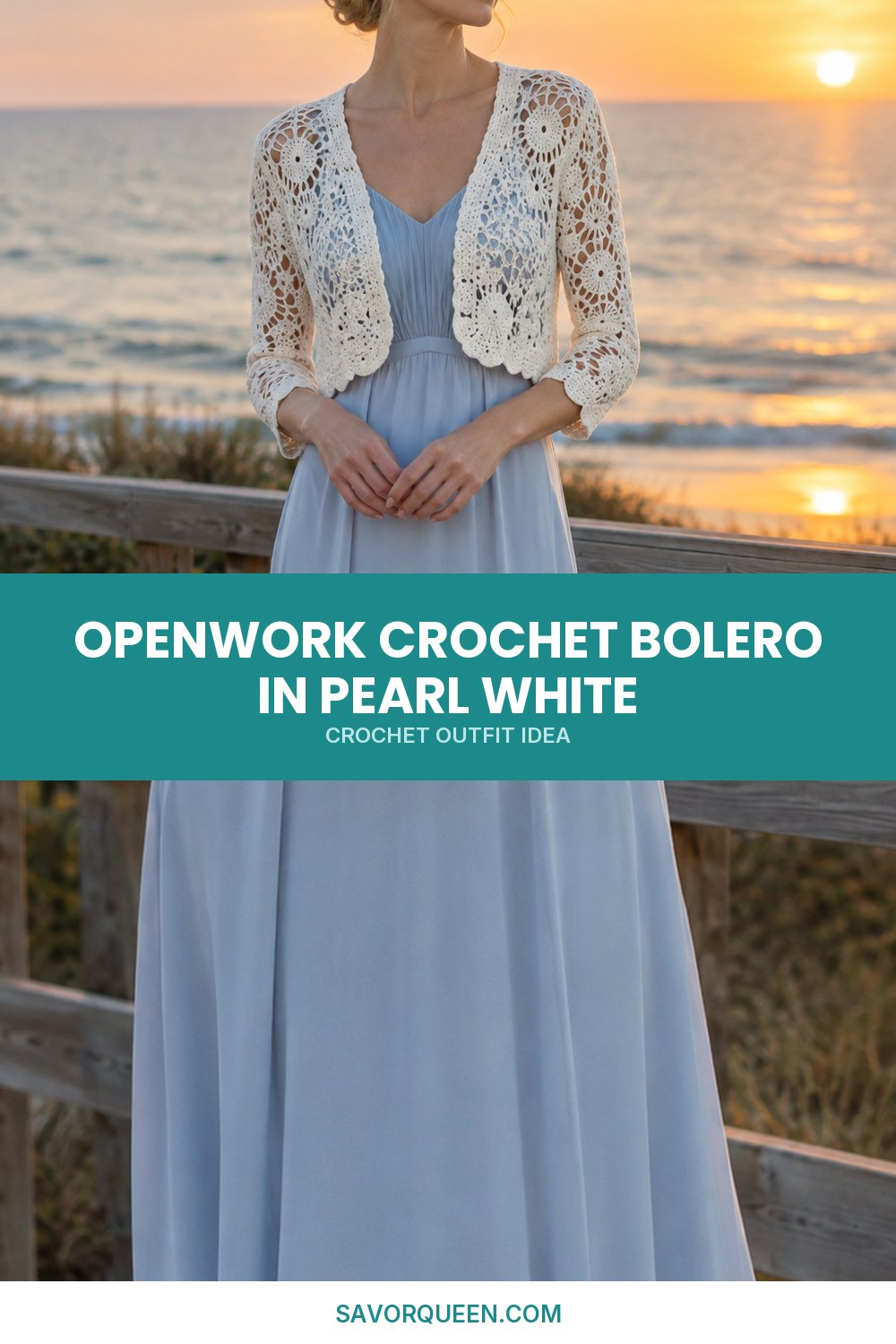
This openwork bolero uses spaced lace motifs and narrow seams to create a polished, breathable layer with a formal feel. A fingering weight cotton or linen-cotton blend gives it a crisp drape, and a 3.5 mm to 4 mm hook keeps the motif edges defined. The fit is narrow across the shoulders with a slightly longer front line, which frames the neckline of a gown without taking over the outfit. Pearl white is a strong match for ivory, silver, soft blue, and classic black.
Quick notes: yarn fingering cotton-linen, hook 4 mm, skill level advanced.
Style it with a long formal dress and drop earrings for weddings, galas, or evening portraits. The openwork pattern lets the dress fabric show through, which keeps the look light and elegant. Practical tip: if you plan to wear it over satin, line only the shoulder area with a small stay stitch strip so the bolero does not slide off.
How to choose, make and care for these
Match the bolero to the dress neckline
A strapless or straight-neck dress works well with a cropped lace or shell stitch bolero, while V-necks and halters look better with a style that opens at the front. Keep the bolero shorter if the dress already has a defined waist, and choose a slightly longer front if you want more balance over a fitted gown. The goal is to frame the dress, not cover it.
Choose yarn that matches the occasion
Fine cotton and bamboo blends suit spring and summer events because they stay smooth and breathable. Wool blends and cotton-wool mixes work better for cooler evenings and winter weddings. For formal wear, avoid overly fuzzy yarns and highly variegated colorways, since they can hide the stitch detail that makes the bolero look polished.
Block for shape and symmetry
Blocking matters more with boleros than with many other accessories because the neckline, sleeves, and hems all sit close to the body. Pin the edges evenly, especially around lace and picot trims, so the fabric opens in the right places. If the design includes sleeves, check that both sides match before drying completely.
Keep seams flat and neat
When a bolero has set-in sleeves or side seams, use a mattress stitch or slip-stitch join for the cleanest finish. Bulky seams can show through satin, crepe, or jersey dresses. If the garment is openwork, keep the joining method low-profile so the back stays smooth and the stitches remain the focus.
Wash and store gently
Most formal crochet boleros do best with cool hand washing and flat drying. Fold them rather than hanging them, since hanging can stretch the shoulders and sleeves over time. Store them with tissue paper between folds if the yarn is delicate or light-colored, especially for lace pieces that you want to keep crisp.
Frequently asked questions
Which crochet bolero patterns work best with formal dresses?
The best crochet bolero patterns for formal dresses usually use lace, shell stitch, fan stitch, or neat openwork with a cropped shape. Fine cotton, bamboo blends, and smooth wool blends keep the look polished. Choose a style that frames the neckline and sits neatly on the shoulders.
What yarn should be used for crochet bolero patterns for evening wear?
For evening wear, fingering or sport weight yarn often gives the cleanest drape. Cotton, bamboo-cotton, linen-cotton, or soft merino blends are all strong options depending on the season. Smooth fiber helps the stitch texture stay visible under formal lighting.
How should crochet bolero patterns fit over a formal dress?
A formal bolero should sit close enough to stay in place but not so tight that it pulls across the bust or upper back. Sleeve length, shoulder width, and cropped length matter more than extra ease. Try it over the dress fabric you plan to wear, since satin and crepe behave differently from knitwear.
Can crochet bolero patterns be worn to weddings?
Yes, crochet bolero patterns are a good choice for weddings when the yarn and finish feel refined. Ivory, pearl white, blush, navy, and silver gray are all strong wedding guest colors. Keep the stitch pattern neat and the silhouette balanced so it complements the dress rather than competing with it.
How do you care for crochet bolero patterns made for formal events?
Hand wash gently in cool water and dry flat so the shape stays even. If the bolero uses lace or picot edges, block it after washing to restore the neckline and sleeves. Store it folded in a breathable bag or drawer so the shoulders do not stretch.
More crochet ideas to save
A well-made bolero can change the feel of a formal dress without adding bulk, and these crochet bolero patterns give you options for lace, structure, color, and season. Use them as a guide when choosing the right layer for weddings, dinners, and special events. For more outfit ideas, related reads like “12 Vintage Crochet Bolero Looks For Special Events“, “13 Cute Crochet Bodysuit Styles For Night Out“, and “12 Elegant Crochet Bolero Looks For Evening Wear” fit naturally next to this list.
Browse every design in the crochet patterns section, and learn the basics in how to crochet.