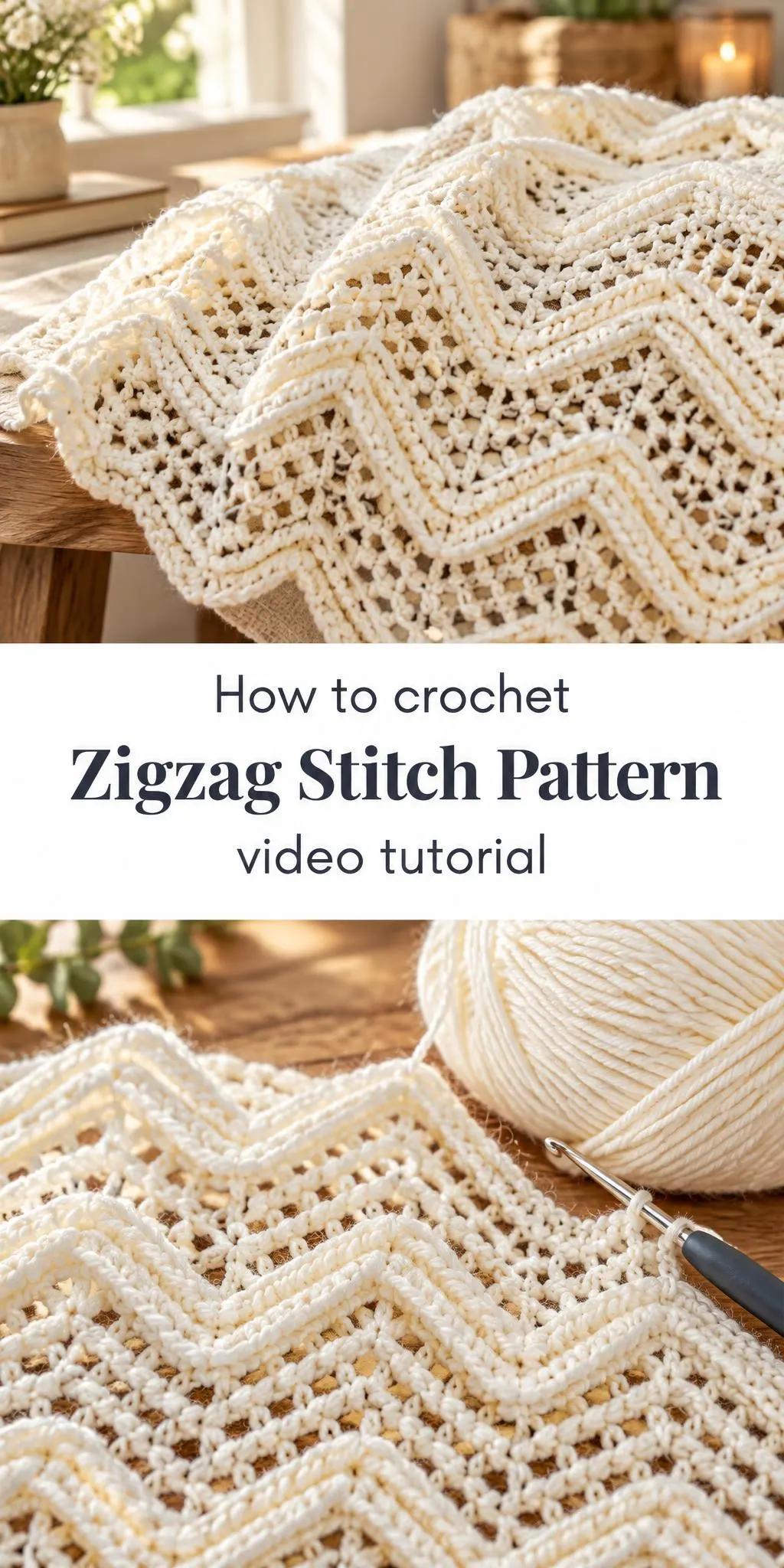
The crochet zigzag stitch pattern is a classic favorite for anyone who loves texture, rhythm, and a little bit of visual movement in their work. Its rising and falling peaks turn a simple piece of fabric into something with a lively, almost sculptural character.
In this post
Why the Zigzag Stitch Pattern Stands Out
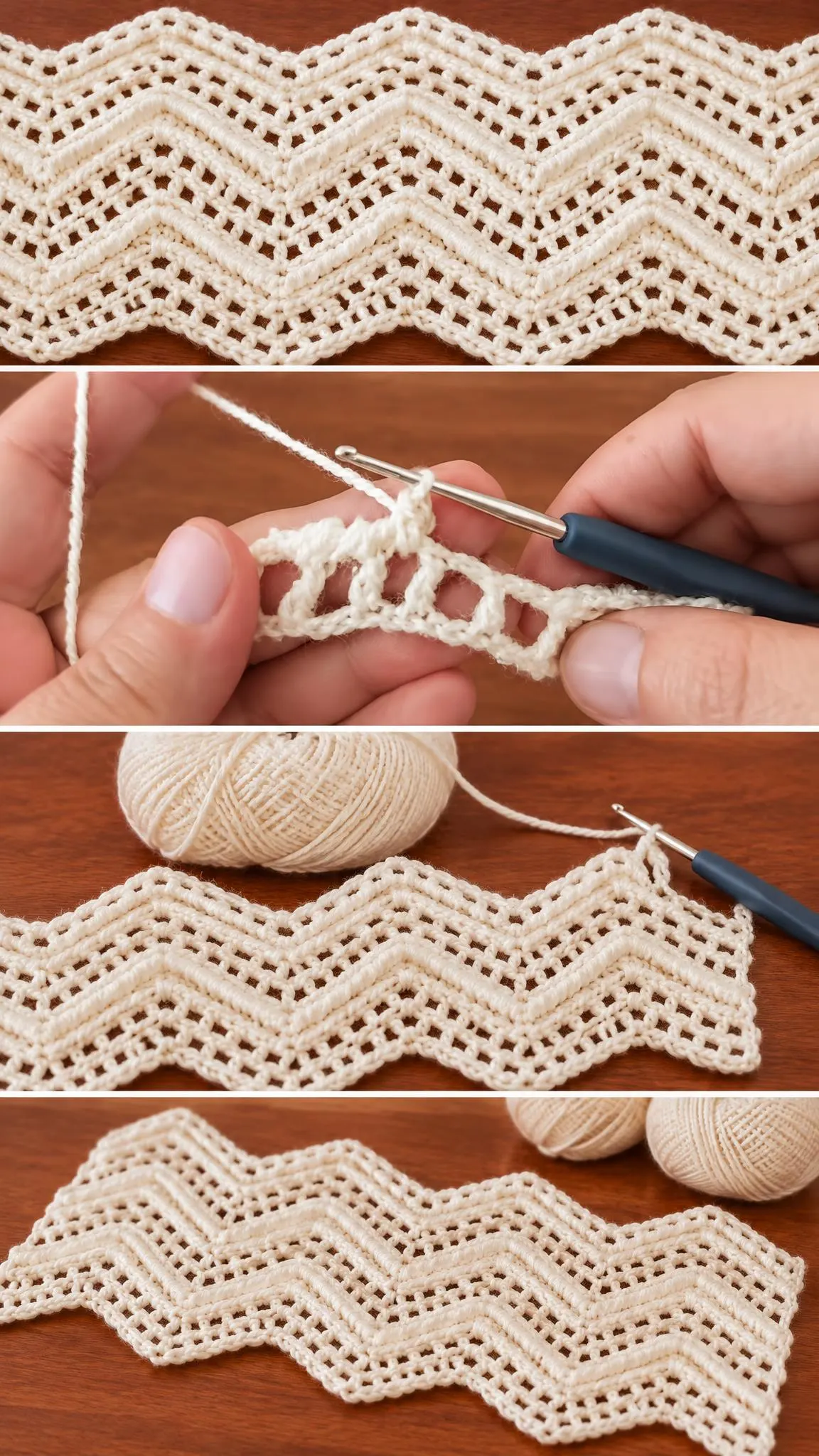
The defining quality of this pattern is its diagonal structure. Rows of openwork shift direction at regular intervals, creating a series of chevron-like ridges that run across the surface. Where the stitches gather, the fabric looks dense and raised. Where they open, small square and diamond-shaped holes appear, letting light pass through the fabric and giving it a airy, lace-like finish.
This contrast between solid bands and open spaces is what makes the zigzag design so eye-catching. It works well for projects that benefit from a sense of depth, such as shawls, baby blankets, table runners, and lightweight wraps. Because the pattern has a strong visual identity, it often looks impressive even when worked in a single solid color, and the stitch definition does most of the decorative work for you.
Stitch Pattern Related Posts:
- Crochet Amigurumi Plushies: A Cute and Charming Handmade Companion
- Crochet Tunic Blouse: A Chic and Airy Handmade Staple
- Crochet Book Cover with Picture Frame: A Charming and Personalized Handmade Accessory
- Crochet Striped Tunisian Stitch Shawl: A Cozy and Elegant Essential
Choosing Materials for the Right Effect
Yarn choice has a dramatic influence on how a zigzag design reads. A smooth, well-plied yarn shows off the crisp peaks and valleys, while a fuzzy or heavily textured yarn can blur the pattern into a soft haze. For most readers, a smooth acrylic blend or a fine cotton is a practical starting point, since these fibers hold stitch definition and make the openwork easy to see.
Color affects the feel of the finished piece as much as the yarn does. A creamy white or ivory, as used in many versions of this pattern, gives the fabric a soft, gentle look that suits baby items and heirloom-style gifts. Deeper shades such as navy, forest green, or charcoal will emphasize the shadows between the peaks, making the geometry more dramatic. Pastel tones like blush or sage produce a calmer effect that suits home decor.
A hook should match the yarn so the openwork stays clear without becoming loose or floppy. If your fabric looks stretched or the holes appear distorted, try a slightly smaller hook. If the surface feels stiff and the zigzag lines seem crowded, a larger hook may open things up.
Understanding the Shape of the Design
How the Peaks Are Built
The zigzag effect is created by shifting the placement of stitches from row to row, so that each row travels a little further to one side before turning back. Crocheters often describe this as a series of increases and decreases, or as clusters that move across the fabric. The exact sequence depends on the version you follow, but the underlying idea is consistent: the stitch placement changes direction, and the spaces between groups of stitches open into the lacy holes you can see.
Because the peaks depend on this shifting, consistent tension matters. Pulling too tightly will flatten the zigzag and close the openings, while very loose stitches can make the edges wavy in an unplanned way. Taking a moment to check that each row lies flat helps the diagonal lines stay sharp and even.
Working with Edges and Repeats
Edges deserve attention in a pattern like this. Since the outline of the fabric follows the zigzag, a plain straight border can make the points look sharper and more intentional. Many makers add a simple single-crochet edging around the finished piece to stabilize it and give the peaks a neat frame. Counting the repeats carefully is also important, because a slightly off repeat can shift the diagonal lines and make the design look uneven.
Using and Styling Your Zigzag Piece
A zigzag fabric is wonderfully versatile. Draped over the shoulders, it becomes a light shawl that moves with the wearer and catches the breeze. Paired with a plain blouse or a neutral sweater, it adds textural interest without competing with other patterns in the outfit. In cooler months, a heavier version worked in a deeper tone can serve as a cozy layer over a coat.
For the home, the pattern shines as a throw or runner. A zigzag throw draped over the arm of a sofa introduces a sense of rhythm to a room, especially when its colors echo the cushions or rug. On a dining table, a narrow runner worked in cream or soft gray can make simple dishes look more considered, and the openwork lets the table surface show through subtly.
Gifts are another natural fit. A baby blanket in soft white feels both traditional and modern, and the openwork keeps it breathable. A friend who loves texture might appreciate a scarf in a bold color, folded into a neat rectangle and tied with ribbon.
Finishing Touches for a Polished Result
Once your fabric reaches the size you want, take time with the finishing. Weave in all ends securely along the back, and trim them neatly so they do not poke through the openings later. Loose ends in a lacy pattern can be surprisingly visible, so this small step pays off.
Blocking is worth considering. Gently wetting or steaming the finished piece and pinning it to shape encourages the zigzag edges to settle into their final form and helps the openings look balanced. Always check the yarn label before washing or steaming, since some fibers respond differently to moisture and heat. Acrylic blends usually tolerate gentle blocking well, while cotton may need a different approach.
Care matters for keeping the piece looking fresh over time. Hand washing in lukewarm water with a mild wash and laying the fabric flat to dry will protect the stitch definition. Storing the piece folded rather than hung will also help prevent stretching.
A Satisfying Pattern to Make Your Own
The zigzag stitch pattern rewards patience with a result that looks far more complex than it feels to work. Each row reveals a little more of the diagonal rhythm, and by the time the fabric is finished, its peaks and openings feel like a true accomplishment. Take your time with the rows, keep your tension steady, and enjoy watching the geometry come together.
For the exact row-by-row instructions, stitch sequences, and repeat counts, follow the video below. Pause and rewind whenever a step needs a closer look, and practice a few rows before committing to a larger piece. The zigzag pattern is generous with its textures, and once you find its rhythm, you may find yourself reaching for it again and again.
Follow us on Pinterest and subscribe to the Newsletter so you don’t miss a thing!
Tutorial and photos of this zigzag stitch pattern by: Crochet Knitting Sort.