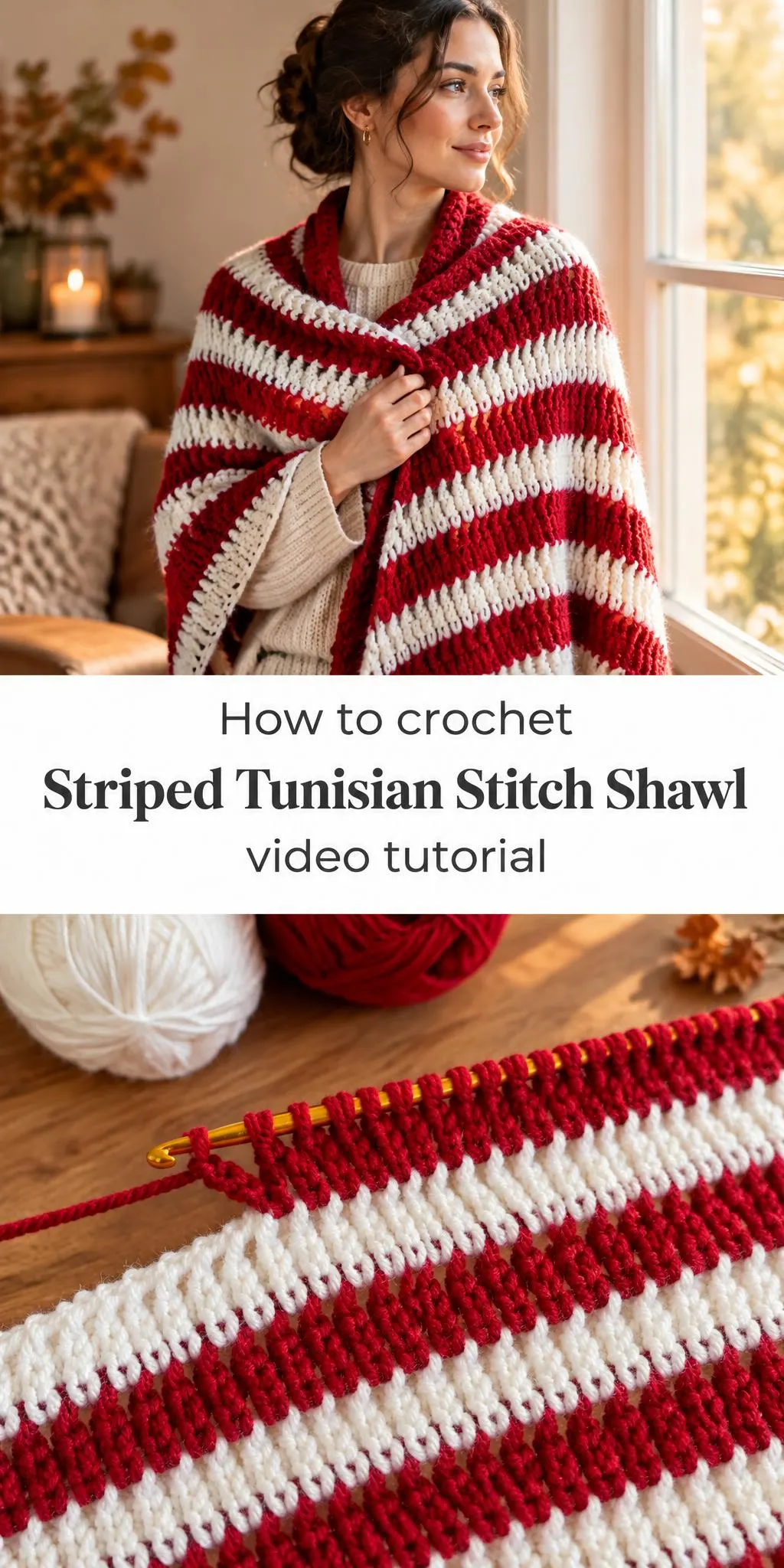
The striped Tunisian stitch shawl is one of those projects that looks far more complicated than it is. Its crisp bands of crimson and white give it a bold, graphic character, while the dense, rib-like texture keeps the fabric warm and sturdy enough to wear through the cooler months.
In this post
Why the Striped Tunisian Stitch Shawl Stands Out
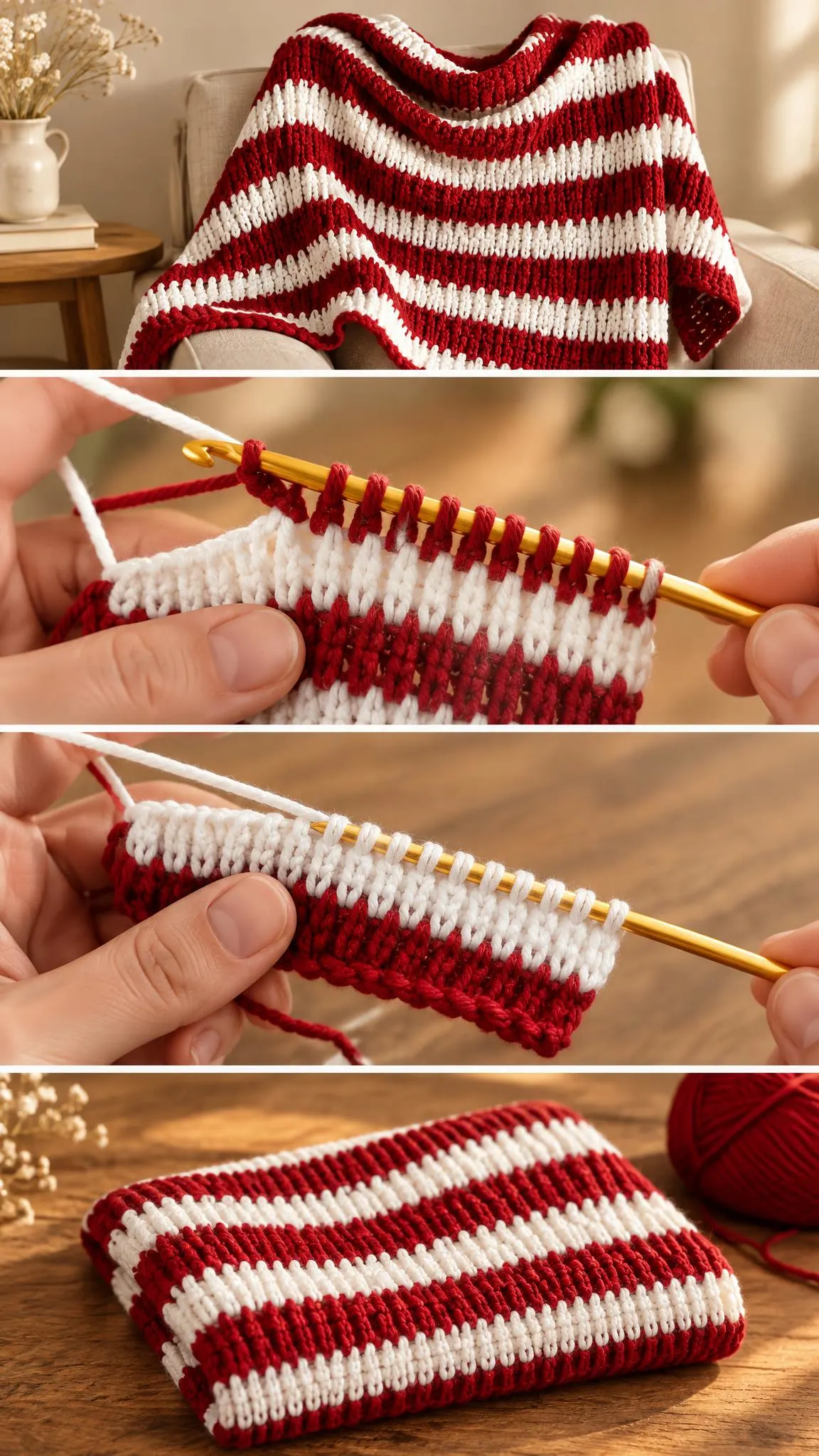
What first catches the eye is the rhythm of the fabric. Narrow bands of white alternate with deeper red rows, and each band is built from short vertical stitches that stack neatly one above another. The result looks almost woven, with a subtle ridged surface that catches light differently from one row to the next. The contrast between the two colors is strong enough to read from across a room, which is exactly what makes a striped piece feel intentional rather than accidental.
Beyond its appearance, the shawl is genuinely practical. A Tunisian stitch produces a fabric that is more substantial than an ordinary single crochet piece, so it drapes with a slight structure rather than collapsing into a loose sheet. That makes it suitable for draping over the shoulders on a chilly evening, layering over a plain sweater, or keeping in a bag for an unexpectedly cool office. It is a shawl that earns its place in daily life.
Stitch Shawl Related Posts:
- Crochet Oh My Stars Scarf: A Cozy and Stylish Handmade Accessory
- Crochet Stitchorama Stitch: A Bold and Versatile Textured Design
- Crochet Mile-A-Minute Blanket: A Cozy and Charming Handmade Keepsake
- Crochet Textured Stitch Blanket: A Cozy and Timeless Classic
Choosing Materials for Your Shawl
Yarn choice shapes both the feel and the finished look of this project. A smooth, mercerized or acrylic-blend yarn in a medium weight will help the stripes stay crisp and the stitch definition remain clear. For a softer result, you might choose a wool blend, which adds warmth and a slightly fuzzy halo, though the stitches will be a little less sharp. Whichever fiber you select, test a small swatch first. Tunisian work is dense, so a fiber that is too stiff can make the fabric feel heavy, while one that is too slippery may cause the stitches to slide. For the palette, a deep red paired with pure white is classic and striking; a softer alternative such as dusty rose with cream will give a gentler, more romantic feel.
For the hook, a Tunisian hook with a long cable is essential, since the stitches are held on the hook as you work across each row. The hook size should suit your yarn and the fabric you want. A slightly smaller hook produces a firmer, more compact surface that holds its shape well, while a larger one gives a lighter, airier shawl. Keep a stitch marker handy and a bobbin or small pouch for your second color so the yarn stays tidy as you switch between stripes.
Understanding the Striped Design
The stripe pattern depends on carrying both colors through the work in an orderly way. Rather than cutting and rejoining yarn at every band, the common approach is to keep each color attached and change between them at the row where a new stripe begins. This keeps the edges clean and the join invisible. Plan your stripe widths before you start. Equal bands create a balanced, calm look, while varying the widths can give the shawl a more dynamic, modern rhythm.
Keeping the Stripes Crisp
Tension is the biggest factor in whether your stripes look sharp or blurred. If you work too loosely, the vertical stitches can lean and the color boundaries may appear wavy. Try to keep an even grip on the yarn and consistent pull-through on each stitch. When you change colors, pick up the new yarn at the edge and check that it is not pulled too tight, which can make the edge pucker. A steady hand gives you the neat, graphic lines that make this design so appealing.
Shaping and Size
A shawl can be worked to a rectangular or triangular shape, and each choice changes how it wears. A rectangle offers generous coverage across the shoulders and back, ideal for wrapping. A triangle sits more gracefully at the neckline and can be pinned or tied. Decide on your shape early, because it affects how you count rows and where the stripes fall. Measuring your intended finished width against a favorite scarf or wrap can help you choose a comfortable size.
Wearing and Styling the Shawl
Because the palette is bold, the shawl works best with simple outfits that let it speak. A plain black or charcoal coat becomes more interesting with a red-and-white wrap draped over the shoulders. Denim, grey knitwear, and neutral trousers all provide a calm backdrop that makes the stripes stand out. If your wardrobe leans toward soft tones, the shawl can act as a focal point that adds warmth and color to an otherwise quiet look.
Consider how you will wear it day to day. Tying the ends loosely at the front creates a cosy wrap for walking outdoors, while folding the shawl into a triangle and securing it with a decorative brooch lends a more polished touch for dinners or events. A longer piece can be wrapped twice around the neck in colder weather, turning it into a snug scarf that still reads as a deliberate accessory.
The shawl also makes a thoughtful gift. Its striped design appeals to a wide range of tastes, and the warmth of a handmade piece adds personal meaning. Pair it with a small card explaining the care instructions or a favorite cup of tea for a complete, cosy present.
Finishing and Caring for Your Shawl
Finishing is where a good project becomes a lasting one. Weave in all yarn ends carefully along the stripe lines, where they will be hidden by the color change. Check that the edges are even by laying the shawl flat and comparing both sides; uneven edges are often caused by inconsistent tension at the start or end of rows. A gentle block can help even out the stitches and encourage the stripes to settle into straight, parallel lines.
Care depends on the fiber you chose. Wash acrylic blends in lukewarm water with a mild detergent and lay them flat to dry. Wool and wool-blend pieces benefit from hand washing and a light squeeze rather than wringing, which can distort the dense texture. Always check the yarn label before washing, since colorfast properties vary, and keep the red and white apart during the first wash to prevent any bleeding.
For the full video walkthrough and exact stitch sequences, follow along below. Pause whenever you need to, and revisit tricky transitions as often as you like. Each stripe you complete brings the shawl closer to a piece you will reach for season after season.
A striped shawl, carefully made, becomes a warm and memorable part of everyday life.
Follow us on Pinterest and subscribe to the Newsletter so you don’t miss a thing!
Tutorial and photos of this striped tunisian stitch shawl by: Örgü Diyarı KNİTTİNG .