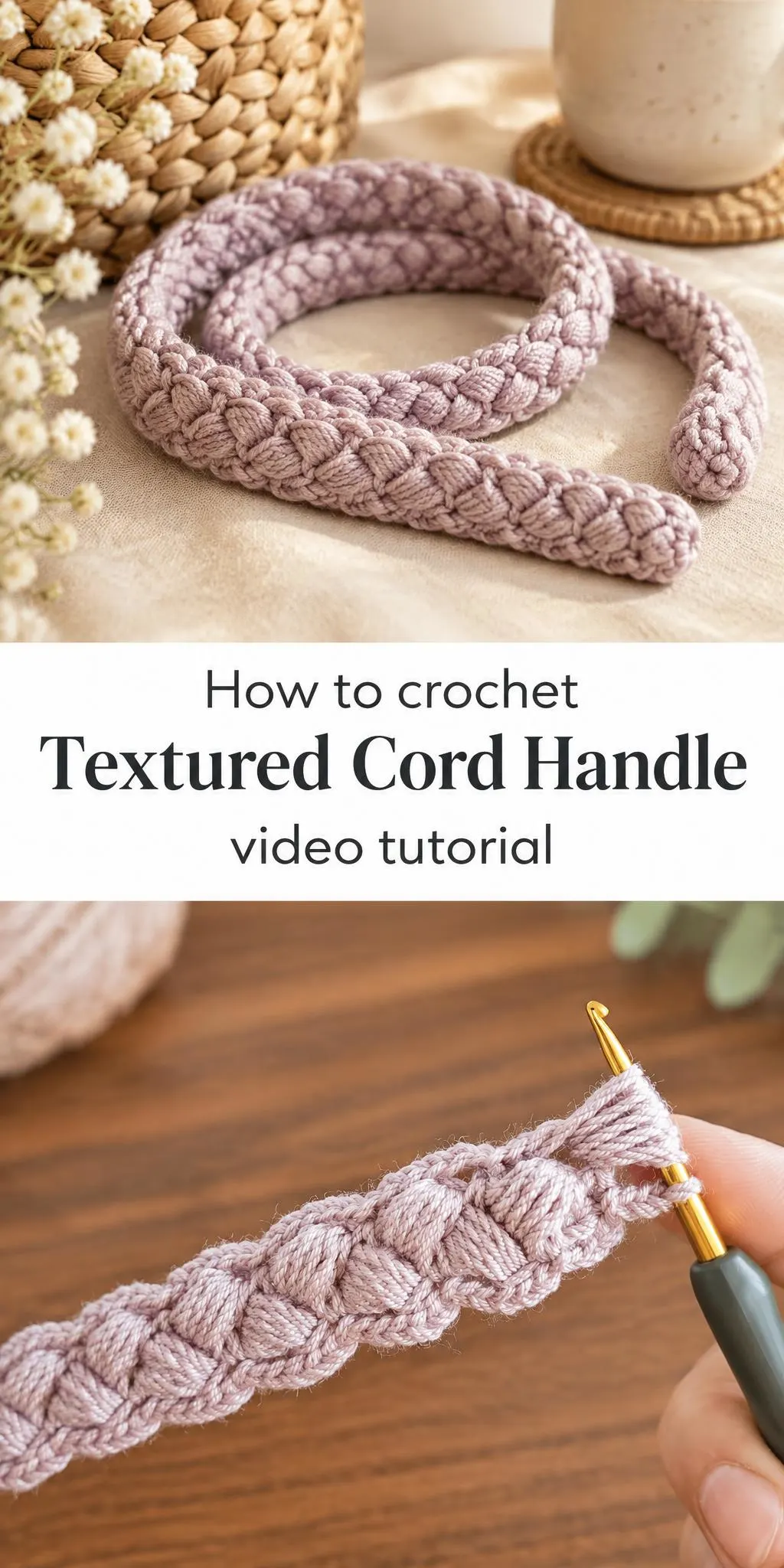
A textured cord handle can turn an ordinary bag, pouch, or tote into something with real character. This crochet piece offers a rich, dimensional surface that catches the light and invites a closer look, all while staying sturdy enough for daily use.
In this post
Why the Textured Cord Handle Stands Out
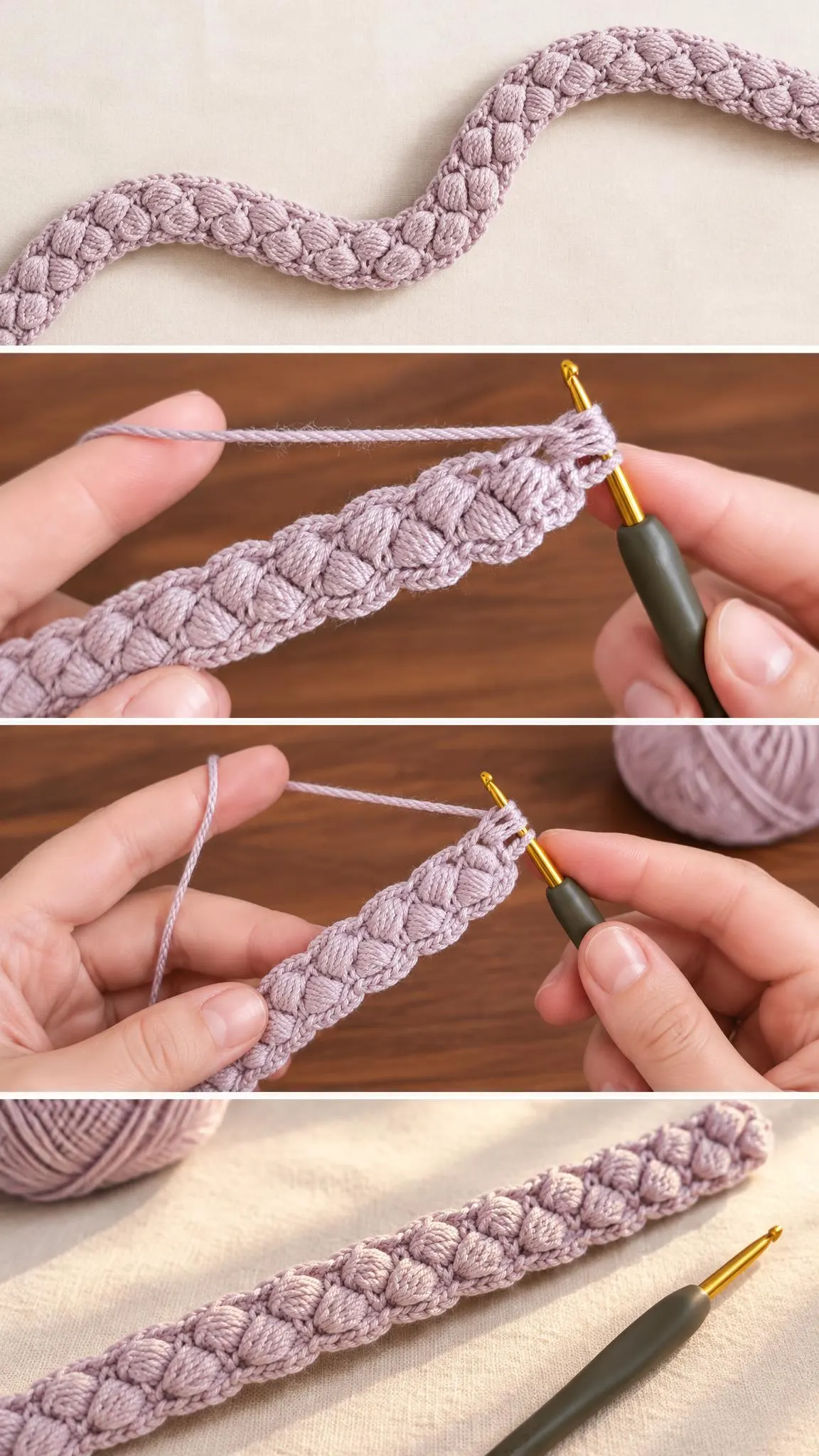
The most striking quality of this handle is its raised, puffy texture. Clusters of stitches rise from the fabric in small rounded blocks, arranged in a diagonal rhythm that runs along the length of the strap. Between these clusters, a thin, open channel of simpler stitches creates a sense of depth, so the eye moves naturally from one group to the next.
That contrast between plump and flat is what gives the handle its personality. A smooth strap would simply carry weight, but this one reads as a design feature. Each textured block adds a little shadow and a little highlight, which makes the piece feel tactile even before anyone touches it.
Because the texture is so visible, the handle works well on projects that deserve a focal point. It suits a minimalist bag where a single detail should do the talking, or a handmade purse that needs a refined finishing touch. You might also use it as a standalone strap for a crossbody bag, where the textured band sits comfortably against the body and draws attention to the shoulder.
Cord Handle Related Posts:
- Crochet Textured Tote Bag: A Stylish Handmade Staple
- Crochet Mile-A-Minute Blanket: A Cozy and Charming Handmade Keepsake
- Crochet Textured Stitch Blanket: A Cozy and Timeless Classic
- Crochet Tunic Blouse: A Chic and Airy Handmade Staple
Choosing Materials for a Clean, Defined Texture
For a textured handle like this, you might choose a cotton or cotton-blend yarn with a smooth, slightly firm ply. Cotton holds stitch definition well, so each raised cluster keeps its shape instead of flattening out or blurring into the rest of the fabric. A mercerized cotton offers a gentle sheen that can make the texture look even more pronounced under natural light.
Acrylic and acrylic blends are also a practical option, especially for beginners or for projects that will see frequent washing. They tend to be softer and more affordable, though they may show less crispness in the clusters. Wool can add warmth and a slightly fuzzy halo, which is lovely for winter accessories but can soften the stitch definition somewhat. Whichever fiber you choose, test a short swatch first to see how the texture settles.
For the hook, select a size that matches your yarn and the stiffness you want. A slightly smaller hook than the label suggests usually produces a denser fabric that supports the strap well. Keep a few stitch markers nearby, since textured work can make it easy to lose your place in the rows.
Understanding the Stitch Structure
Textured crochet like this one relies on building up clusters so they stand away from the base fabric. Stitch families that create this effect often involve working several loops into the same stitch or position, then closing them together so the cluster puffs outward. The result is a raised bump rather than a flat plane.
Between these clusters, the simpler base stitches form a grounding structure. They pull the textured blocks into a line and keep the strap from twisting or ballooning. Balancing the two is important: if the base is too loose, the clusters may sink, and if it is too tight, the fabric can become stiff and unpleasant to hold.
Keeping Tension Even
Tension is especially important with raised stitches. Work each cluster with a consistent grip, aiming for the same height and width across the whole length. Uneven clusters will show up as lumps or dips in the finished strap. Pausing after every few clusters to check the line can save you from unpicking a long section later.
Shaping the Handle for Comfort and Wear
The length and width of the strap determine how it feels on the shoulder or in the hand. A narrower handle with textured clusters can look delicate, but it may dig in when carrying heavier items. A wider band distributes weight more evenly and gives the textured pattern room to breathe. Measure your bag’s opening and the intended drop before you commit to a finished length.
Consider how the handle will attach as well. Reinforcing the join with a second layer of yarn or a sturdy lining helps the strap withstand daily tugging. Where the handle meets the bag, use a neat, flat seam so the transition looks deliberate rather than bulky.
Styling Your Textured Cord Handle
A textured handle pairs naturally with soft, neutral outfits. A dusty mauve or taupe strap brings warmth to a camel coat, a cream knit, or a denim jacket, while a deeper plum or charcoal can anchor a simple black dress. The raised pattern adds visual interest without competing with bold prints, so it works well alongside patterned clothing when the bag itself stays in a calm shade.
For an everyday look, attach the handle to a structured tote and carry it on the forearm, letting the textured band show against your sleeve. For evenings, a smaller pouch with a slim textured strap feels refined and easy to hold. Think about where the handle will sit on your body and choose a width that matches the scale of the bag.
Finishing Touches and Care
Once the handle is complete, weave in all ends carefully along the wrong side. Loose tails can work their way out through the open channels of the texture, so take a few extra inches of yarn and tuck them through several stitches. Trim neatly and check the strap from both sides.
Before attaching the handle, lay it flat and gently steam or lightly press it if your yarn allows. Avoid pressing directly on the raised clusters, since heavy pressure can flatten the texture. Instead, hover the iron or steamer above the surface and let the moisture relax the fibers. Always check the yarn label first, because some fibers do not respond well to heat.
When cleaning the finished bag or accessory, hand washing in cool water is usually the gentlest choice. Lay the piece flat to dry and reshape the handle while it is still damp so the clusters regain their height.
Making a textured cord handle is a satisfying way to add dimension to your projects. The raised rhythm, the careful balance of texture and base, and the freedom to choose colors all make it a rewarding detail to build. Take your time with the clusters, keep your tension even, and let the finished strap show off its character.
For the exact stitch sequence and step-by-step guidance, follow the video below. Pause and rewind whenever a cluster needs a closer look, and enjoy building your handle one textured row at a time.
Follow us on Pinterest and subscribe to the Newsletter so you don’t miss a thing!
Tutorial and photos of this textured cord handle by: Örgü Diyarı KNİTTİNG .