These crochet sleep sacks are for baby wardrobes that need softness, warmth, and a clean sleep setup. The list covers different shapes, stitch textures, and yarn choices so you can plan a sleep sack that fits the season and the baby’s size. Each idea keeps the focus on smooth fabrics, simple construction, and details that work well for safe sleep.
Use this list to compare yarn weight, hook size, stitch texture, and closure placement before you start. Look for breathable fibers, a roomy lower body, and no loose trim near the face. For baby sleepwear, washable yarn and a comfortable fit matter more than heavy decoration, so the ideas below keep the styling calm and practical.
In this post
Cozy Crochet Sleep Sack Designs For Safe Sleep
1. Seed Stitch Sleep Sack in Oatmeal
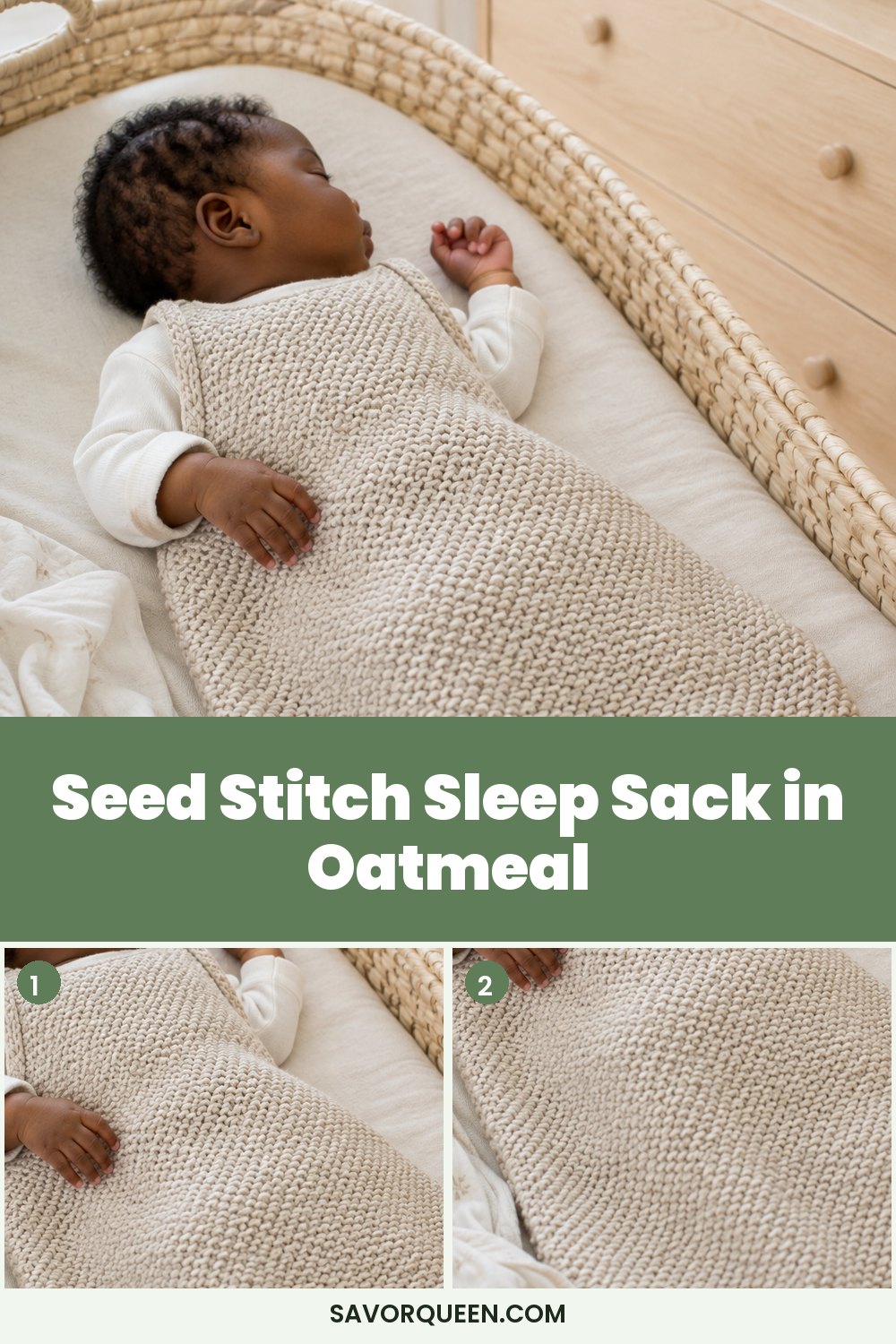
This crochet sleep sack uses seed stitch for a flat, softly textured surface that stays visually calm and baby-friendly. A DK cotton or cotton-bamboo blend works well with a 4 mm hook, giving a light fabric that holds shape without feeling stiff. The shape can be made with a fitted neckline, gentle arm openings, and a slightly flared lower section. Oatmeal, cream, and a hint of warm beige keep the palette quiet and easy to pair with nursery sheets and neutral swaddles.
Quick notes: yarn DK cotton, hook 4 mm, skill level beginner.
Style it with a long-sleeve cotton bodysuit underneath for cooler nights or a short-sleeve layer in a warm room. This design suits newborn to 6 months sizing when worked with enough ease through the torso. Practical tip: block the panels lightly before seaming so the neckline and arm openings sit evenly and do not pull at the shoulders.
2. Ribbed V-Neck Sleep Sack in Soft Sage
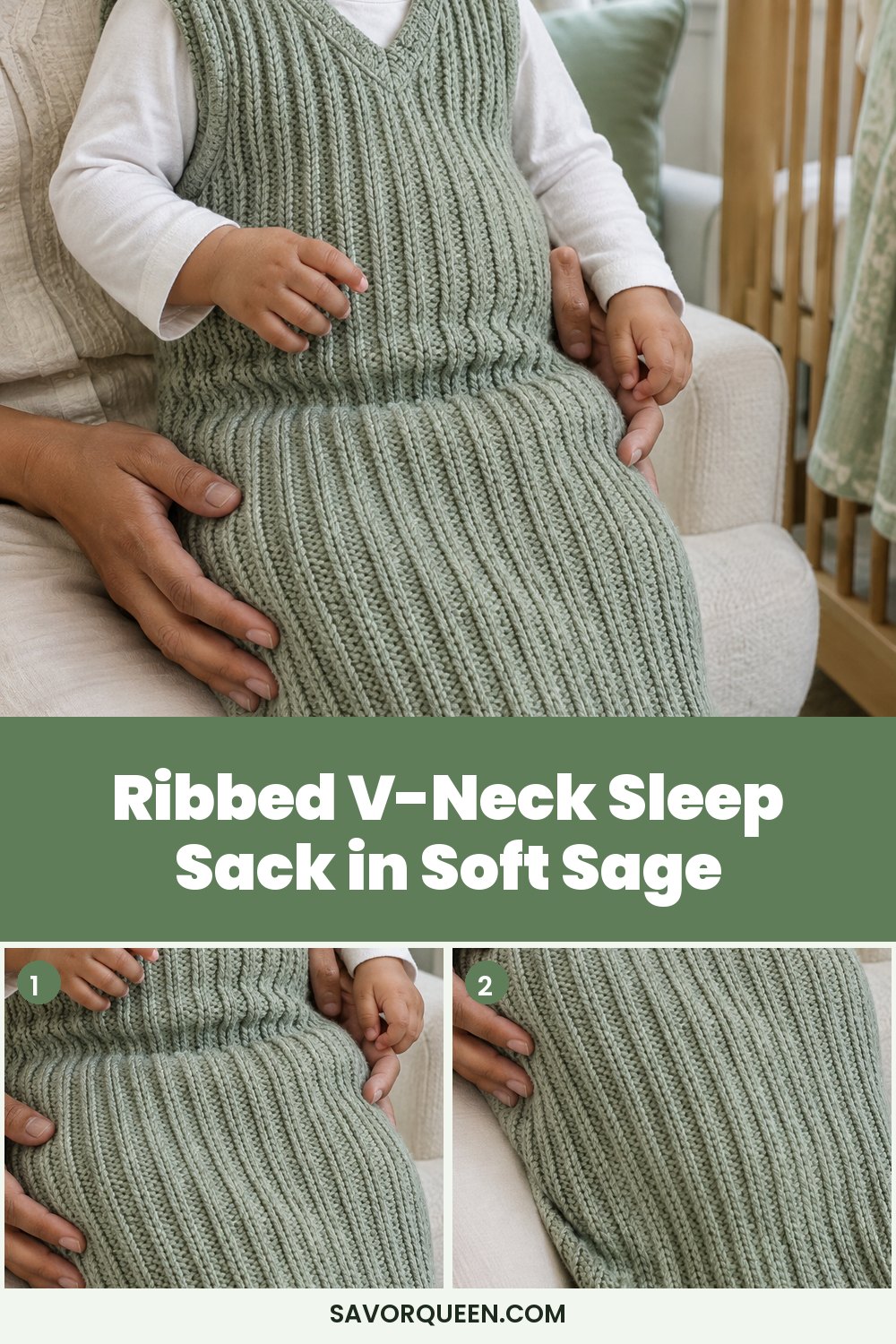
This crochet sleep sack uses front and back post ribbing for a snug-looking but still soft surface, with a subtle V-neck that lies flat over a bodysuit. Choose worsted weight cotton blend yarn with a 5 mm hook for a slightly denser fabric that still breathes well. Soft sage, pale eucalyptus, and a touch of cream give it a fresh nursery palette. The ribbing adds stretch around the chest while the body stays roomy enough for natural movement during sleep.
Quick notes: yarn worsted cotton blend, hook 5 mm, skill level easy.
Pair it with footed pajamas in white or pale gray for a clean layered look in cooler seasons. This style works well for babies who need a little more structure around the upper body. Practical tip: use a stretchy seam at the underarm and side edges so the sack opens and closes smoothly without tugging the stitches out of shape.
3. Shell Stitch Sleep Sack in Dusty Rose
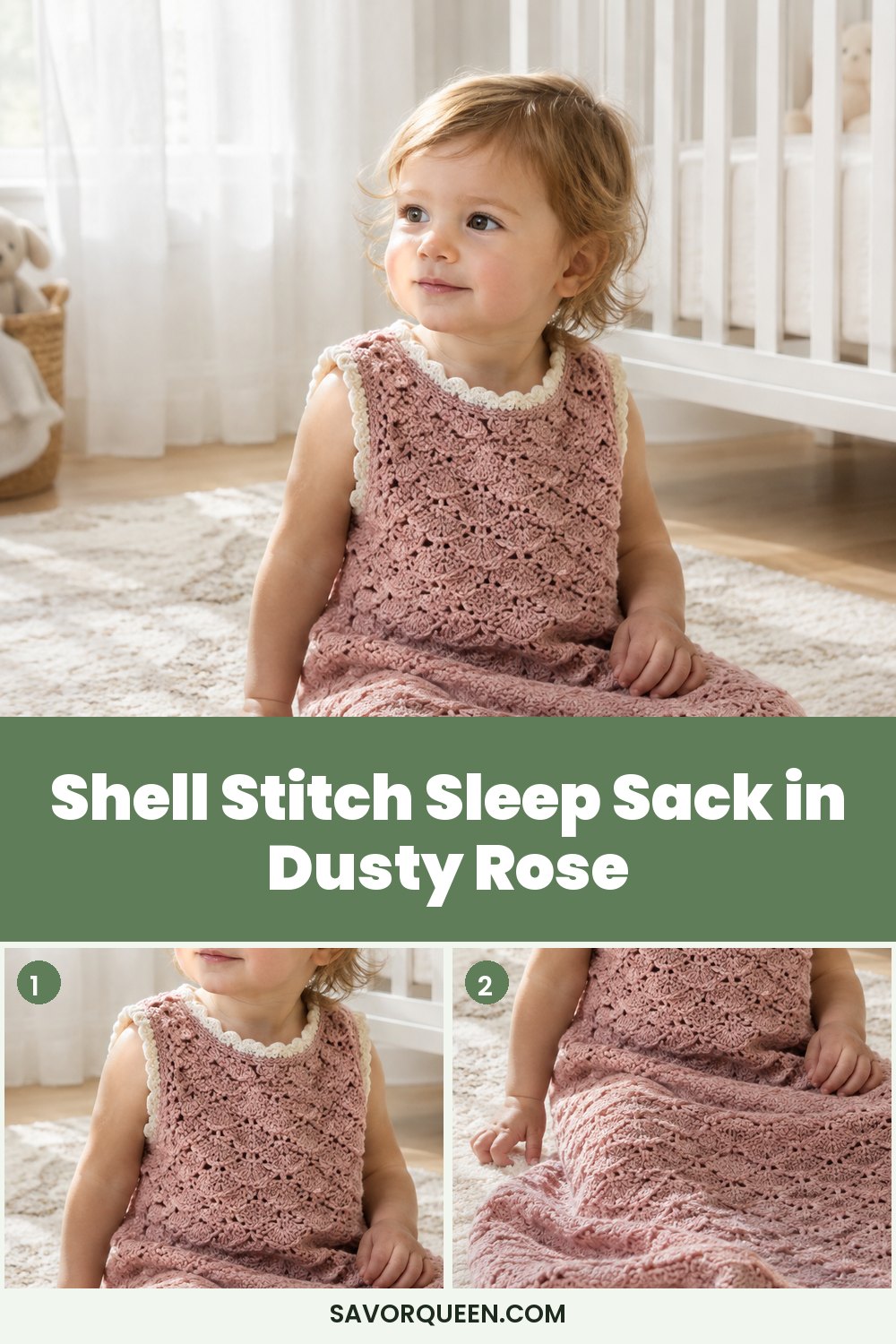
Shell stitch gives this crochet sleep sack a soft scalloped texture that feels classic without looking busy. A fingering or light DK bamboo-cotton blend works well with a 3.75 to 4 mm hook for a light, breathable fabric. Dusty rose, blush, and a tiny stripe of ivory create a gentle color story that suits a baby girl nursery or a shared family room. Keep the silhouette simple so the shell texture stays the main detail, with a smooth neckline and easy side closure.
Quick notes: yarn light DK bamboo-cotton, hook 4 mm, skill level easy.
Wear it over a simple cotton sleeper for evening routines, family photos, or a quiet nap in a cool room. This is a good choice when you want a delicate look without heavy embellishment. Practical tip: keep the shell rows even and count carefully at the side seam so the scallops match on both panels.
4. Textured Bobble Sleep Sack in Buttercream
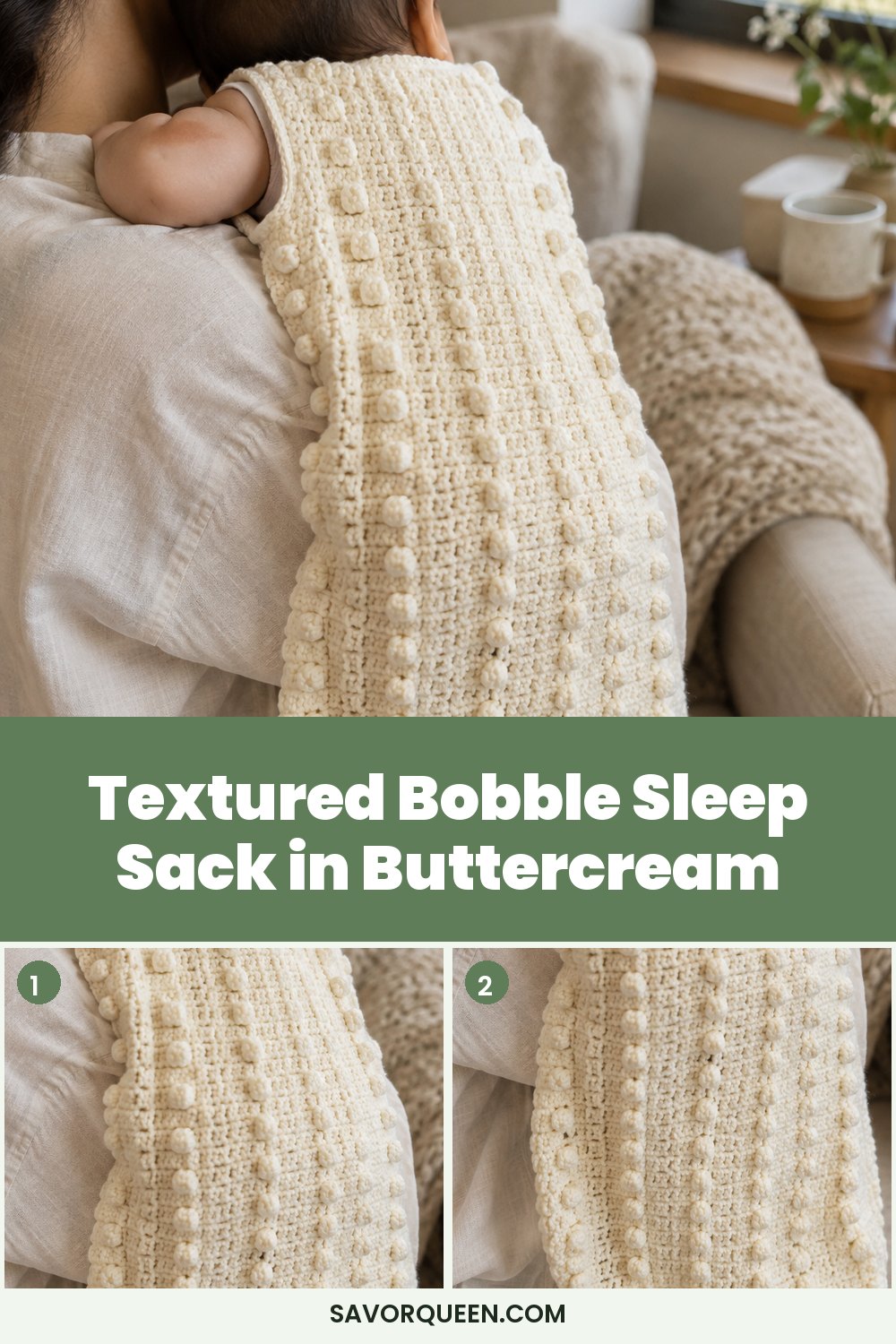
This crochet sleep sack uses small, low-profile bobbles placed in tidy vertical lines to create texture without bulk. A washable acrylic-cotton blend in worsted weight works well with a 5 mm hook, giving warmth, durability, and easy care. Buttercream, soft gold, and a small stripe of cream keep the tone bright but not loud. The body should stay smooth and loose, with the bobbles kept away from the neckline and arm openings for a cleaner finish and a more comfortable feel.
Quick notes: yarn worsted cotton-acrylic blend, hook 5 mm, skill level intermediate.
Style it with neutral footie pajamas and a light nursery blanket for daytime lounging and bedtime routines. This design suits colder months or air-conditioned rooms. Practical tip: choose small bobbles instead of large clusters so the surface stays soft under a blanket and easier to wash.
5. Linen-Stitch Sleep Sack in Pale Blue
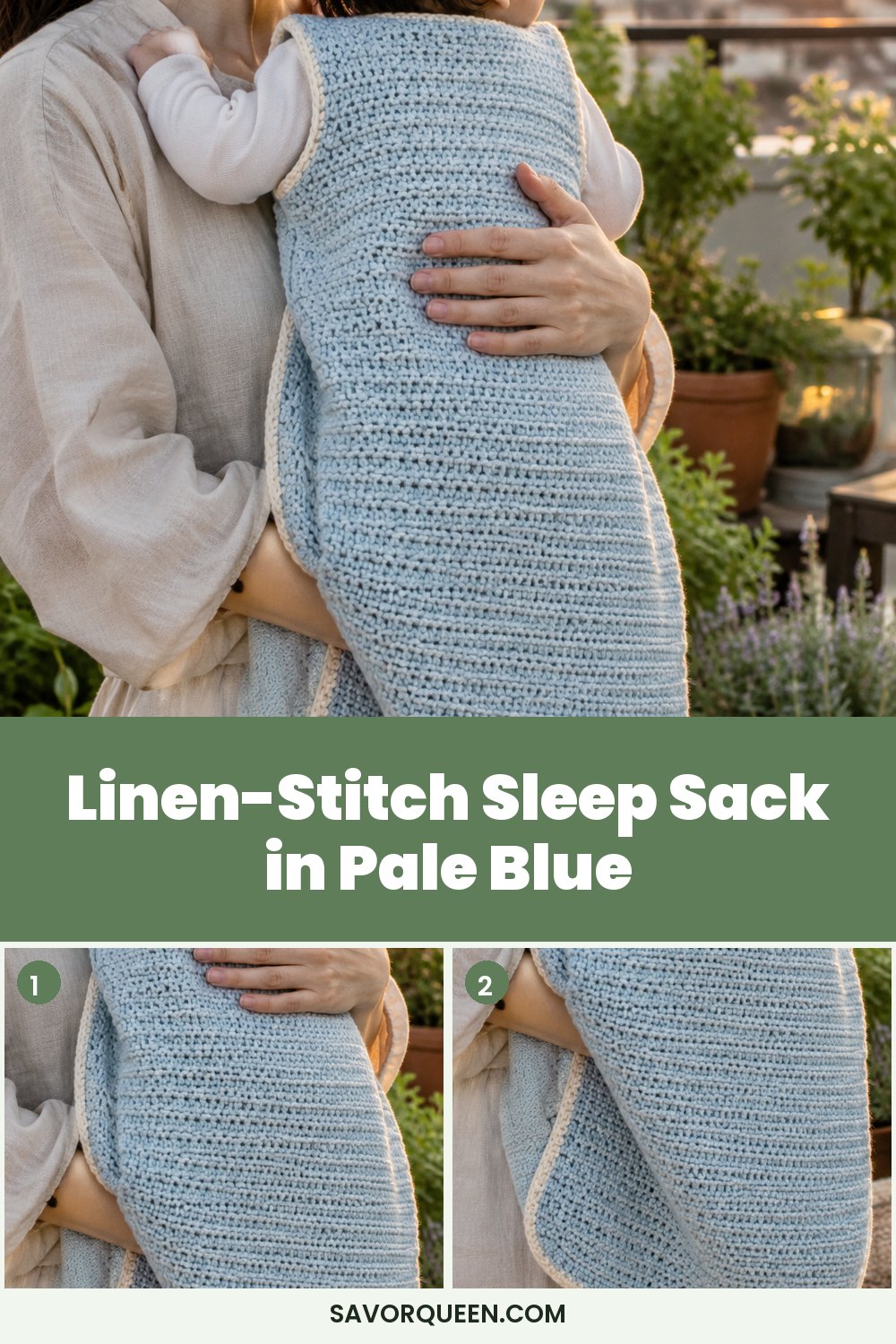
The linen stitch gives this crochet sleep sack a woven look with very little bulk, making it a strong choice for mild weather. Use a cotton-linen blend or soft DK cotton with a 4 mm hook for a breathable, gently structured fabric. Pale blue, mist, and a narrow cream edge create a calm color story that feels clean in a nursery. The stitch lays flat, which helps the sack sit neatly over pajamas and keeps the surface smooth for sleep.
Quick notes: yarn DK cotton-linen blend, hook 4 mm, skill level beginner.
Pair it with a white ribbed sleeper or a pale gray bodysuit for a simple, fresh bedtime outfit. This design works well for spring and early summer naps. Practical tip: if you use linen in the blend, wash and dry the swatch first so you know how much the fabric softens and relaxes after blocking.
6. Moss Stitch Sleep Sack in Soft Lavender
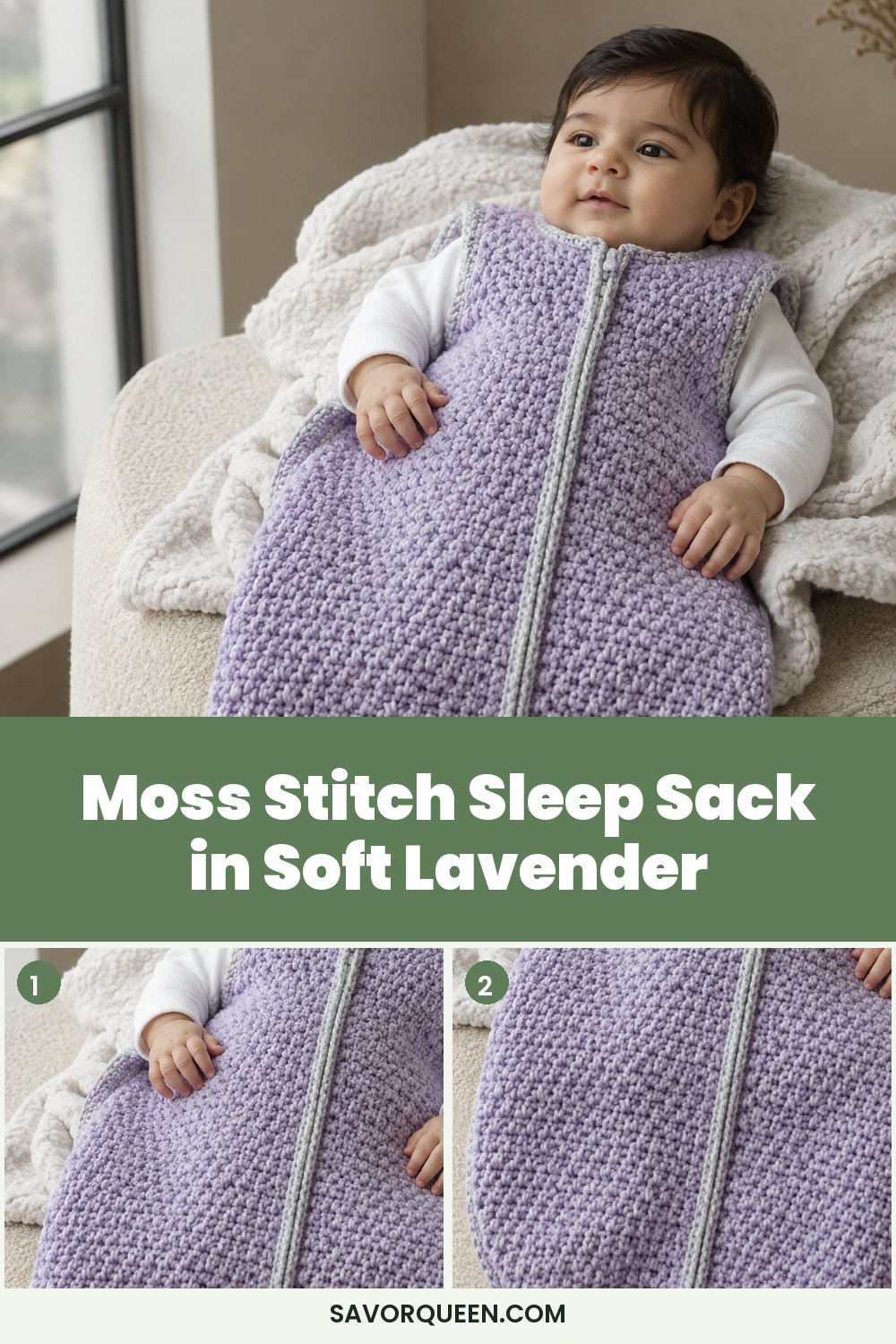
Moss stitch creates a tiny, even texture that reads calm from a distance and interesting up close. A soft acrylic-wool blend in light DK weight works well with a 4 mm hook for a cozy yet washable fabric. Soft lavender, lilac haze, and a little pearl gray give this sleep sack a quiet, cool-toned palette. The shape should remain simple, with no extra trim at the face, so the stitch texture stays the main visual detail.
Quick notes: yarn light DK acrylic-wool blend, hook 4 mm, skill level beginner.
This design suits cooler nights, stroller naps, and quiet evenings at home over a cotton sleeper. It works nicely for a 0 to 6 month range when kept roomy through the hips and legs. Practical tip: steam lightly or block gently to even out the moss stitch and help the edges lie straight before seaming.
7. Chevron Sleep Sack in Warm Sand
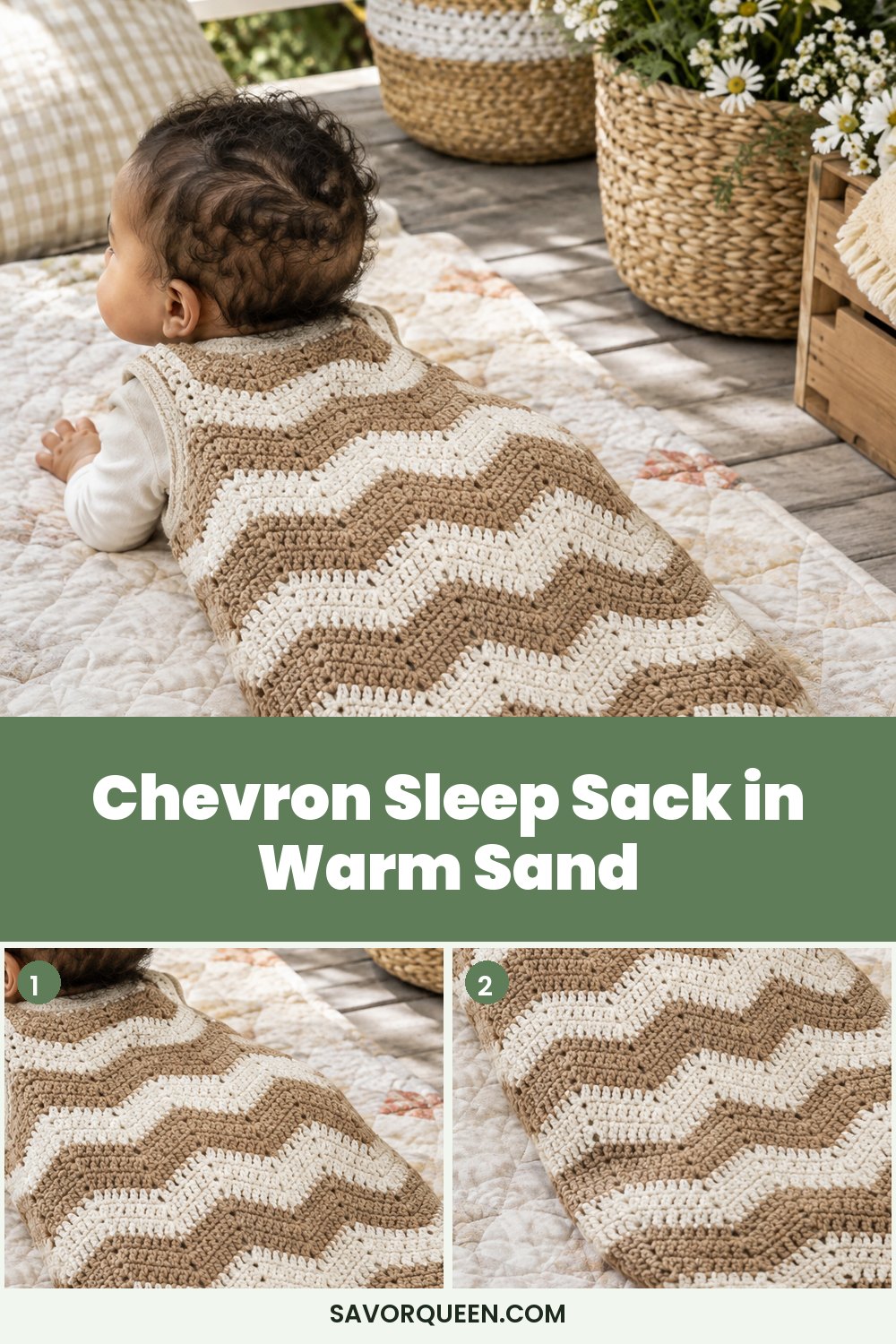
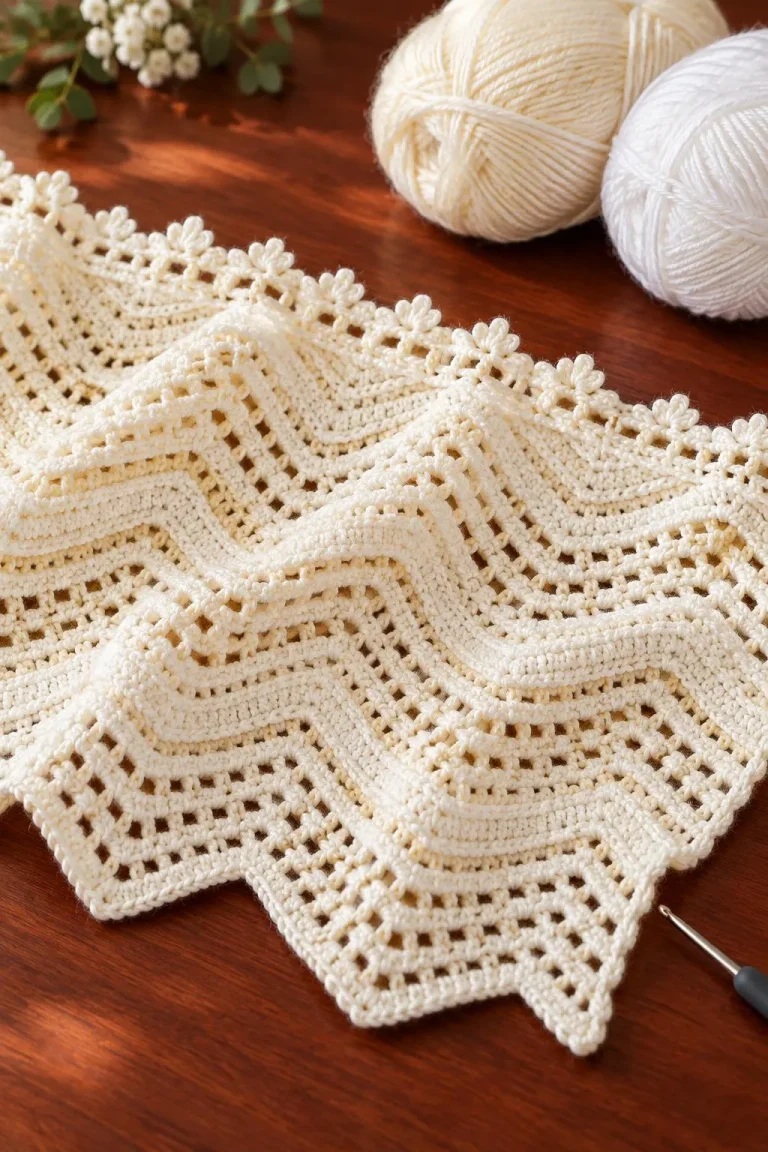
A gentle chevron pattern adds movement without making the sleep sack busy. Use worsted cotton or a cotton-acrylic blend with a 5 mm hook to create a sturdy fabric that still feels soft against baby skin. Warm sand, ivory, and camel stripes keep the look grounded and easy to coordinate with neutral sleepers. Keep the chevrons low and even so the fabric stays smooth across the torso and legs, with a simple neckline and no raised trim near the face.
Quick notes: yarn worsted cotton-acrylic blend, hook 5 mm, skill level intermediate.
Wear it with cream pajamas and a muslin swaddle for a neutral bedtime set. This design works well for gift sets because the stripe pattern photographs clearly. Practical tip: match your stripe changes at the side seam so the chevron peaks line up cleanly when the sack is laid flat.
8. Garter Stitch Sleep Sack in Cream and Olive
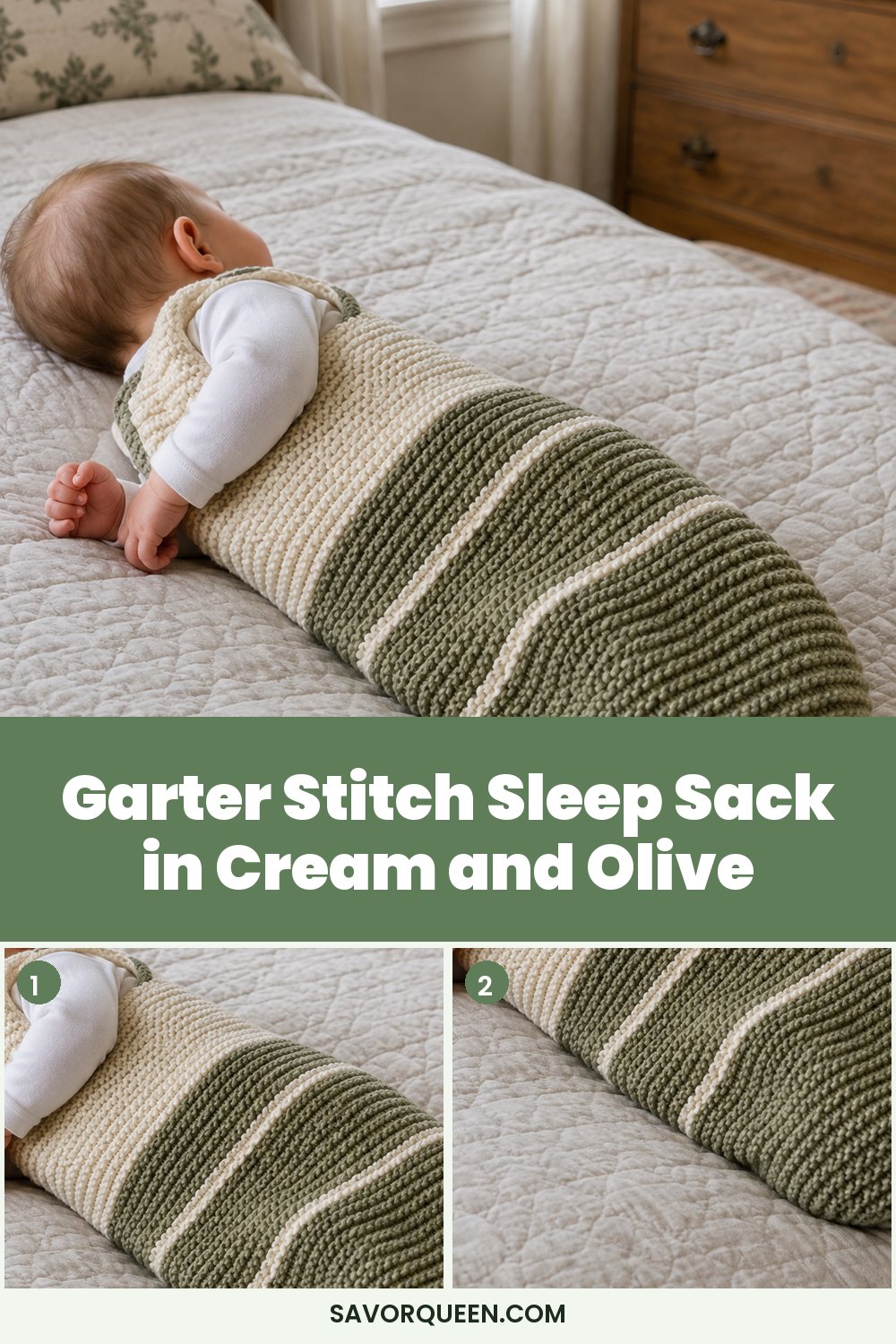
Garter stitch gives this crochet sleep sack a soft ridged surface that feels classic and sturdy. Use a sport or light DK wool-cotton blend with a 4 mm hook for a fabric that is warm but still breathable. Cream and olive are a quiet pairing that works well in a natural nursery or for a baby wardrobe built around muted colors. The simple stitch keeps the sack smooth and low-profile, which is useful for layering over sleepwear without extra bulk.
Quick notes: yarn sport wool-cotton blend, hook 4 mm, skill level beginner.
Pair it with a ribbed onesie and knit socks for colder evenings or travel days. This style is good for families who want understated texture instead of decorative motifs. Practical tip: keep the sack slightly oversized through the body so the garter ridges do not pull when the baby bends and kicks.
9. Puff Stitch Sleep Sack in Powder Pink
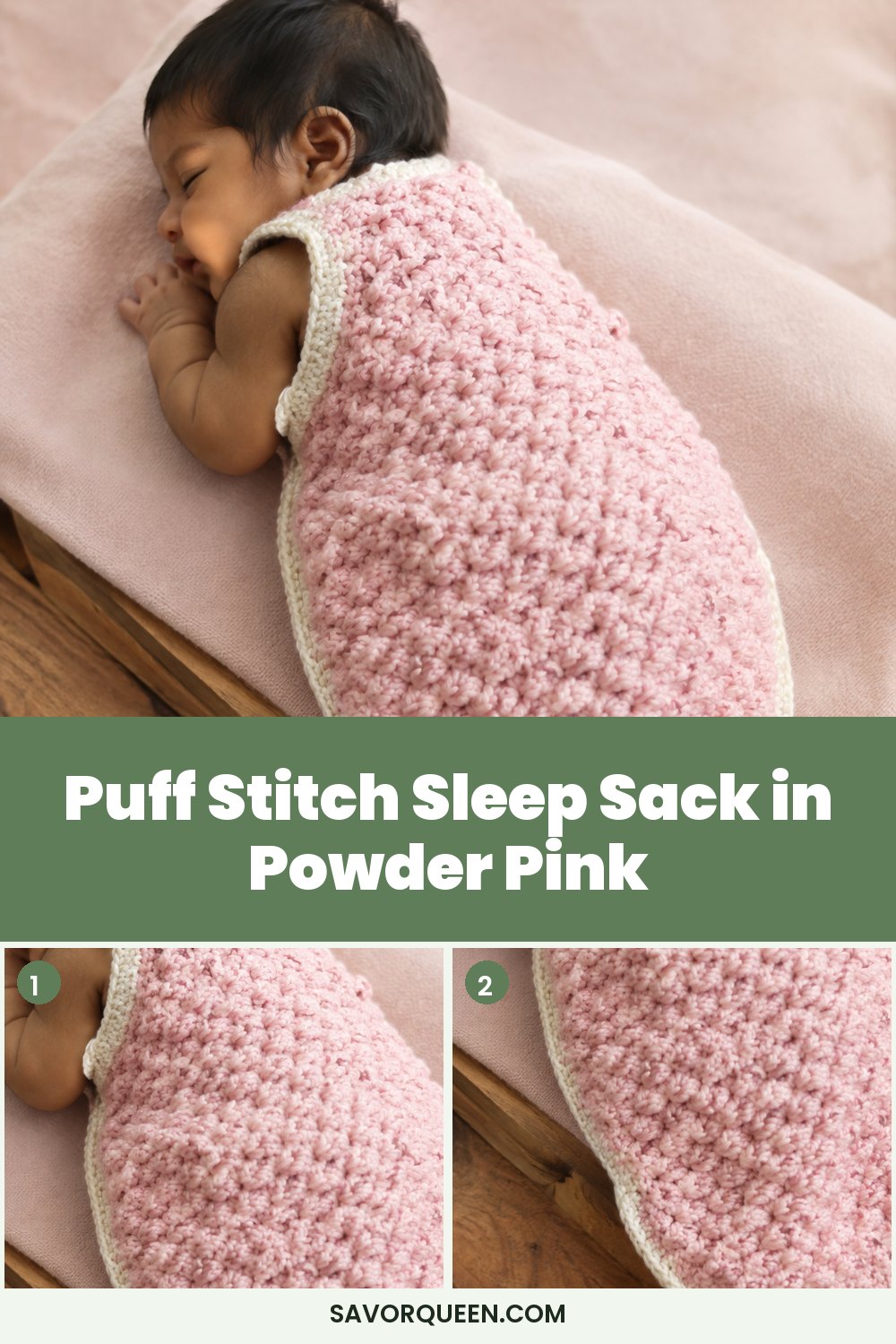
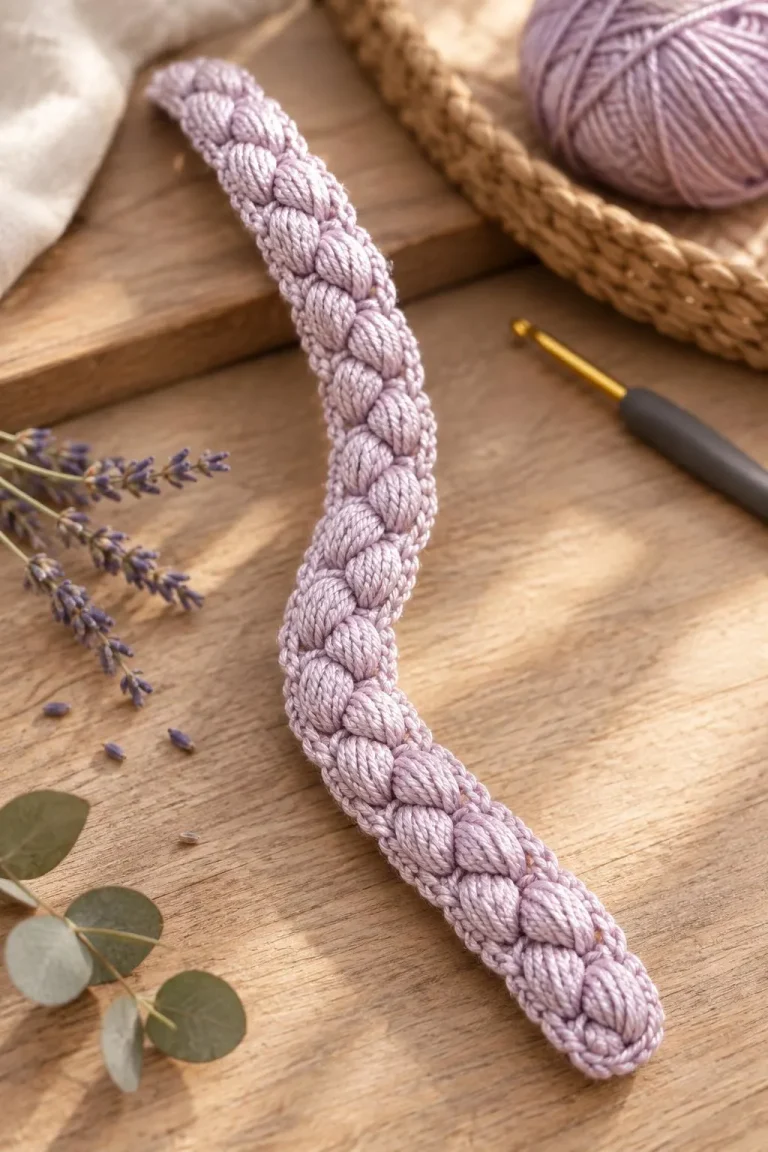
Puff stitch adds a plush look to this crochet sleep sack while still keeping the fabric soft and flexible. A baby-safe cotton-acrylic blend in worsted weight works well with a 5 mm hook, giving structure and easy washing. Powder pink, petal, and ivory make the color story gentle and sweet without becoming too bright. Place the puff rows on the body only, leaving the neckline and arm openings smooth so the sack stays comfortable around the face and shoulders.
Quick notes: yarn worsted cotton-acrylic blend, hook 5 mm, skill level intermediate.
Wear it over a plain white sleeper for a soft bedtime outfit or use it for newborn photos in a quiet nursery. This design suits cooler seasons when you want extra warmth from texture rather than bulk. Practical tip: keep puff rows spaced apart so the fabric remains light and does not feel dense around the middle.
10. Basketweave Sleep Sack in Taupe
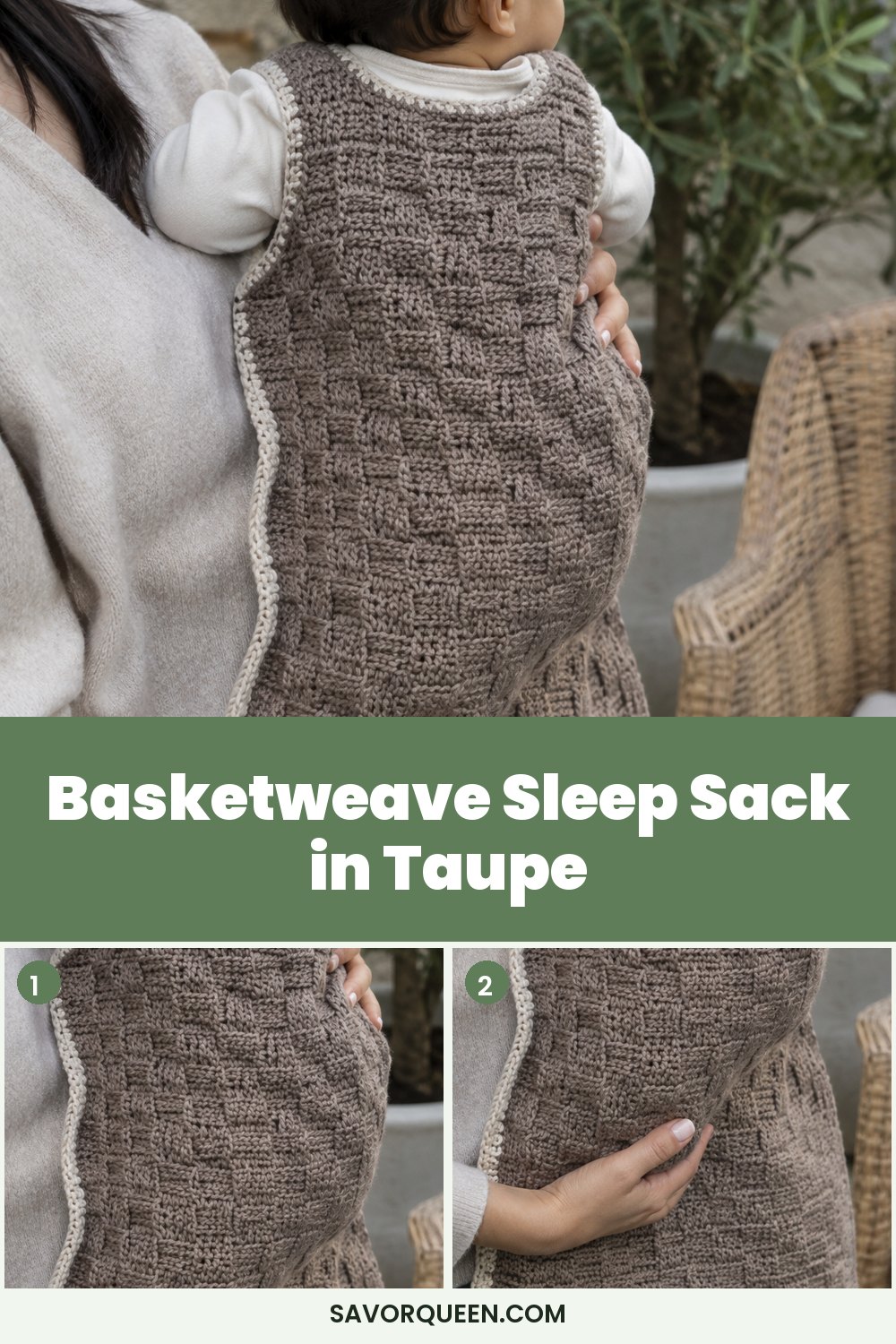
Basketweave stitch brings a woven look to this crochet sleep sack, giving it a classic, cozy surface without making it bulky. A worsted merino-acrylic blend works well with a 5 mm hook for warmth and softness with easier care than pure wool. Taupe, greige, and a thin oatmeal border create a modern neutral palette. Keep the basketweave on the torso and lower body, while the neckline stays simple and smooth for a better fit under pajamas.
Quick notes: yarn worsted merino-acrylic blend, hook 5 mm, skill level advanced.
Style it with a white sleeper and a soft nursery blanket for cold-weather evenings and family visits. This design suits older infants who need a roomier shape through the legs. Practical tip: use stitch markers to keep the basketweave pattern aligned, because the texture can shift if the counts drift on shaping rows.
11. Modern Color-Block Sleep Sack in Ivory and Clay
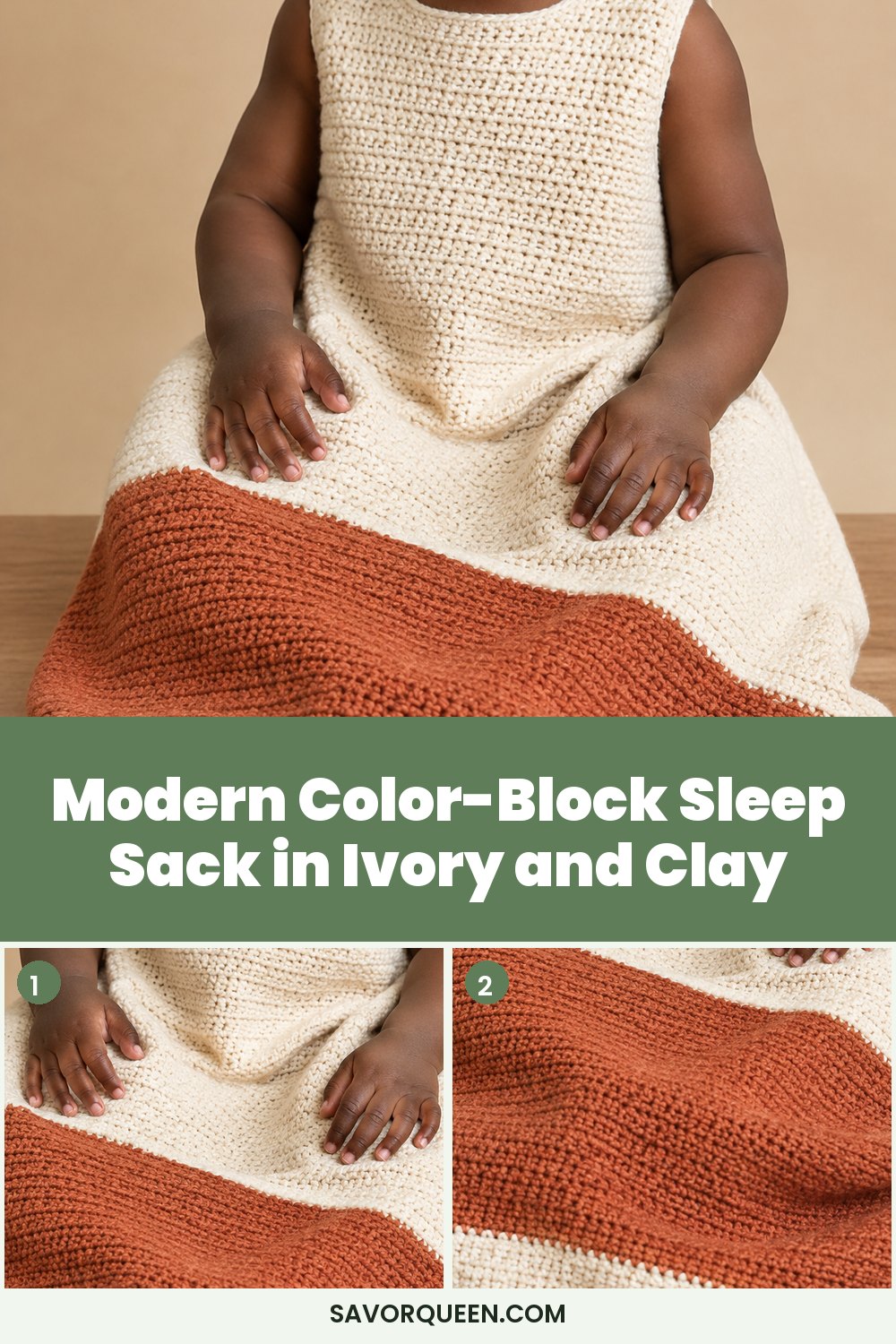
This crochet sleep sack uses simple single crochet panels in color blocks for a clean, modern look. A DK cotton yarn with a 4 mm hook gives a smooth, breathable fabric that works well in warmer rooms. Ivory, clay, and a small strip of muted terracotta create a grounded palette that feels current without being busy. Keep the seams neat and the block changes horizontal or vertical, depending on the shape, so the finish stays tidy and baby-safe.
Quick notes: yarn DK cotton, hook 4 mm, skill level beginner.
Pair it with a ribbed onesie or a plain sleeper when you want a clean day-to-night nursery look. It suits everyday use because the stitch surface is smooth and low bulk. Practical tip: wash the yarn sample before you begin so the color blocks keep their shape and the finished sack stays the right size after laundering.
How to choose, make and care for these
Choose soft, washable yarn
For baby sleep sacks, choose cotton, cotton blends, or soft acrylic-wool blends that handle frequent washing. DK and worsted weights are the easiest to control for fit and drape. Smooth fibers help the fabric sit flat over sleepwear and make care easier for busy nursery routines. Keep anything scratchy, fuzzy, or high-maintenance out of the design if the sack will be worn often.
Keep the neckline simple
A round or gentle V-neck works well because it sits flat and keeps the upper edge smooth. Avoid ties, beads, tassels, and bulky collars near the face. A clean neckline also makes layering easier over pajamas and reduces the chance of a fussy fit around the shoulders.
Leave room for movement
A sleep sack should fit close enough at the top to stay in place, but the body needs ease for kicking and turning. Slightly wider hems and a roomy lower shape help the baby move comfortably. If the yarn stretches after washing, adjust the body length before finishing the side seams.
Match stitch texture to the season
Dense stitches like seed stitch, moss stitch, and basketweave are useful for cooler rooms. Linen stitch and trellis stitch work better for mild weather because they stay lighter. Pick the stitch based on room temperature, then pair the sack with a simple bodysuit or sleeper underneath.
Wash and block before use
Wash the finished piece the same way you plan to wash baby clothes, then shape it flat to dry. Blocking helps seams settle and evens out textured stitches. If the yarn grows or shrinks after washing, that final step lets you catch the size change before the sleep sack is put into regular use.
Frequently asked questions
Are crochet sleep sacks safe for baby sleep?
Crochet sleep sacks can be a good sleepwear choice when the design stays simple, smooth, and roomy. Use soft washable yarn, keep the neckline flat, and avoid loose trim, ties, or beads. The safest version is one that layers over fitted sleepwear and fits without extra bulk near the face.
What yarn works best for crochet sleep sacks?
Cotton, cotton blends, and soft acrylic-wool blends are the most practical choices for crochet sleep sacks. DK and worsted weights give enough structure without making the sack too heavy. For warmer rooms, choose breathable cotton; for cooler rooms, use a soft blend with easy care.
How much ease should crochet sleep sacks have?
A sleep sack should have enough ease for kicking, rolling, and settling without feeling tight through the torso or hips. The neckline should stay close and smooth, while the lower body can be roomier. If in doubt, size by chest and length, then adjust after a wash test swatch.
Can crochet sleep sacks be used for newborns?
Yes, crochet sleep sacks can be made for newborns if the yarn is soft, washable, and free of small decorative parts. Keep the design simple and the fit snug at the top but roomy below. For very small babies, avoid heavy texture around the shoulders and face area.
How do you care for crochet sleep sacks?
Wash according to the yarn label, then dry flat so the shape stays even. Use a gentle cycle or hand wash for delicate fibers and reshape the sack while damp. Checking the fit after washing helps keep crochet sleep sacks practical for repeated nursery use.
More crochet ideas to save
These crochet sleep sacks show how texture, fiber, and simple shaping can support a calm baby sleep wardrobe. Keep the yarn soft, the stitches controlled, and the finish easy to wash. For more baby outfit ideas, related reads like 10 Sweet Crochet Baby Romper Styles For Everyday Wear, 16 Boho Crochet Baby Bonnet Looks For Soft Spring Outfits, and 13 Cozy Crochet Baby Bonnet Looks For Vintage Photos fit naturally with these nursery-friendly designs.
Browse every design in the crochet patterns section, and learn the basics in how to crochet.