Crochet baby onesies can look simple, current, and softly tailored when the shape stays clean and the yarn choice is practical. This list is for new parents and makers who want baby clothes that fit a minimalist nursery: low-contrast colors, breathable fiber, and stitches that show texture without feeling fussy. Each idea focuses on a onesie silhouette, how it sits on the body, and how to wear it with the rest of a small baby wardrobe.
Use this roundup as a style guide before choosing yarn and stitch patterns. Look for washable fibers, soft seams, easy closures, and a relaxed fit that leaves room for diapers. Neutral tones work well in a modern nursery, but muted sage, clay, oatmeal, and slate can still feel calm. For every item, pay attention to fiber content, hook size, and one care or sizing tip so the finished piece stays practical.
In this post
Modern Crochet Baby Onesie Looks For Minimalist Nurseries
1. Ribbed Oatmeal Crochet Baby Onesie
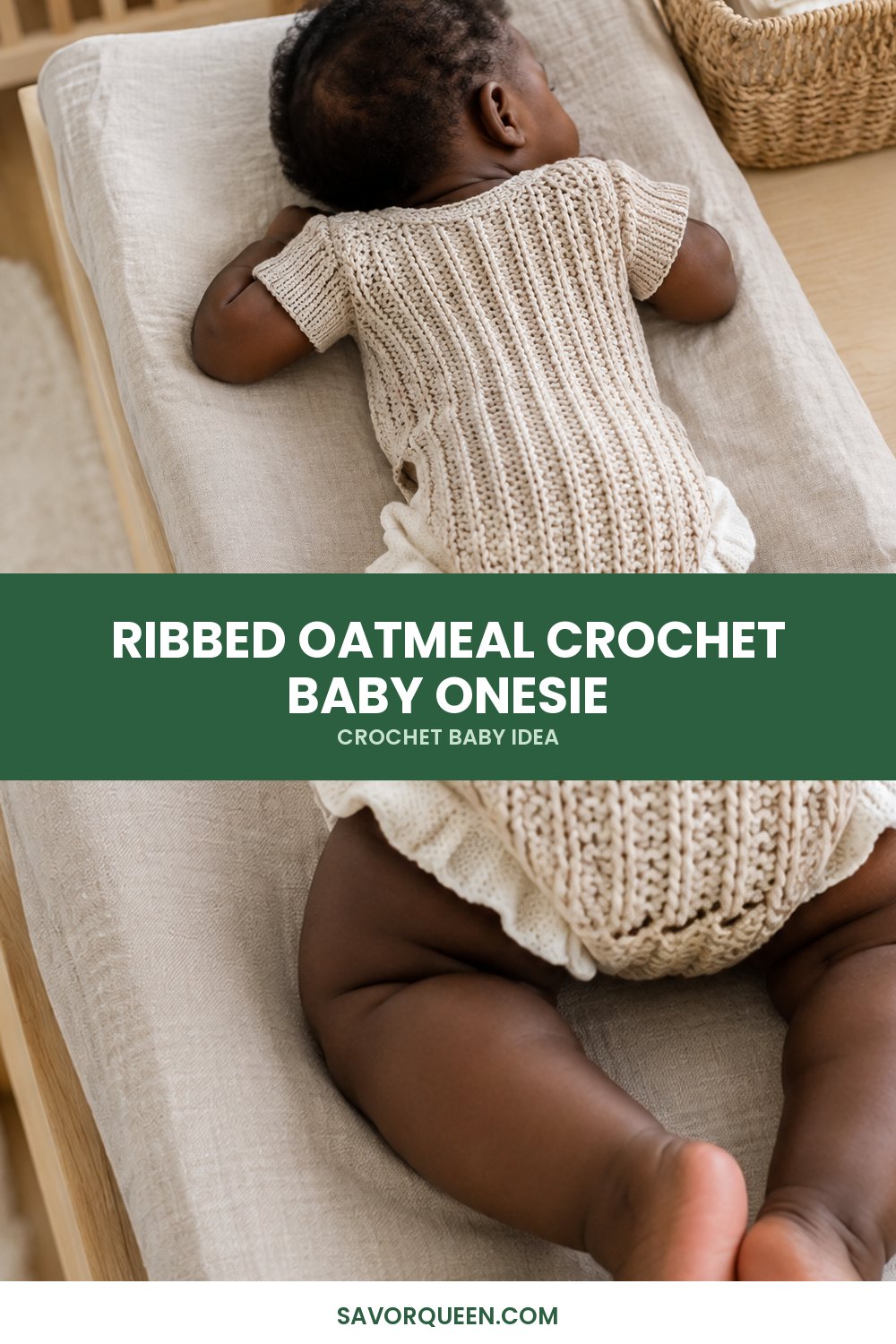
This crochet baby onesie uses narrow front-post and back-post ribbing for a clean, sweater-like surface that still feels soft enough for a newborn. A light worsted cotton and bamboo blend works well with a 4.5 mm hook, giving enough drape for the torso while keeping the ribs defined. The shape is fitted through the shoulders with a little room through the body, in oatmeal and cream tones that sit quietly in a minimalist nursery.
Quick notes: yarn light worsted cotton-bamboo blend, hook 4.5 mm, skill level easy.
Pair it with a knit bonnet, diaper cover, or simple leggings in stone or pale grey for visits, photos, or a quiet day at home. The ribbing looks best when the side seams are neat and flat. Tip: size up slightly if the yarn has very little stretch, since ribbed fabric can feel shorter after blocking.
2. Seed Stitch Sand Crochet Baby Onesie
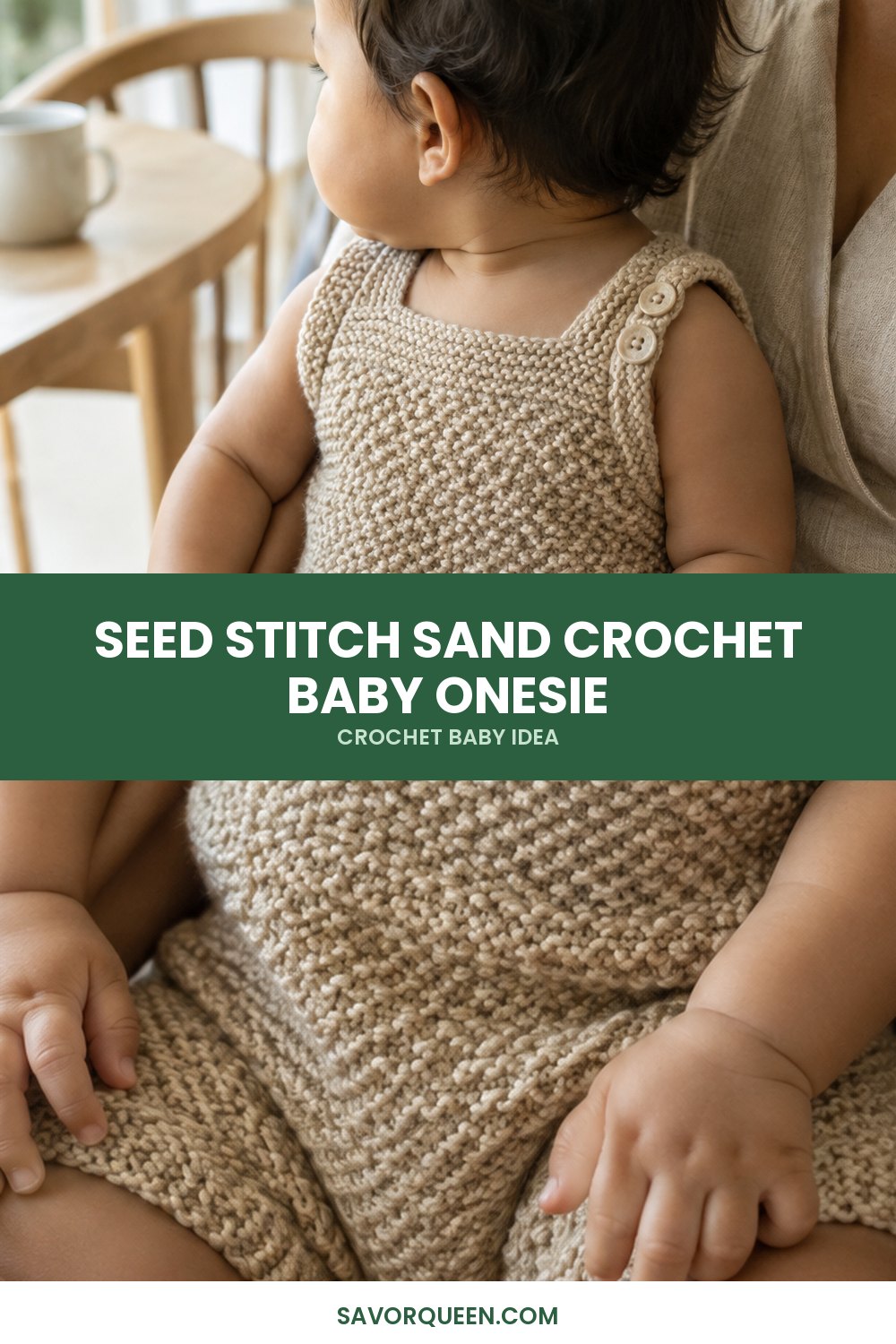
This crochet baby onesie is built with seed stitch for a tiny, pebbled texture that reads refined without looking busy. A DK cotton yarn with a 4 mm hook keeps the fabric light and breathable, which suits warm nurseries and daytime wear. The color story stays close to sand, flax, and pale beige, with a gently squared yoke and short legs for a tidy finish that layers well under a cardigan.
Quick notes: yarn DK cotton, hook 4 mm, skill level easy.
Style it with muslin bloomers or a thin wrap blanket in matching neutrals for daytime errands or a baby shower gift set. The seed stitch can draw in slightly, so gauge matters. Tip: block the piece flat before checking length, then measure the leg openings again so the fit stays comfortable over a diaper.
3. Slate Striped Crochet Baby Onesie
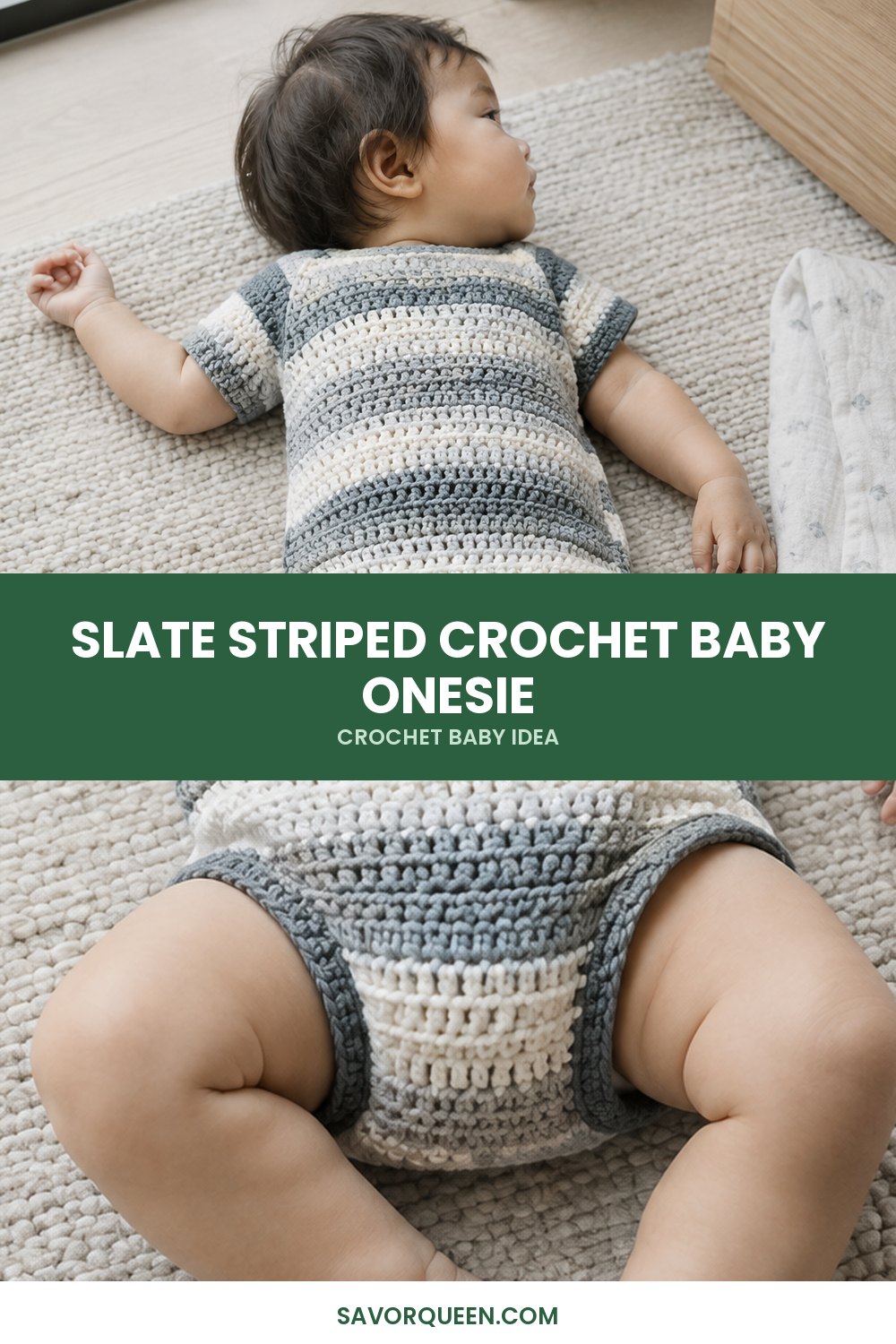
This crochet baby onesie uses single crochet and half double crochet stripes to create a subtle graphic look without bright contrast. A sport weight cotton with a 3.75 mm hook gives a smooth fabric that feels tidy against the skin. Slate, mist, and soft white stripes keep the palette modern, while the straight body and slightly dropped crotch give room for diaper changes and comfortable movement.
Quick notes: yarn sport weight cotton, hook 3.75 mm, skill level intermediate.
Wear it under a brushed cotton romper or with ribbed socks when the weather turns cool. The stripes help you check alignment at the yoke and leg edges, so take time at the joining points. Tip: carry yarn neatly up the side seam or weave ends as you go to keep the inside smooth for sensitive skin.
4. Linen Texture Cream Crochet Baby Onesie
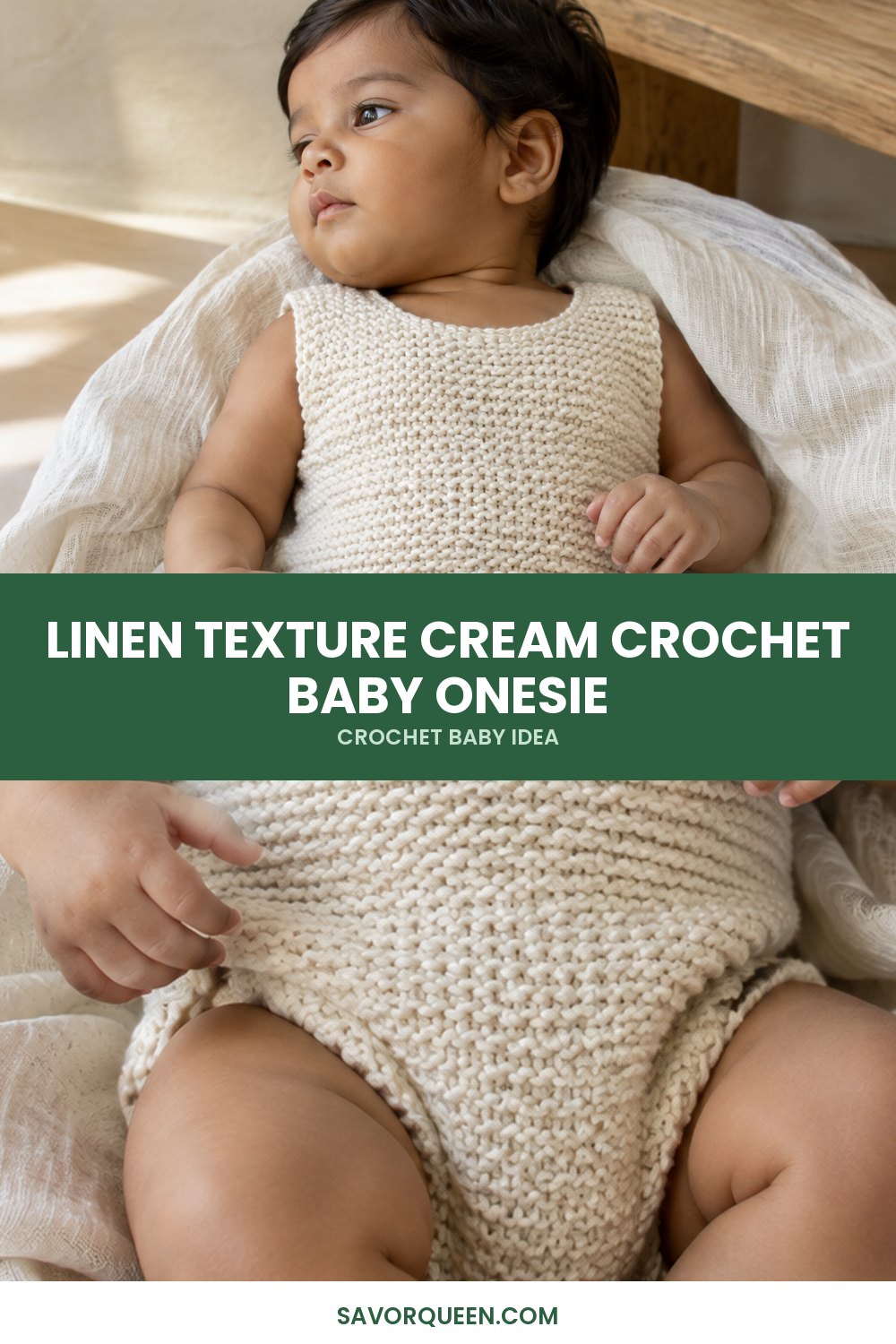
This crochet baby onesie uses linen stitch for a compact, woven look that suits minimalist styling. A fingering or light DK linen-cotton blend with a 3.5 mm hook gives light structure without bulk, which works well for warmer days and layered looks. The cream shade keeps the outfit soft and pared back, while the clean neckline and simple arm openings make the silhouette read polished and practical.
Quick notes: yarn light DK linen-cotton blend, hook 3.5 mm, skill level intermediate.
Pair it with a gauze swaddle, slim knit pants, or bare legs in summer for family photos and daytime outings. Linen stitch can feel firm at first, then relaxes with wear and washing. Tip: wash in a mesh bag on a gentle cycle and reshape while damp so the stitch detail stays even.
5. Moss Green Puff Sleeve Onesie
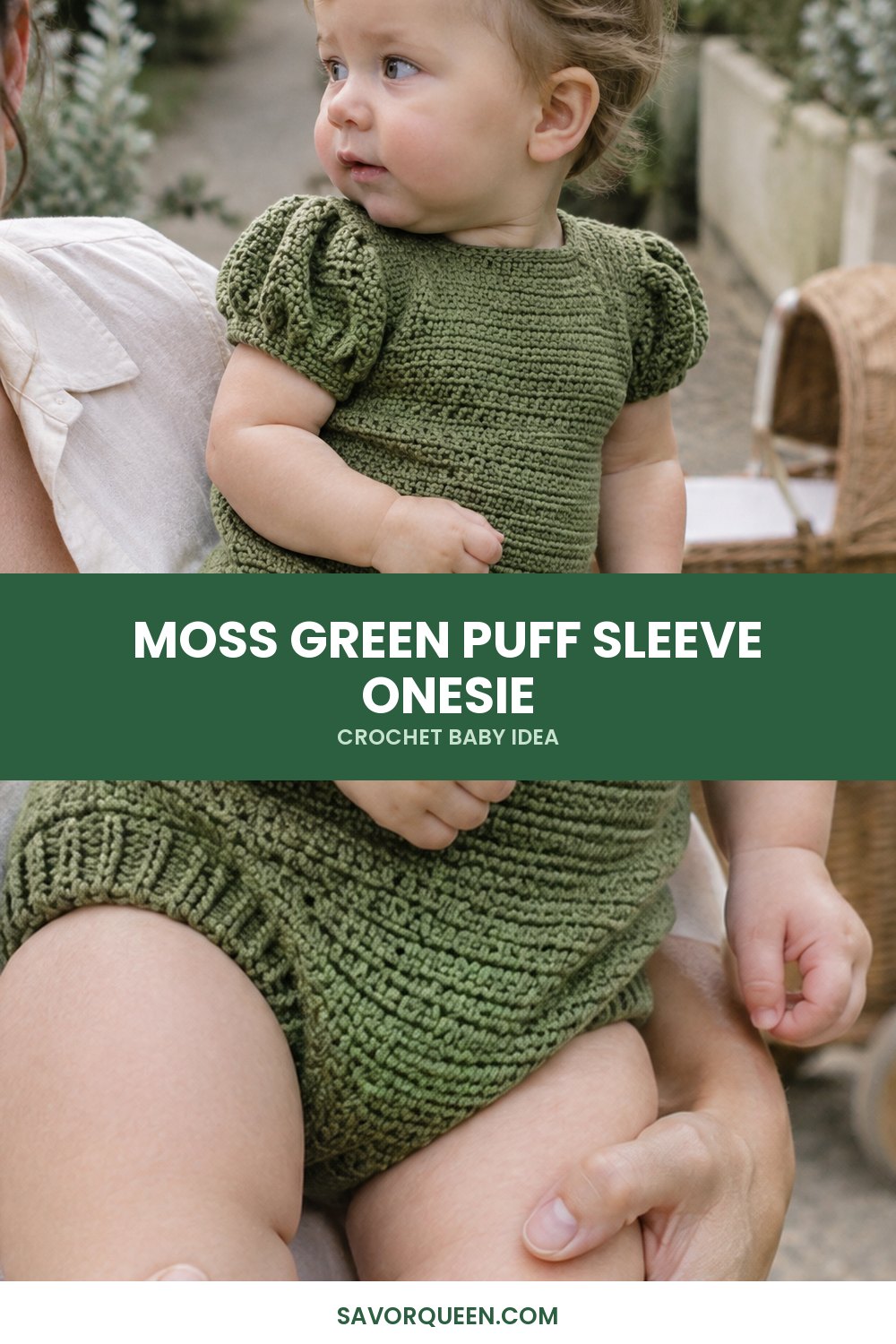
This crochet baby onesie pairs smooth waist shaping with small puff sleeves for a soft, modern profile. A DK cotton yarn on a 4 mm hook gives enough structure for the sleeves while staying breathable across the chest and torso. Moss green works especially well with oatmeal, pine, and natural wood tones, bringing a little depth to a minimalist nursery without breaking the calm palette.
Quick notes: yarn DK cotton, hook 4 mm, skill level easy.
Wear it with ribbed tights or a plain diaper cover for a family brunch or a first holiday photo. Puff sleeves can add volume, so keep the body close-fitting but not tight. Tip: steam blocking helps even out the sleeve caps and makes the puff shape sit more neatly at the shoulder.
6. Stone Blue Raglan Crochet Baby Onesie
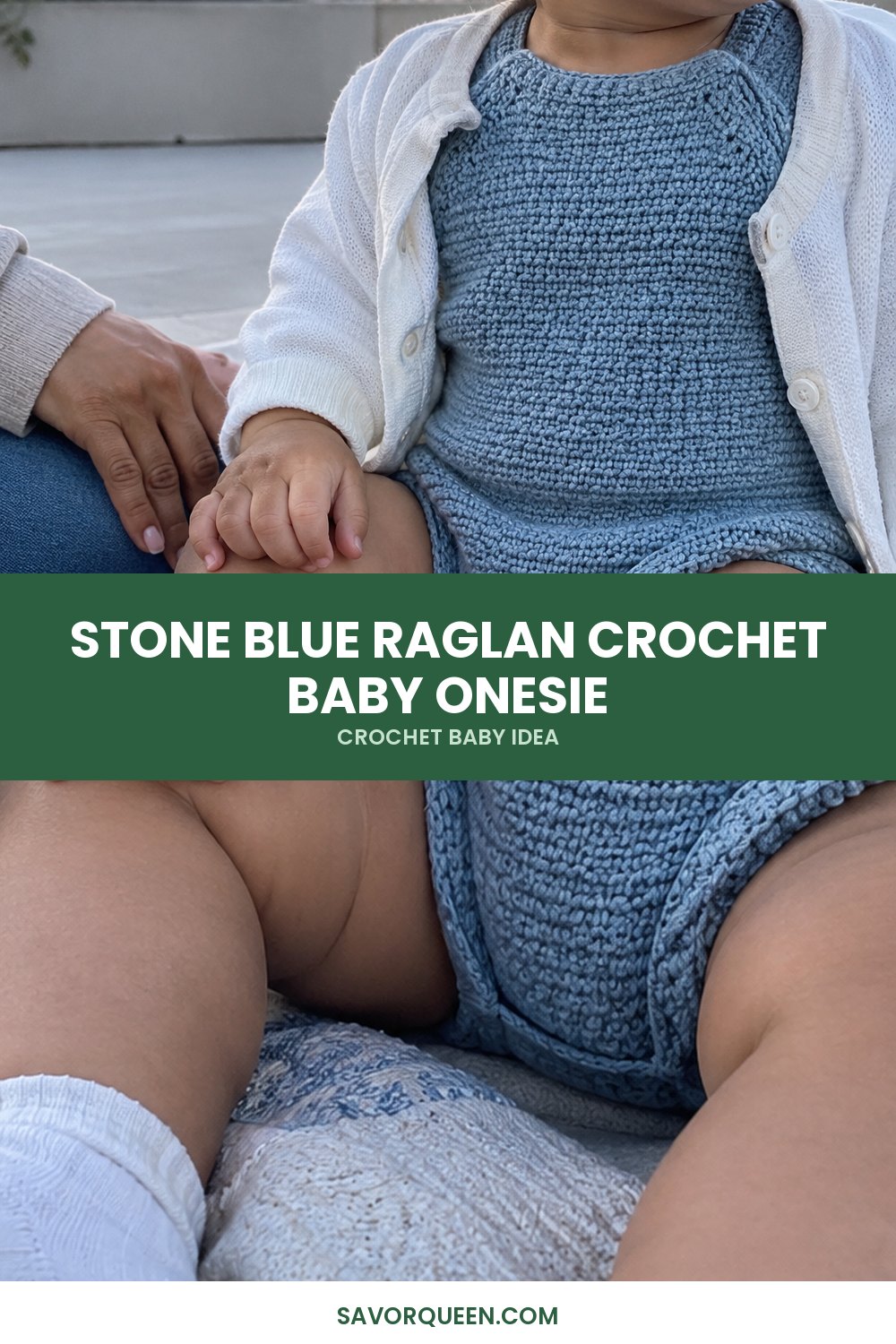
This crochet baby onesie uses raglan shaping for a smooth upper body and easy movement through the shoulders. A soft acrylic-wool blend in DK weight, worked with a 4.5 mm hook, gives warmth without feeling heavy, which suits cooler months and layered outfits. Stone blue reads calm and fresh, especially beside white blankets, pale denim, and natural wood finishes in a minimalist nursery.
Quick notes: yarn DK acrylic-wool blend, hook 4.5 mm, skill level intermediate.
Style it under a zip cardigan or with ribbed socks for stroller walks and visiting grandparents. Raglan seams should sit flat so the neckline does not pull. Tip: check the yoke depth before adding the sleeves, because a slightly deeper yoke gives more room for a diaper and a better overall fit.
7. Biscuit Chevron Crochet Baby Onesie
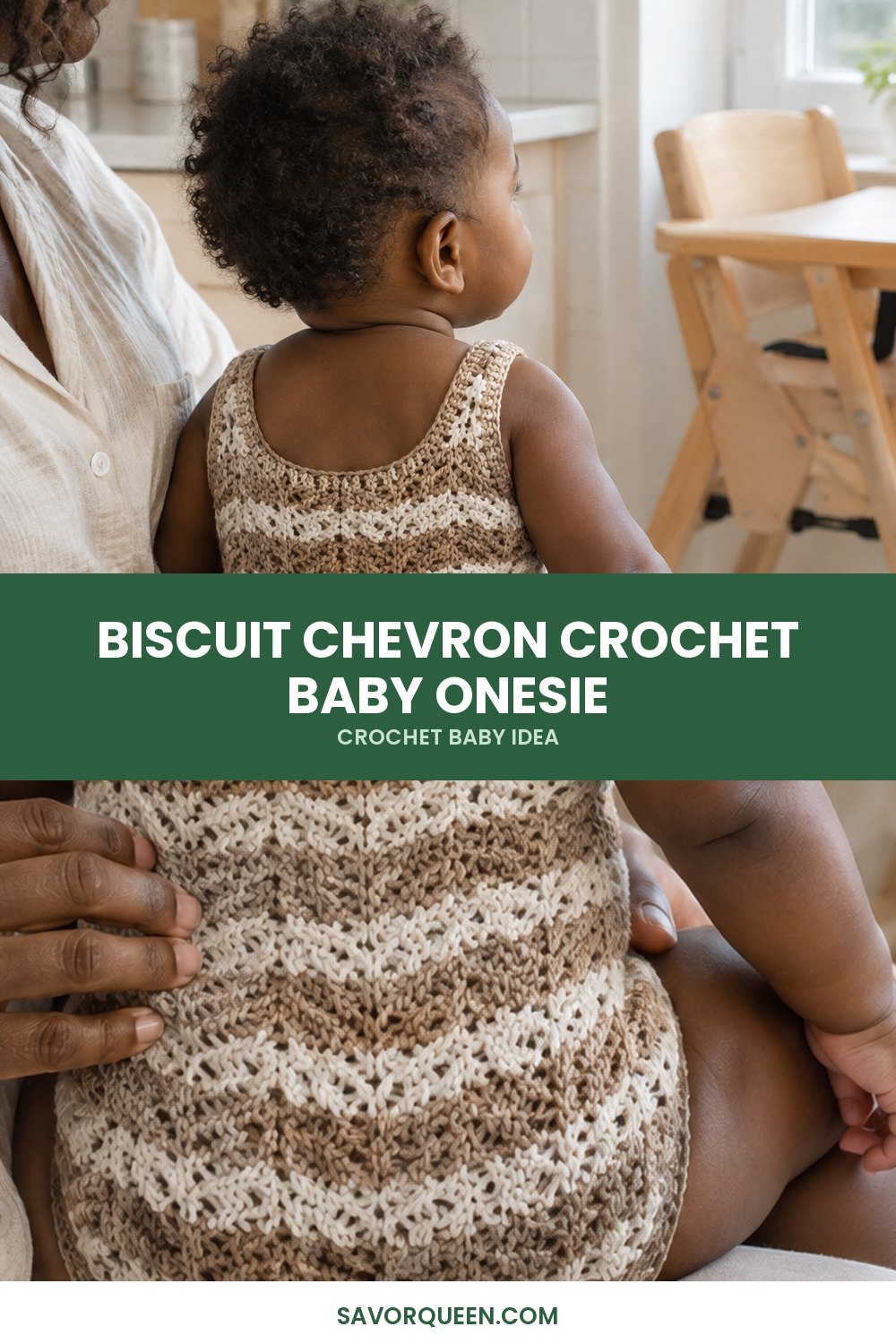
This crochet baby onesie uses a small chevron stitch to add movement while staying understated. A worsted cotton with a 5 mm hook gives a slightly denser fabric that works well for cooler indoor rooms or transitional seasons. Biscuit, cream, and taupe stripes keep the look grounded, and the chevron lines help the body read long and neat without adding extra trim or embellishment.
Quick notes: yarn worsted cotton, hook 5 mm, skill level intermediate.
Pair it with plain knit booties or a soft gauze blanket when heading to a family lunch or a newborn visit. Chevron fabric can stretch if the gauge is loose, so use a firm tension. Tip: measure the length after blocking, since the peaks and valleys may settle more than you expect.
8. Dusty Rose Button Front Onesie
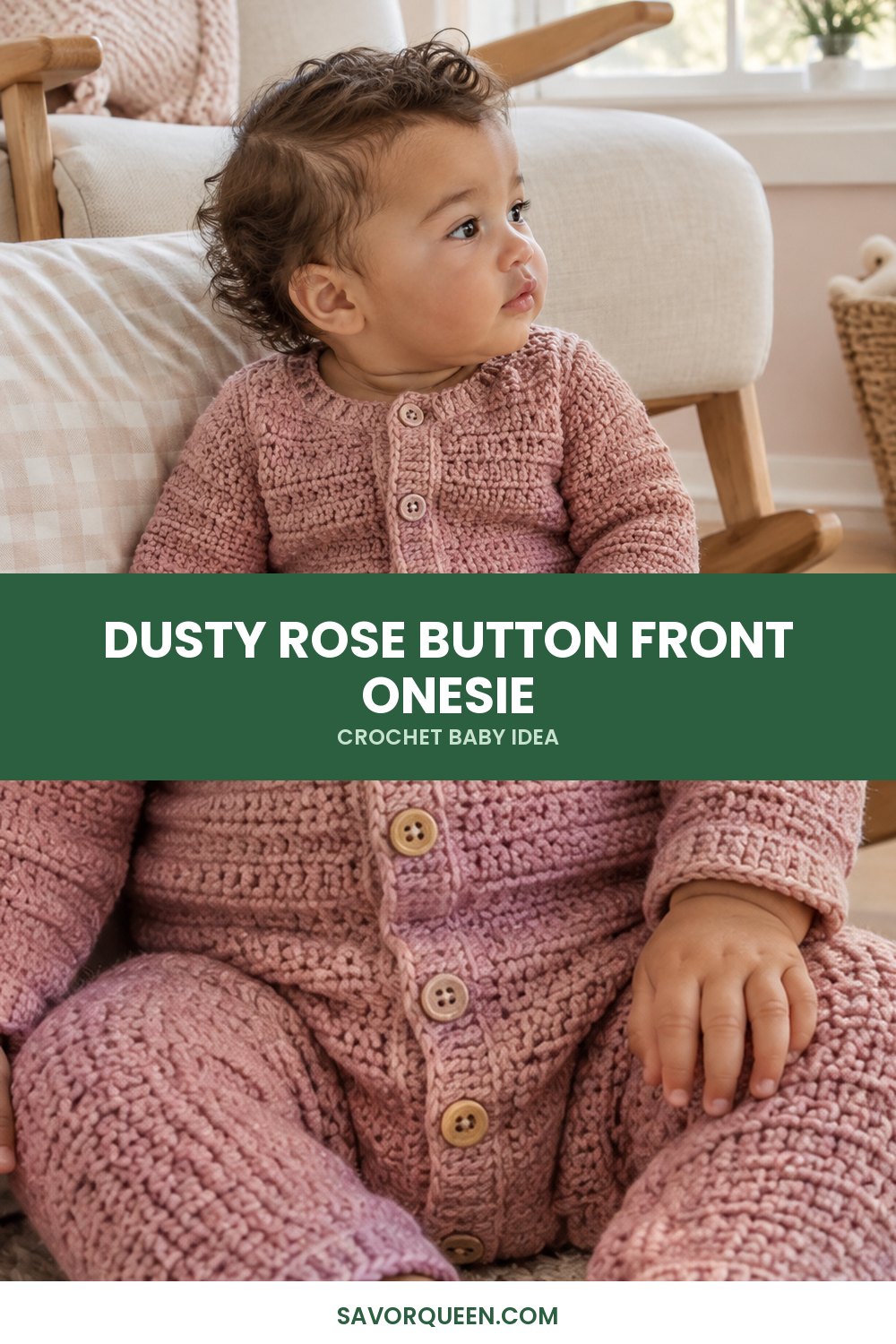
This crochet baby onesie uses half double crochet for a soft, smooth fabric and a neat button-front placket. A lightweight cotton-acrylic blend in DK weight with a 4 mm hook gives easy care and a little resilience through repeated washing. Dusty rose stays gentle rather than sweet, especially when matched with oatmeal, stone, and pale blush accents in a restrained nursery palette.
Quick notes: yarn DK cotton-acrylic blend, hook 4 mm, skill level easy.
Wear it open over a plain vest on warm days or buttoned fully under a blanket layer when it cools down. Keep the buttons flat and secure for baby safety. Tip: choose sewn-on buttons with a backing thread and avoid loose decorative add-ons near the neckline.
9. Natural Cream Textured Crochet Baby Onesie
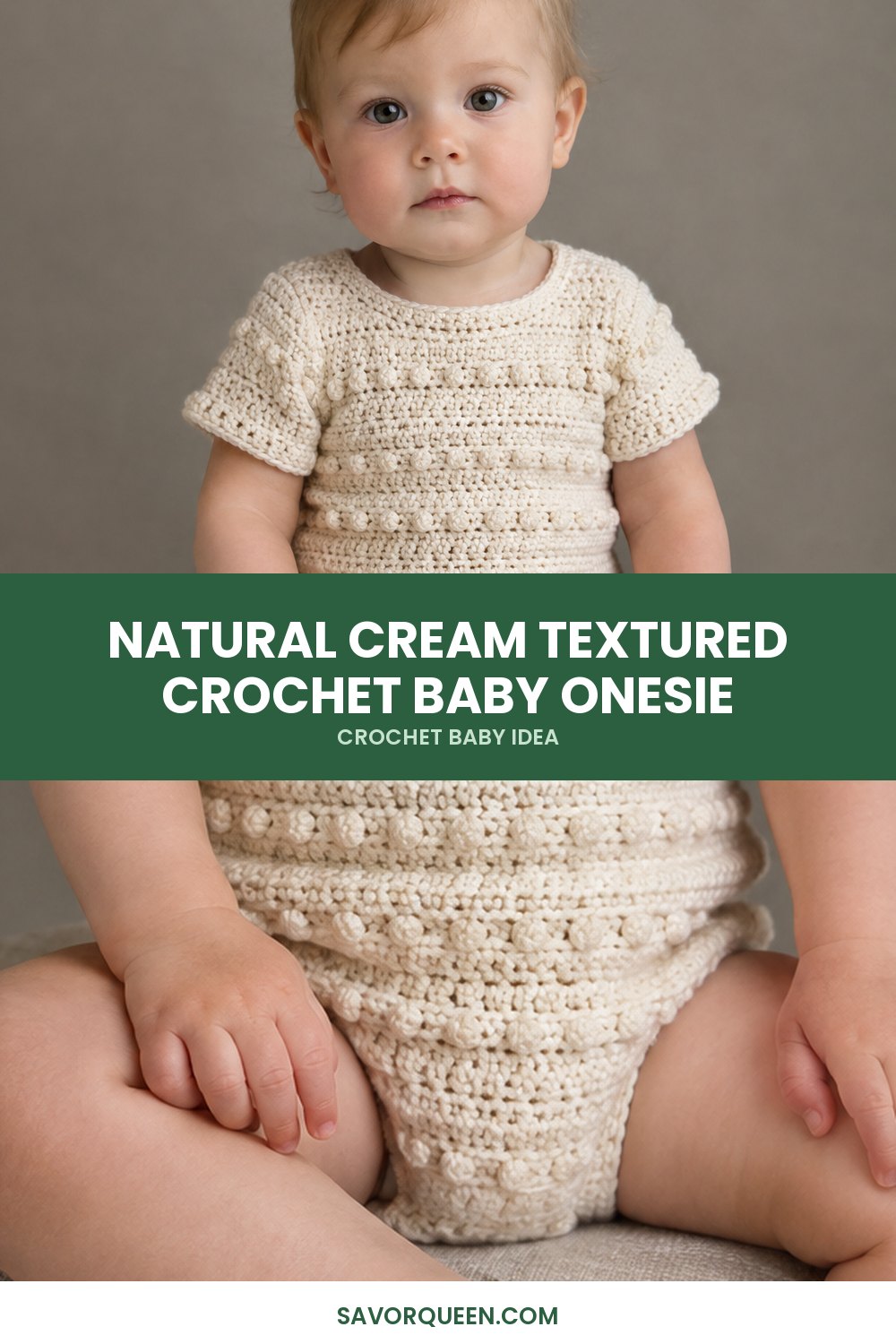
This crochet baby onesie focuses on texture alone, using alternating single crochet and bobble rows in a restrained natural cream shade. A DK cotton yarn with a 4 mm hook keeps the bobbles low and baby-friendly while adding a handmade surface that still feels calm. The shape stays straight through the body with softly rounded armholes, which gives a neat finish under blankets, cardigans, or over a basic diaper cover.
Quick notes: yarn DK cotton, hook 4 mm, skill level intermediate.
This is a good choice for newborn photos or quiet days at home when you want visible stitch detail without strong color contrast. Tip: keep bobbles small and spaced out so the inside of the garment stays smooth against delicate skin.
10. Soft Grey V-Neck Crochet Baby Onesie
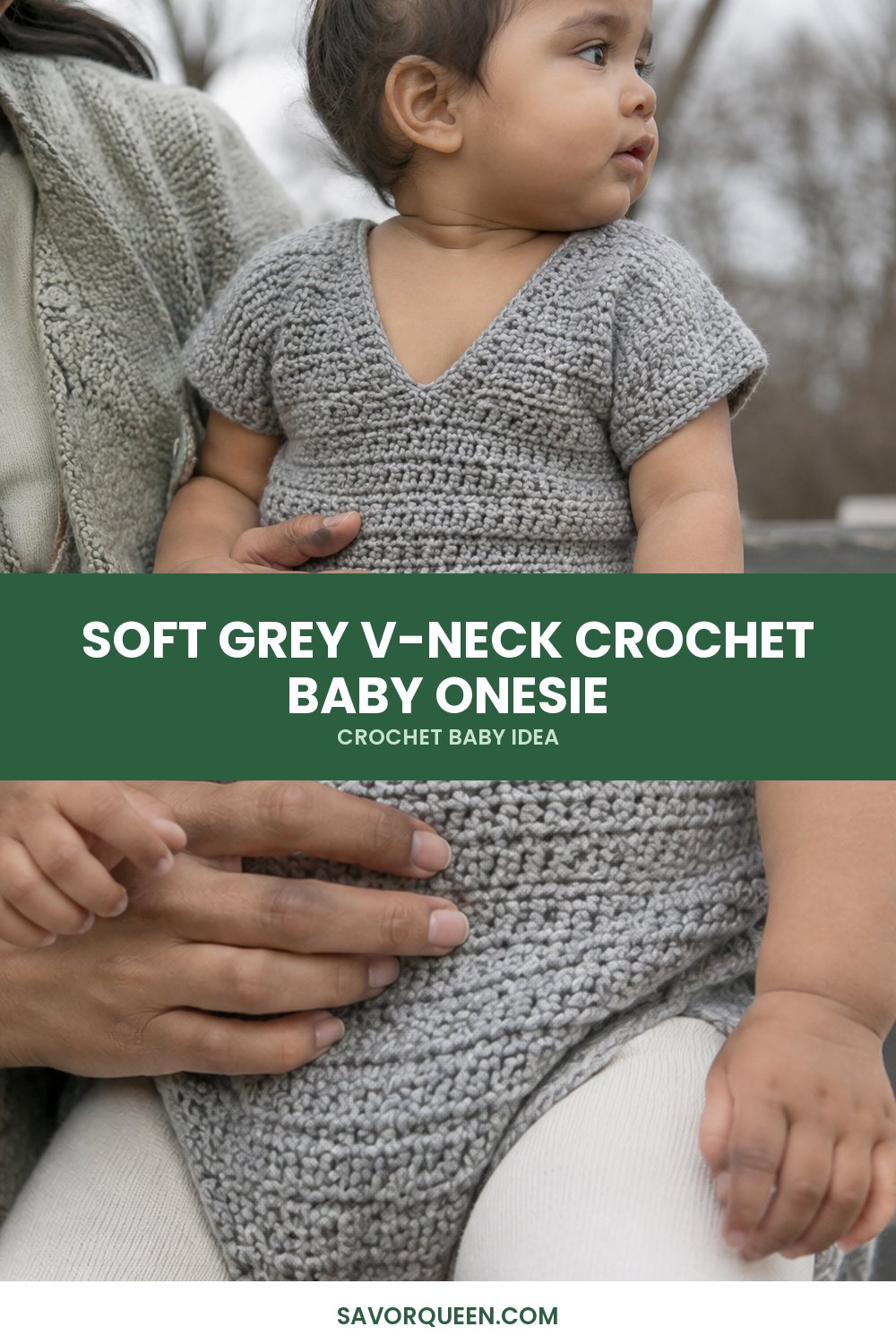
This crochet baby onesie uses a shallow V-neck and smooth double crochet fabric for a neat, slightly tailored look. A fingering-weight cotton blend with a 3.25 mm hook creates a lighter piece that works well for spring or for layering under a sleep sack. Soft grey keeps the design understated, while the clean neckline and narrow sleeves make the silhouette feel polished and easy to wear.
Quick notes: yarn fingering cotton blend, hook 3.25 mm, skill level intermediate.
Pair it with pull-on trousers or a cotton swaddle for daytime naps and family visits. The V-neck should lie flat without gaping. Tip: use a firm neckline edging or a short row of slip stitch around the opening so the front sits neatly after washing.
11. Deep Olive Crochet Baby Onesie with Tabs
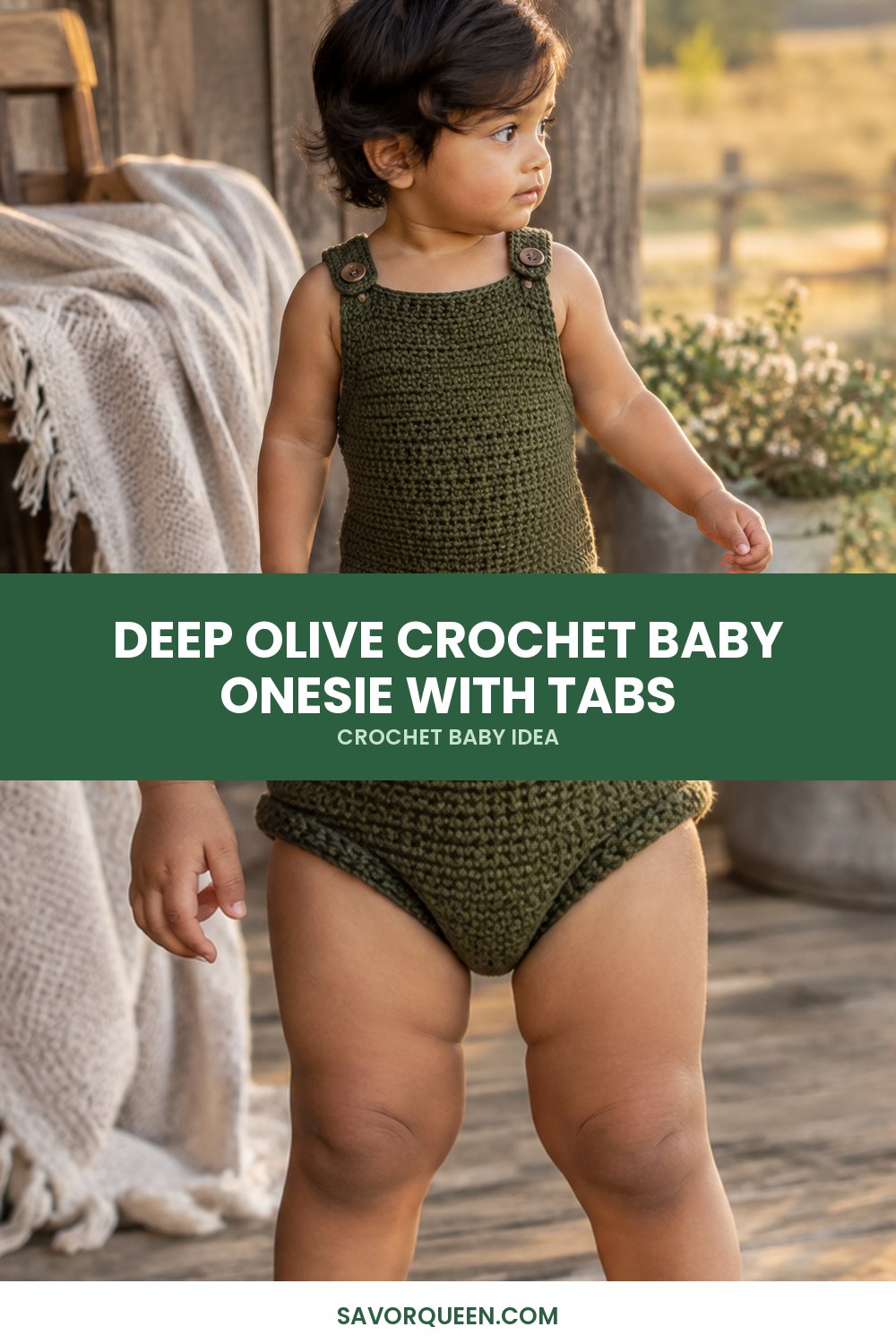
This crochet baby onesie uses simple granny-inspired eyelets only at the edge, with the body worked in solid half double crochet for a smooth fit. A worsted cotton with a 5 mm hook gives a little more warmth and a sturdy hand for active babies. Deep olive pairs well with ivory, caramel, and natural wood, which keeps the look calm and grounded rather than decorative.
Quick notes: yarn worsted cotton, hook 5 mm, skill level easy.
Style it with a cream cardigan and ribbed socks for cooler mornings or a casual family gathering. The tab detail should stay flat and soft, with no long ties near the face or shoulders. Tip: if you use tabs for closure, keep them short, sewn firmly, and away from the neckline for baby safety.
How to choose, make and care for these
Choose washable fibers first
For crochet baby onesies, soft cotton, cotton-bamboo, and cotton-acrylic blends are the safest starting points for daily wear. They hold shape better than many fuzzy yarns and handle frequent washing, spit-up, and quick changes. For cooler seasons, a small amount of wool can add warmth, but keep the yarn smooth and gentle. Always check the care label so the finished piece matches the realities of baby laundry.
Keep closures simple and safe
Minimalist baby style works best when closures stay hidden or very small. Snaps, flat buttons, and short shoulder plackets are easier to use than long ties. Avoid beads, loose tassels, and anything that could press near the face during naps. If the design uses ties or tabs, keep them short and sewn securely. The goal is a clean look that still changes quickly.
Fit for diapers, not just the body
A baby onesie needs room through the crotch and seat, not only across the chest. Add a little ease so the garment does not pull when baby moves or sits. Slightly deeper armholes and a longer torso help the piece stay comfortable over a diaper. If the fabric is dense, consider sizing up one stage for a better drape and easier dressing.
Let texture do the styling
In a minimalist nursery, stitch texture can replace extra color or trim. Ribbing, seed stitch, linen stitch, and gentle bobbles create interest without making the piece feel busy. Keep the palette close to oatmeal, grey, clay, moss, and cream if you want a calm shelf or closet. Blocking helps the texture read clearly and makes the edges sit straighter in photos and daily wear.
Frequently asked questions
Are crochet baby onesies practical for everyday wear?
Yes, when they are made in soft washable yarn with a simple shape and secure closures. Cotton and cotton blends are useful for warmer homes and frequent washing, while a small amount of wool can help in colder weather. Keep the fit roomy enough for diapers and movement.
What yarn works best for crochet baby onesies in a minimalist nursery?
Smooth cotton, cotton-bamboo, or cotton-acrylic blends work well because they stay neat and are easy to care for. These fibers also show stitch texture clearly in neutral colors. For cooler months, a soft cotton-merino blend can add warmth without looking bulky.
Which stitches look most modern on crochet baby onesies?
Ribbing, seed stitch, linen stitch, half double crochet, and small pointelle details all read clean and current. They give texture without adding clutter. If you want the outfit to stay quiet and refined, use one main stitch and keep the rest of the design simple.
How should crochet baby onesies fit over a diaper?
The torso should be slightly longer than a bodysuit for an adult, with enough width through the seat and leg openings. That extra room helps the onesie stay comfortable during naps, feeds, and changes. If the yarn is dense or the stitch is firm, sizing up can improve the fit.
How do you wash crochet baby onesies safely?
Use the care instructions for the yarn first, then wash gently and reshape flat if needed. A mesh bag helps protect buttons and delicate stitch edges. Avoid high heat unless the fiber label allows it, since many baby garments hold their shape better with low heat or air drying.
More crochet ideas to save
Crochet baby onesies can feel calm, modern, and useful when the stitch, fiber, and shape all stay simple. A neutral palette and washable yarn make them easy to live with in a minimalist nursery, while small texture changes keep each design distinct. For more baby layering ideas, see 11 Cozy Crochet Sleep Sack Designs For Safe Sleep, 11 Easy Crochet Baby Mitten Styles For Cold Weather, and 12 Trendy Crochet Baby Set Ideas For New Parents.
Browse every design in the crochet patterns section, and learn the basics in how to crochet.