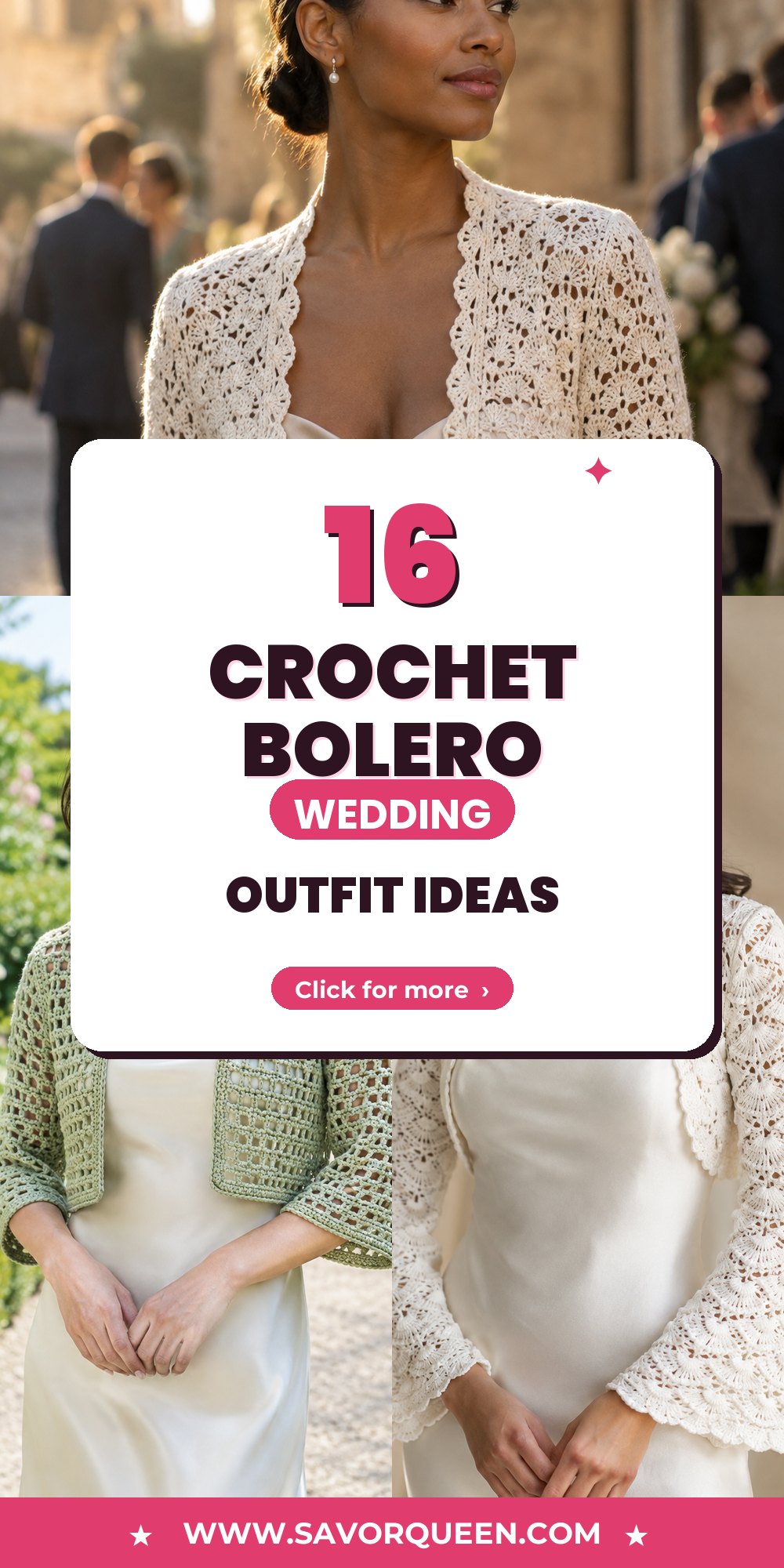
These crochet bolero outfits are for weddings where you want a little coverage, a refined texture, and a layer that still feels light. The ideas below suit guests, bridesmaids, rehearsal dinners, and low-key bridal looks. Each one focuses on a bolero as the main piece, with clear notes on stitch choice, yarn weight, fit, and what to wear underneath so the whole outfit feels balanced and wedding-ready.
Use the list to match the bolero to the season, dress code, and silhouette you already have. Look for yarn that suits the weather, a hook size that gives drape without becoming flimsy, and a length that works with your dress waistline. A close-fitting bolero can sharpen a soft dress, while a relaxed shape works best over satin, crepe, or a fitted column dress.
In this post
Elegant Crochet Bolero Outfit Ideas For Weddings
1. Ivory Lace Stitch Bolero with Silk Slip Dress
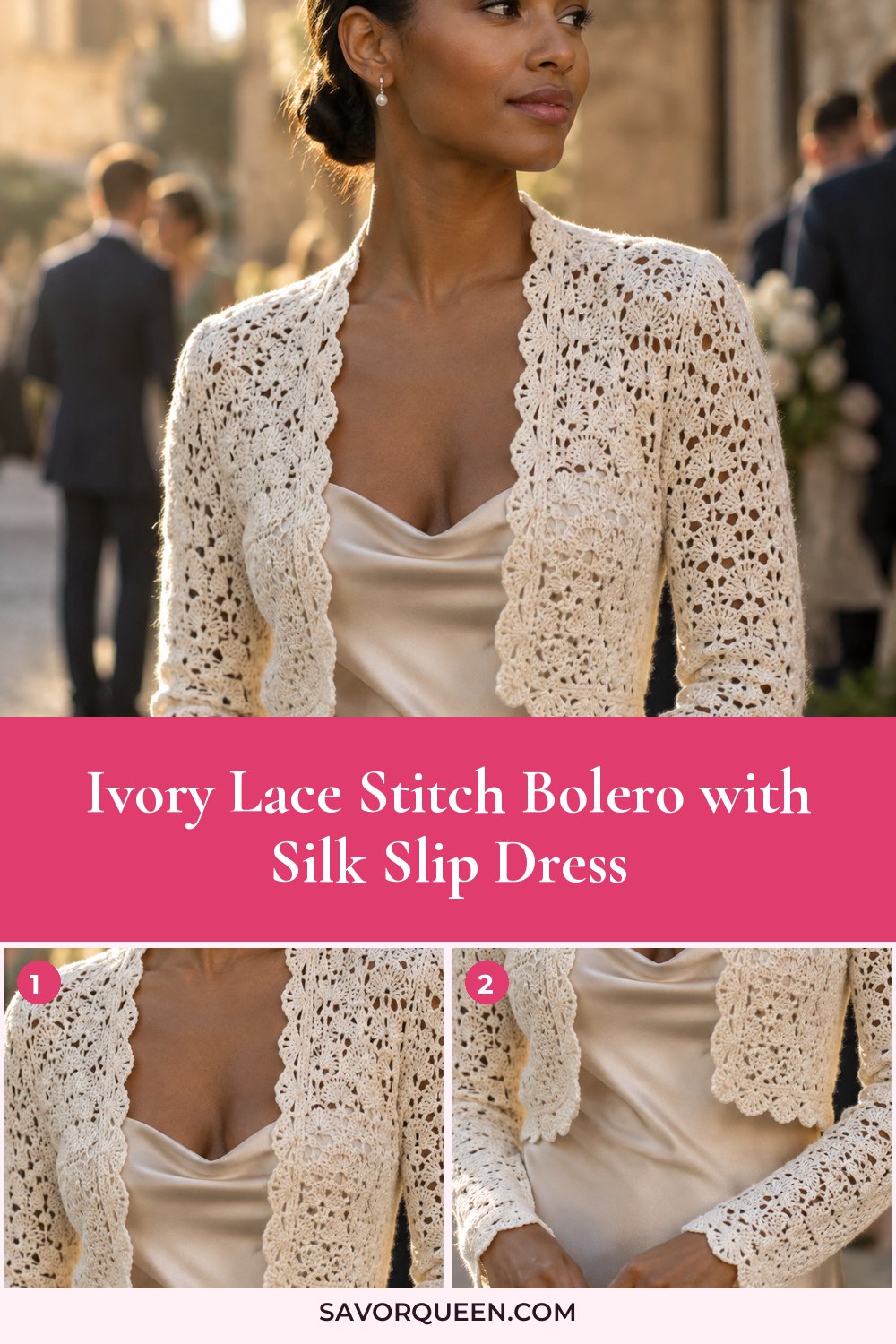
This crochet bolero outfit starts with a fitted ivory bolero worked in lace stitch, with small eyelets and scalloped edges that sit neatly across the shoulders. Use fingering-weight mercerised cotton or silk-blend cotton with a 3.5 mm hook for a crisp, dressy finish. The shape should skim the upper arm and end at the natural waist, so it layers cleanly over a bias-cut slip dress. Soft ivory, pearl, and a touch of cream keep the look tonal and formal.
Quick notes: yarn fingering mercerised cotton, hook 3.5 mm, skill level intermediate.
Style it over a champagne silk slip dress and strappy heels for an evening ceremony or reception. Add pearl studs and a slim clutch to keep the focus on the texture. If the lace opens too much when worn, size down one hook size or block the piece flat before the event so the edges sit cleanly on the shoulders.
2. Soft Sage Mesh Bolero with Satin Midi
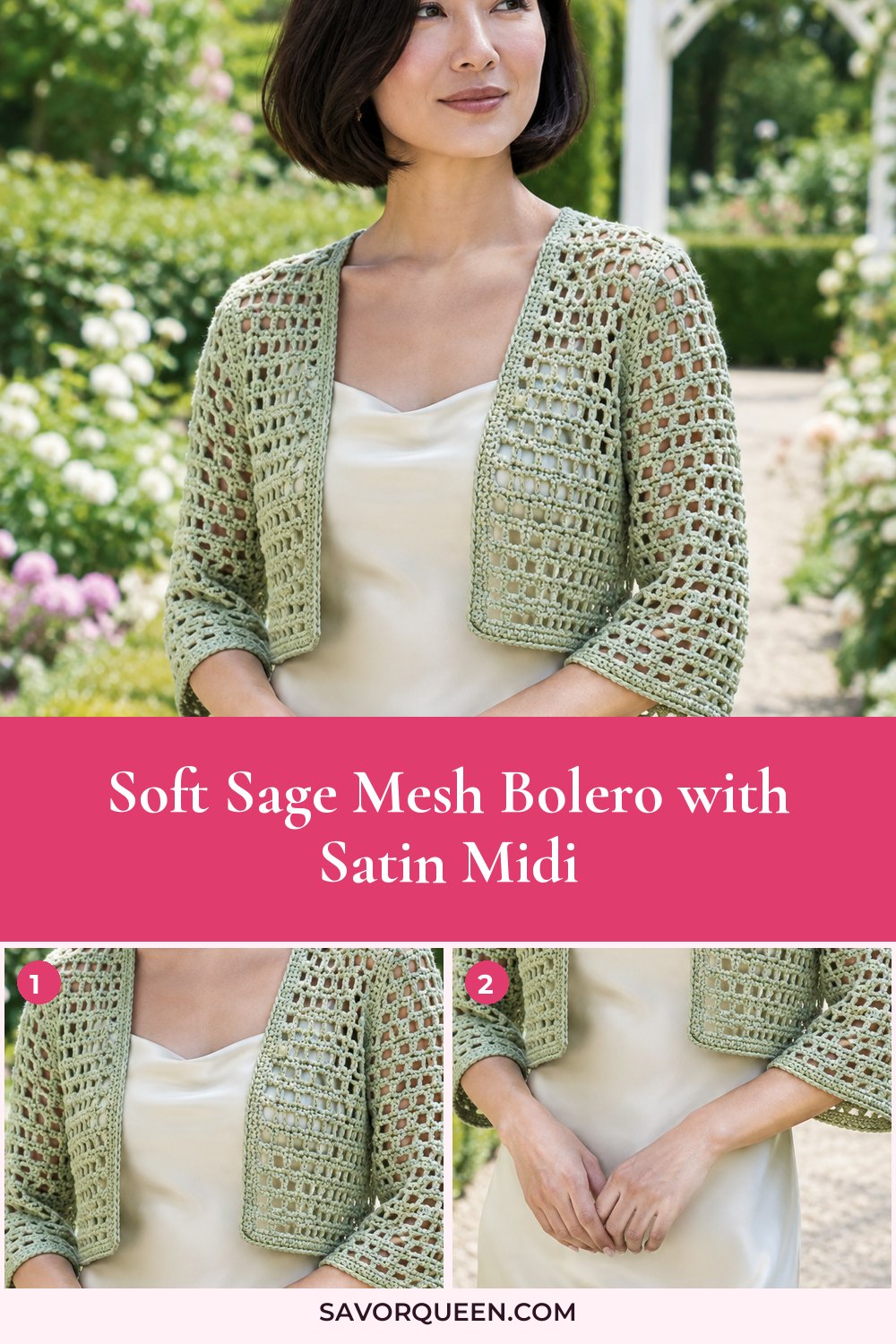
This bolero uses open mesh stitch for a lighter layer that still frames the shoulders. DK cotton with a 4 mm hook gives enough structure without looking heavy, especially in a soft sage shade that works well for spring weddings. A slightly boxy cut with bracelet sleeves keeps the shape modern, and a smooth hem stops it from clinging over satin. The yarn choice matters here because cotton holds the mesh pattern clearly and keeps the colour looking fresh.
Quick notes: yarn DK cotton, hook 4 mm, skill level beginner.
Pair it with a satin midi dress in ivory, stone, or muted blush for an outdoor ceremony or garden reception. A low heel and small gold earrings keep the look polished. If the bolero feels too short when you lift your arms, add one extra pattern repeat at the body before finishing the sleeves so it sits more comfortably over the dress.
3. Pearl White Shell Stitch Bolero for Brides
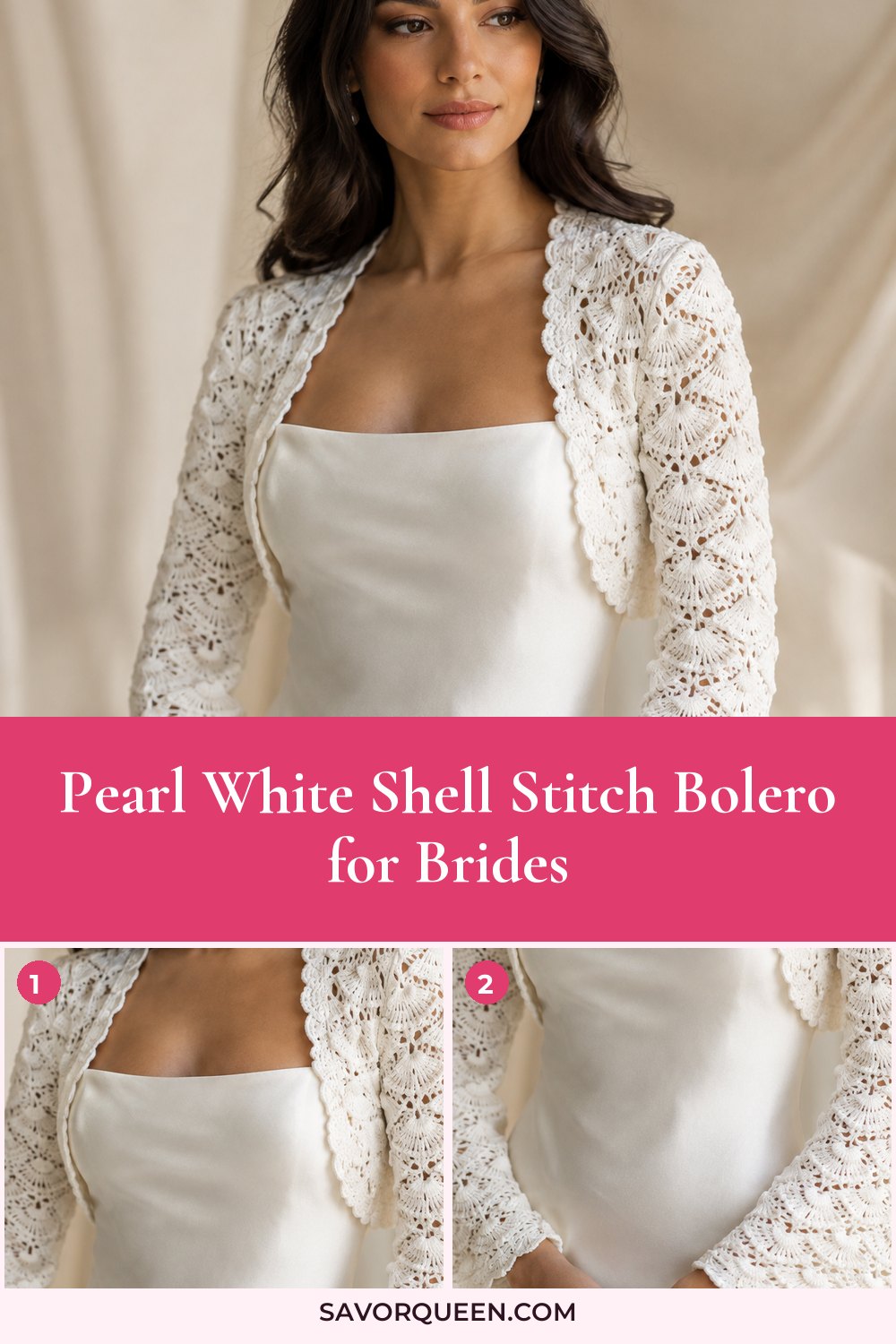
This bolero is made in shell stitch for a softer, romantic finish that suits bridal outfits. A light worsted cotton-bamboo blend with a 4.5 mm hook gives a gentle drape while keeping the shells defined. Keep the fit close through the shoulders and slightly flared at the sleeve cuffs so it frames a strapless or thin-strap gown. Pearl white keeps the look bridal, while the shell pattern adds texture without competing with lace or satin.
Quick notes: yarn worsted cotton-bamboo blend, hook 4.5 mm, skill level intermediate.
Wear it over a simple wedding dress for a ceremony, civil signing, or evening photos when you want coverage without a heavy jacket. Keep jewellery minimal and choose a low bun so the neckline stays visible. If you want the bolero to sit flatter over a fitted bodice, steam-block it lightly and let it dry fully on a flat surface before the event.
4. Dusty Rose Granny Square Bolero with Tea Dress
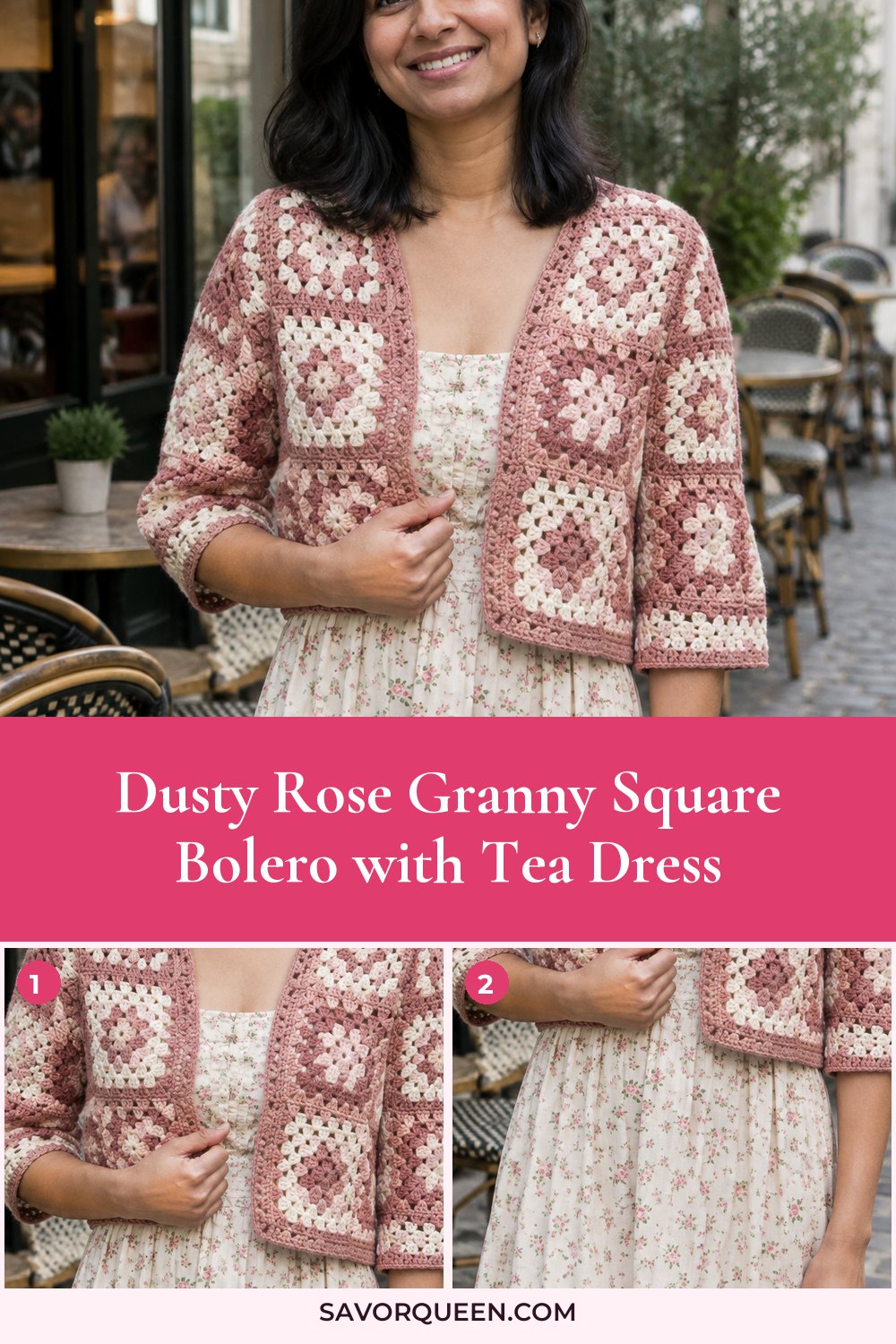
This bolero uses joined granny squares for a vintage-leaning finish that still feels neat when the colour palette stays soft. Choose a DK cotton-acrylic blend with a 4.5 mm hook so the squares hold their shape without becoming stiff. Dusty rose, blush, and a touch of cream keep the palette wedding-appropriate. A shorter body and three-quarter sleeves work well here, especially if the squares are joined flat so the shoulders do not bulk up.
Quick notes: yarn DK cotton-acrylic blend, hook 4.5 mm, skill level easy.
Style it with a tea-length floral dress and low block heels for a daytime wedding or registry celebration. The square motif looks best when the dress stays simple and the colour story stays muted. If the seams feel bulky, join the squares with a flat slip-stitch seam rather than a raised join to keep the bolero smooth under the arms.
5. Moss Green Textured Bolero with Slip Skirt
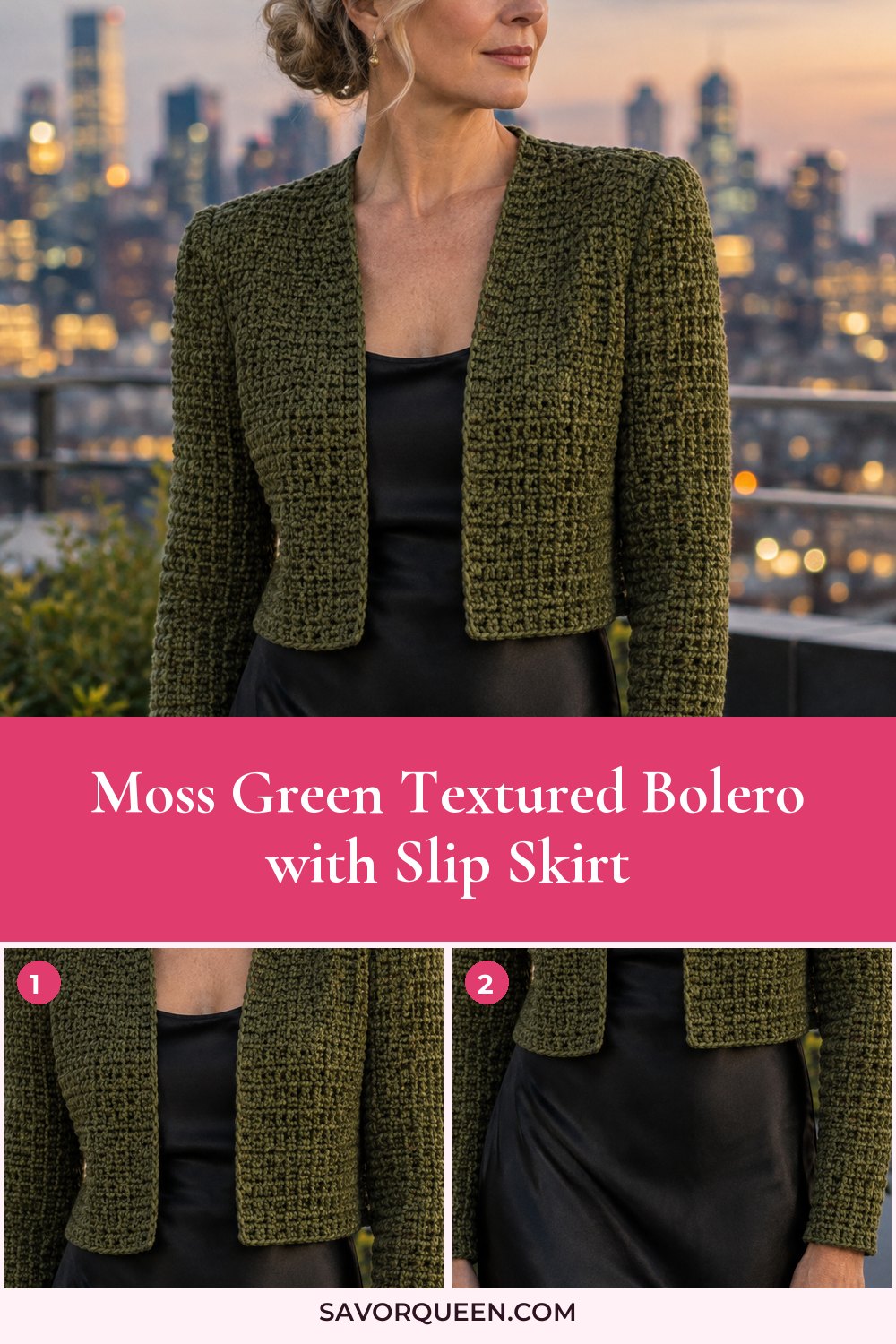
This textured bolero uses a raised stitch pattern such as waffle stitch or mini bobble stitch for a little dimension without becoming bulky. Use light worsted cotton or a cotton-linen blend with a 5 mm hook to keep the texture defined. Moss green is a strong choice for autumn weddings because it reads rich and earthy, especially against ivory, black, or bronze separates. A slightly tailored shoulder and straight hem help the bolero sit neatly over a sleek skirt.
Quick notes: yarn light worsted cotton-linen blend, hook 5 mm, skill level intermediate.
Wear it with a satin slip skirt and a simple camisole for a church ceremony, cocktail reception, or evening dinner. The outfit feels dressy without looking fussy. If you are between sizes, choose the larger size because textured stitches pull in more than smooth ones, especially after blocking and wear.
6. Blush Puff-Sleeve Bolero with Fitted Midi Dress
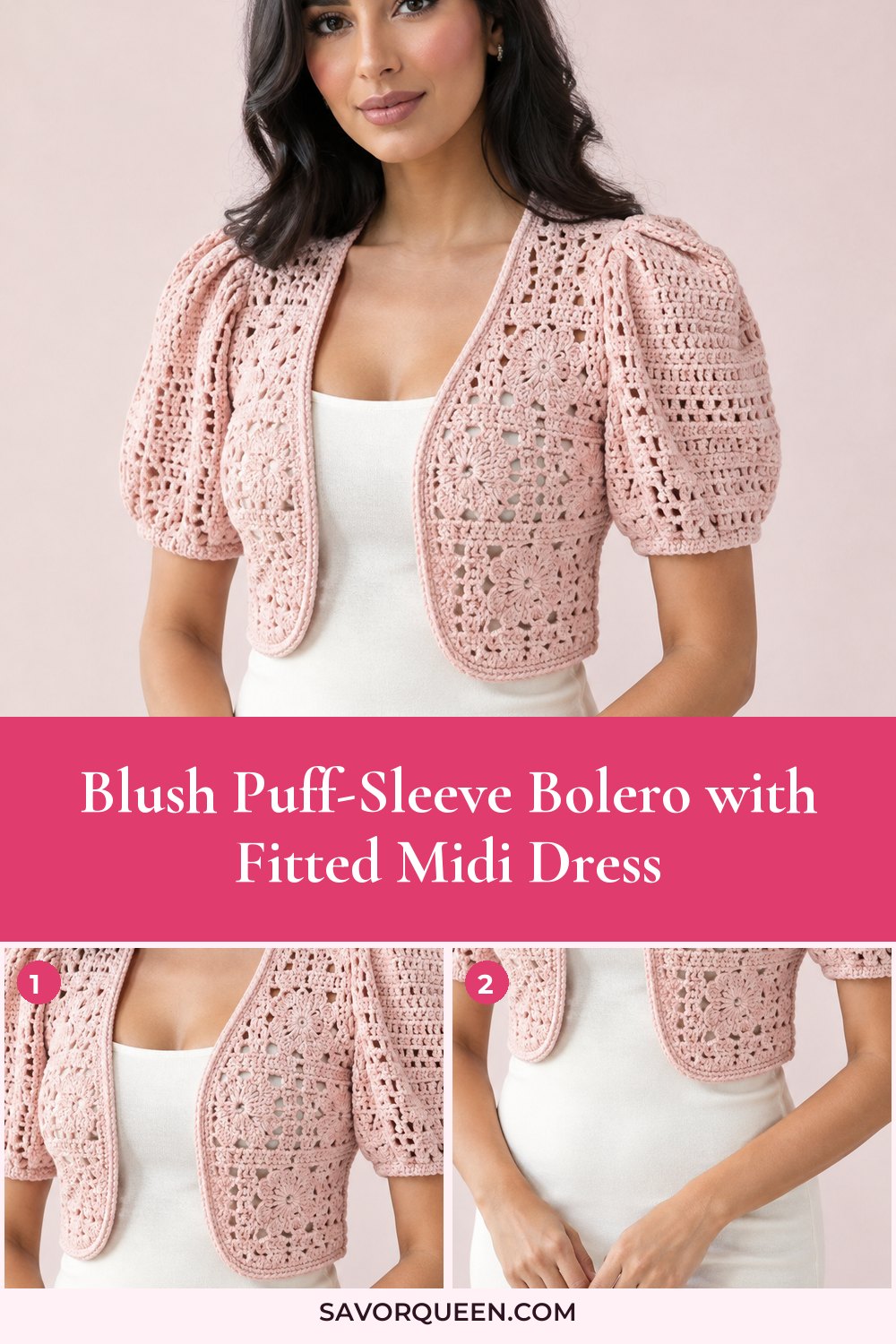
This bolero uses filet-inspired lace with a little puff at the sleeve cap, giving the layer a romantic shape that still stays neat. A cotton-viscose blend in fingering weight works well with a 3.75 mm hook because it gives drape without sagging. Blush pink keeps the piece soft for spring and summer weddings, while the fitted waist and short body line work well over a column midi dress. The sleeve volume is subtle, not oversized, so it stays elegant.
Quick notes: yarn fingering cotton-viscose blend, hook 3.75 mm, skill level advanced.
Pair it with a fitted midi dress in ivory, nude, or pale rose and pointed pumps for a bridal shower or wedding guest look. Keep the neckline simple to let the sleeves stand out. If the puff detail feels too full, work one fewer increase round at the sleeve cap so the shape stays balanced on the arm.
7. Cream Ribbed Bolero with Wide-Leg Trousers
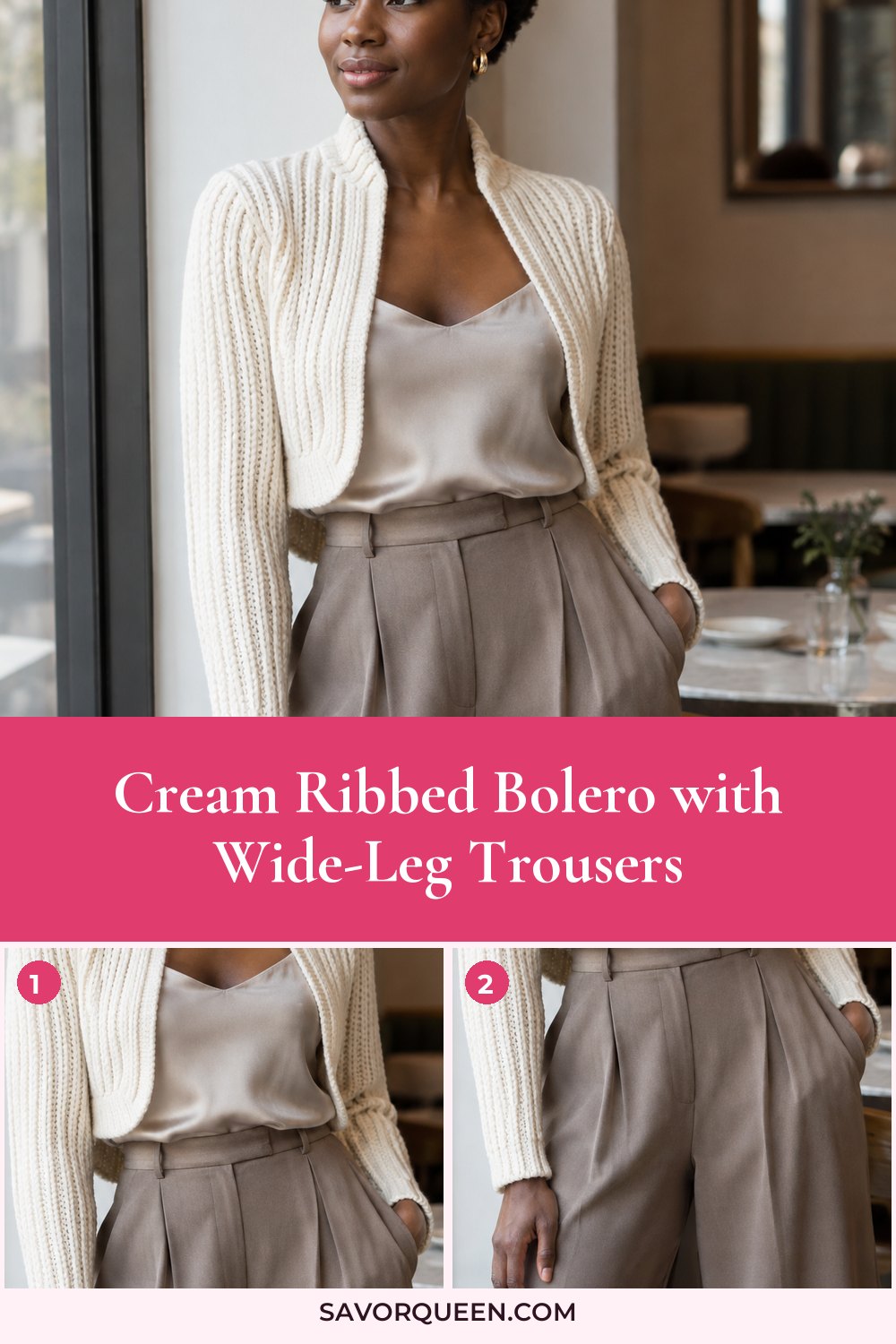
This bolero uses vertical ribbing to create a clean line through the torso and sleeves. A light worsted wool-cotton blend with a 5 mm hook gives enough body for cooler weather without feeling heavy. Cream keeps the outfit formal and easy to pair with tailored pieces. A closer fit through the upper arm and a slightly longer hem at the back help the bolero sit well over trousers and a fitted top. The stitch choice also helps the piece hold its shape through a long event.
Quick notes: yarn light worsted wool-cotton blend, hook 5 mm, skill level beginner.
Wear it with high-waisted wide-leg trousers and a satin cami for a courthouse wedding or rehearsal dinner. Add heeled sandals and a sleek clutch. If the ribbing grows while hanging, dry it flat and avoid stretching the shoulders when storing it, especially before travel.
8. Silver Blue Openwork Bolero over Column Dress
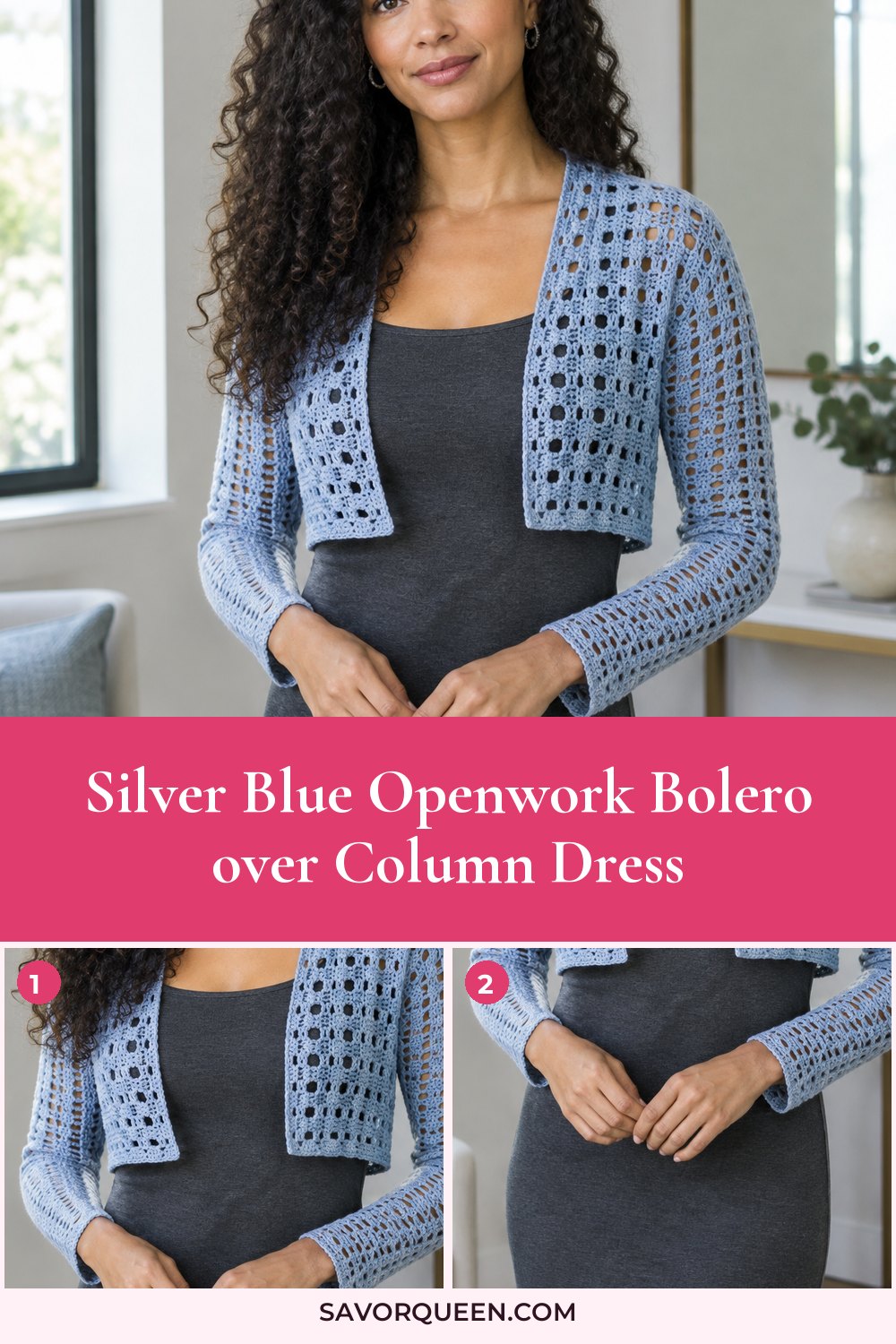
This openwork bolero uses a repeated lace grid for a cool, airy layer that suits evening weddings. Fingering-weight bamboo cotton with a 3.5 mm hook gives a smooth finish and a subtle sheen that reads well under soft lighting. Silver blue feels refined without being bright, and the cropped length keeps the column dress visible. Long sleeves with a slim fit keep the look elegant, while the open pattern prevents the layer from feeling heavy.
Quick notes: yarn fingering bamboo cotton, hook 3.5 mm, skill level intermediate.
Wear it over a navy or charcoal column dress with metallic heels for a formal reception or winter wedding. Keep accessories minimal and let the colour do the work. If the dress fabric is slippery, use a small hidden snap at the neckline to keep the bolero in place during the ceremony and photos.
9. Taupe Crochet Bolero with Satin Jumpsuit
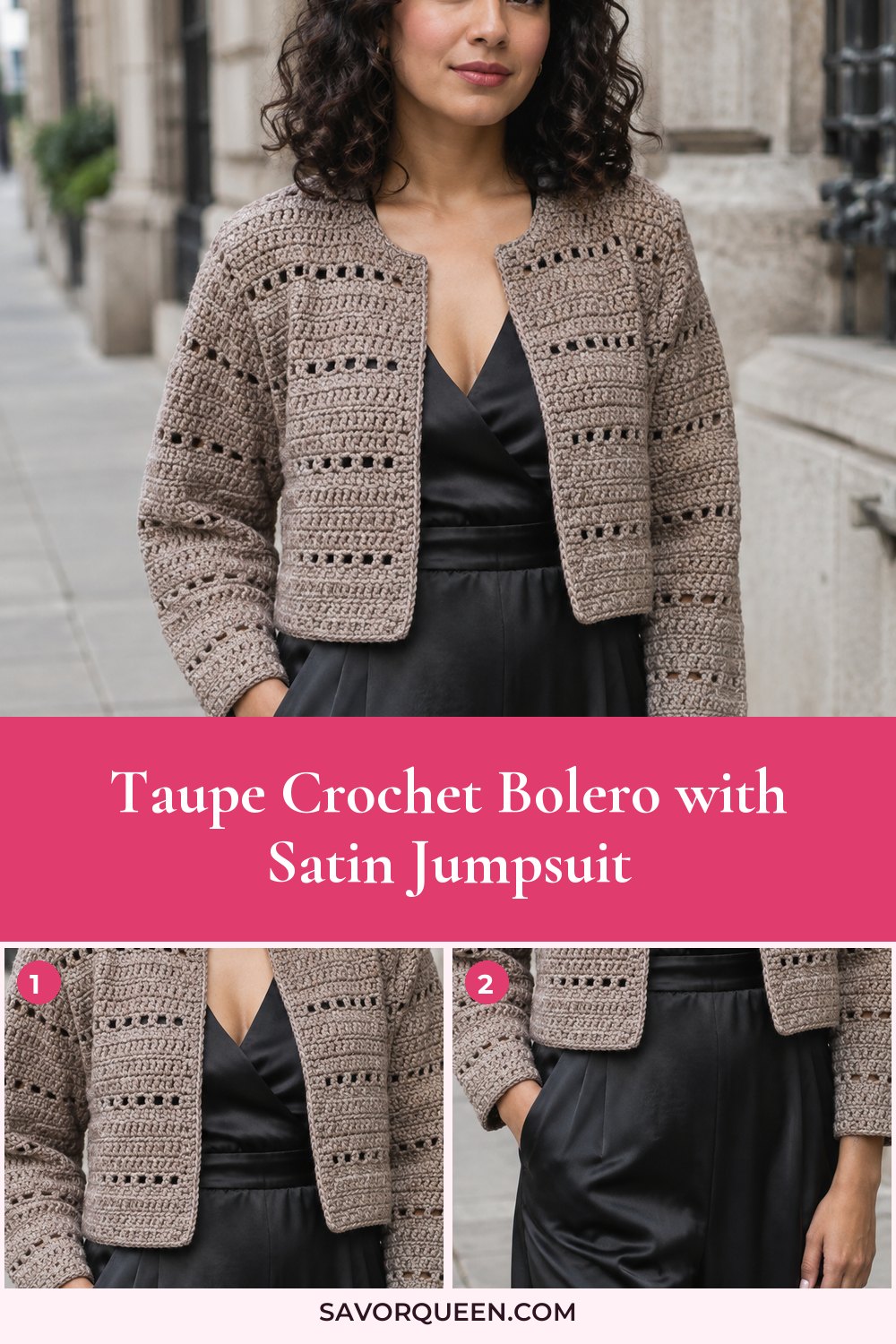
This bolero is worked in a simple half double crochet body with subtle eyelet rows at the hem and cuffs, which keeps the look modern and clean. Use worsted cotton or bamboo-cotton yarn with a 5 mm hook for a soft but stable layer. Taupe is an easy neutral for weddings because it pairs with ivory, black, bronze, or soft florals. A boxy cut works especially well over a jumpsuit, where a tight fit can feel too formal or restrictive.
Quick notes: yarn worsted cotton or bamboo-cotton, hook 5 mm, skill level beginner.
Style it over a satin jumpsuit for a city wedding or evening reception. Choose pointed mules and a slim bracelet so the lines stay long and neat. If the bolero feels too plain, swap the yarn to a cotton with a slight sheen, which helps the stitch definition show up in photos and under venue lighting.
10. Soft Lilac Flower Motif Bolero
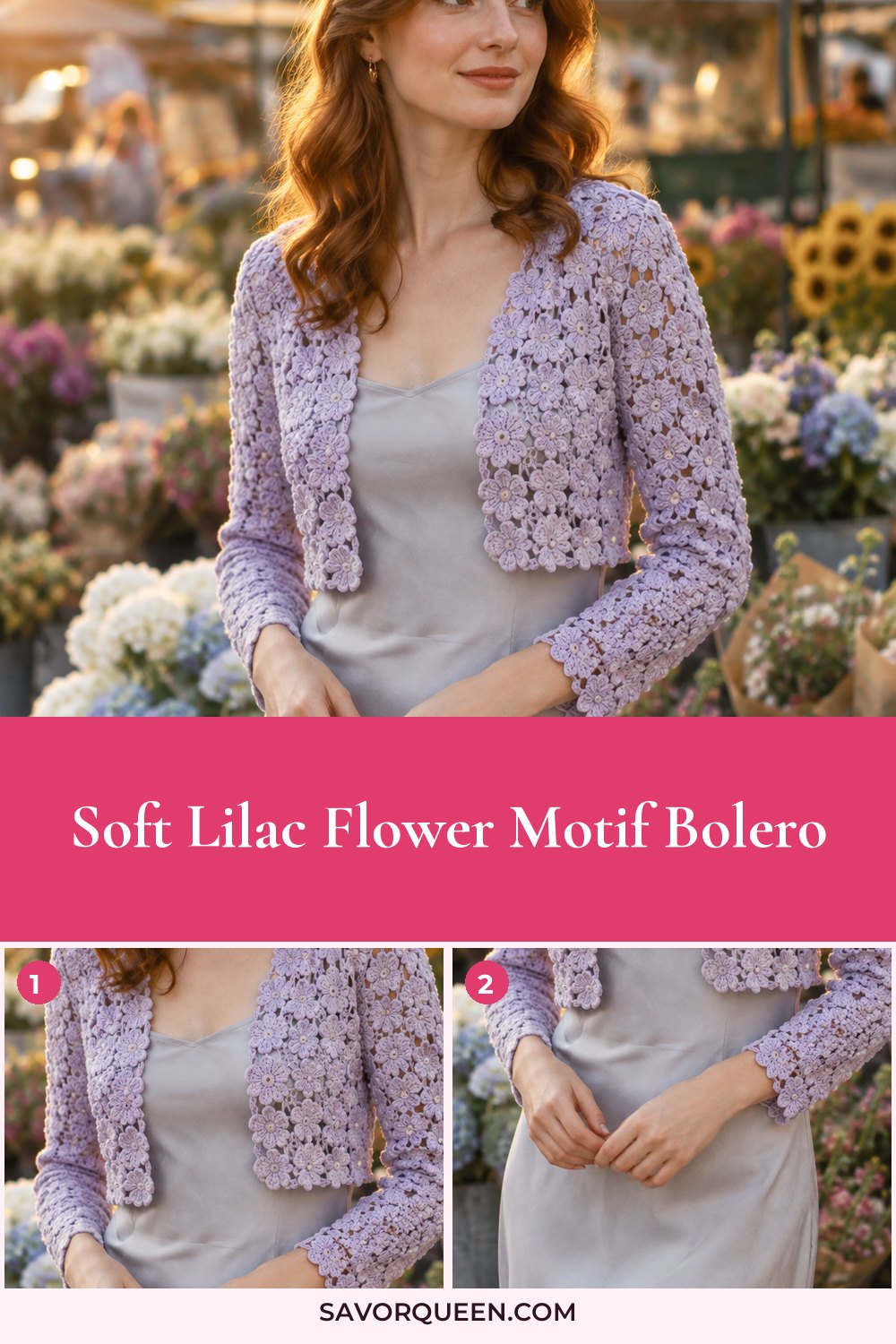
This bolero uses small flower motifs joined into a light, fitted layer that feels feminine without becoming overly busy. A sport-weight cotton with a 3.5 to 4 mm hook gives the motifs clear edges and a neat finish. Soft lilac works well for spring weddings and pairs nicely with silver jewellery or pale grey separates. Keep the body short and the sleeves slim so the motifs stay the focus and the piece sits smoothly over the dress.
Quick notes: yarn sport cotton, hook 3.5-4 mm, skill level advanced.
Wear it over a simple satin midi or a fitted knit dress for a daytime celebration. Because motif pieces can stretch at the joins, lay it flat to dry after blocking and avoid hanging it by the shoulders. A smooth lining or a close-fitting dress underneath helps the motifs look tidy in photos.
11. Champagne Bobble Stitch Bolero for Garden Weddings
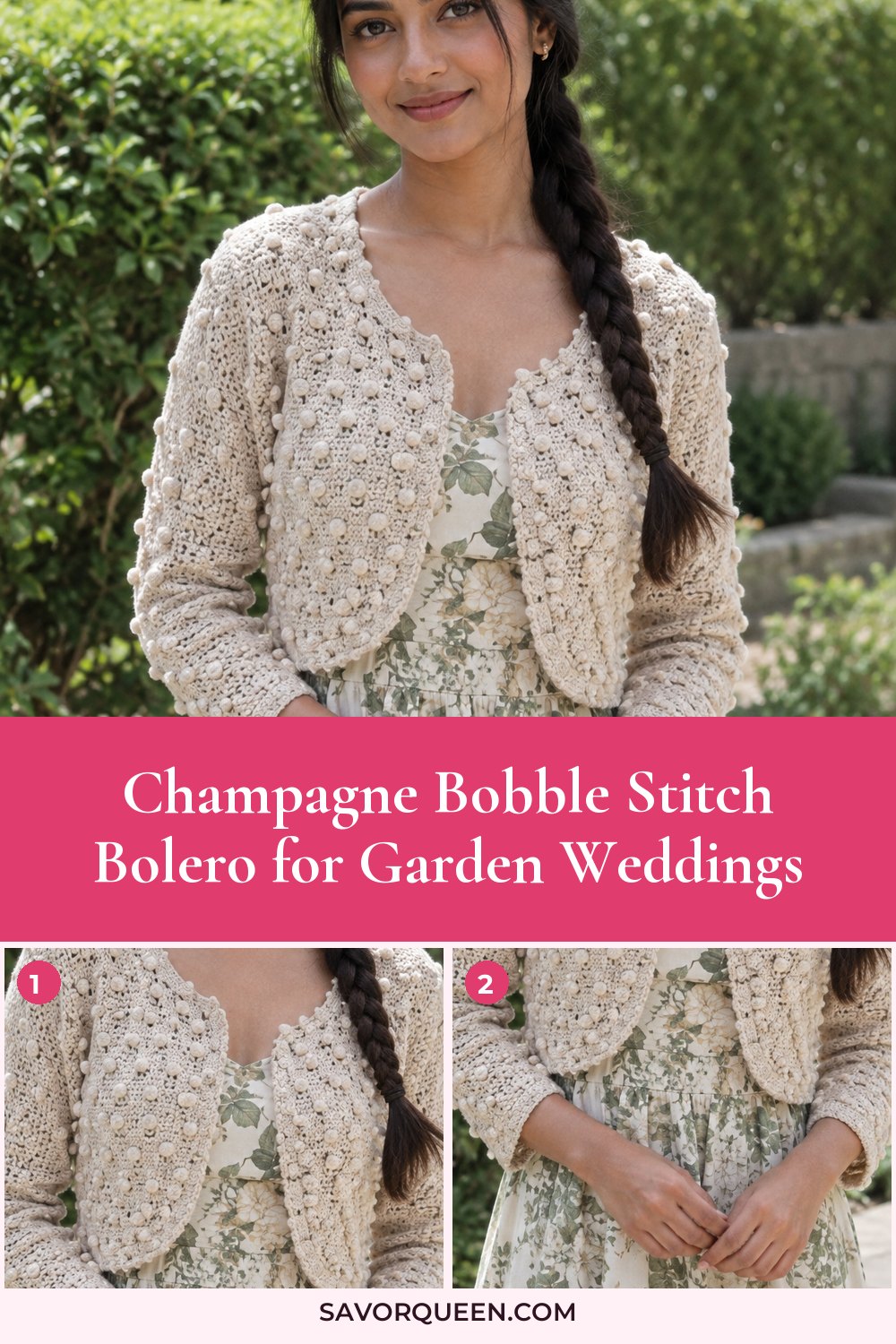
This bolero uses bobble stitch in small, spaced clusters so it has texture without adding too much bulk. A cotton-viscose blend in light worsted weight with a 5 mm hook gives a tidy stitch shape and enough drape for outdoor wear. Champagne is an easy wedding colour because it reads warm and refined beside floral prints, cream dresses, and soft metallic accessories. A gently rounded neckline softens the shoulders and works well for a garden setting.
Quick notes: yarn light worsted cotton-viscose blend, hook 5 mm, skill level intermediate.
Wear it with a floral midi dress and block heels for a garden ceremony or daytime reception. The bobbles look best when the rest of the outfit stays simple, so keep accessories to one or two pieces. If the stitch feels heavy at the shoulders, make the sleeves in a smoother stitch and keep the bobbles to the body only.
12. Black Crochet Bolero in Fine Filet Lace
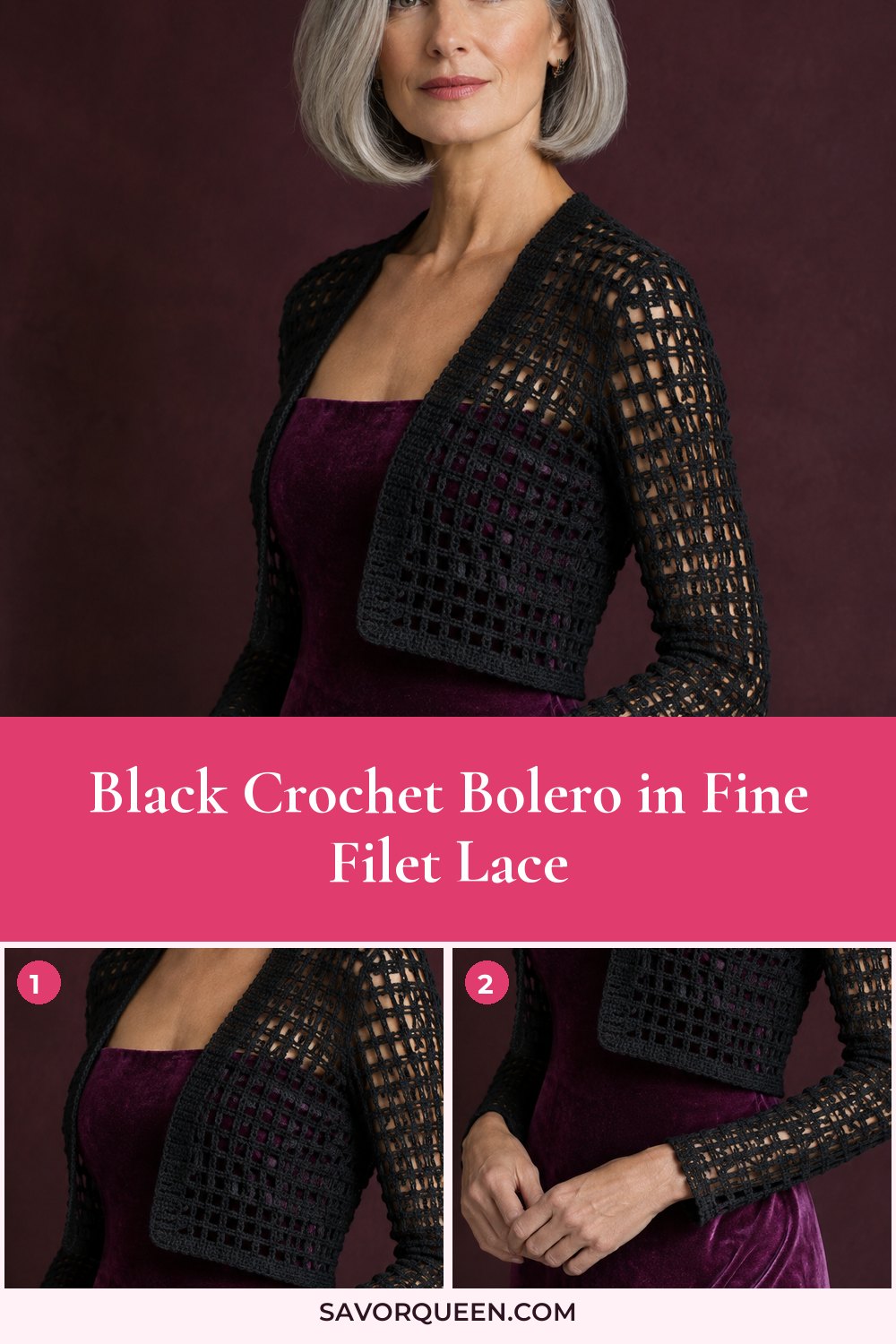
This bolero uses fine filet lace for a sharper, more formal finish that works beautifully with darker evening outfits. Fingering-weight mercerised cotton with a 3 mm hook keeps the grid crisp and gives the piece a delicate sheen. Black makes the bolero feel dressier and more versatile, especially with satin or velvet. Keep the body close to the torso and the sleeves straight so it layers neatly rather than adding width. The open filet pattern gives coverage without hiding the dress underneath.
Quick notes: yarn fingering mercerised cotton, hook 3 mm, skill level intermediate.
Style it with a jewel-toned dress, pointed pumps, and a small metallic bag for a black-tie optional wedding. Black works especially well when the dress has a simple neckline. If the lace opens too much after blocking, steam lightly rather than soaking it, so the stitches stay tight and defined.
13. Ivory Crochet Bolero with High-Neck Dress
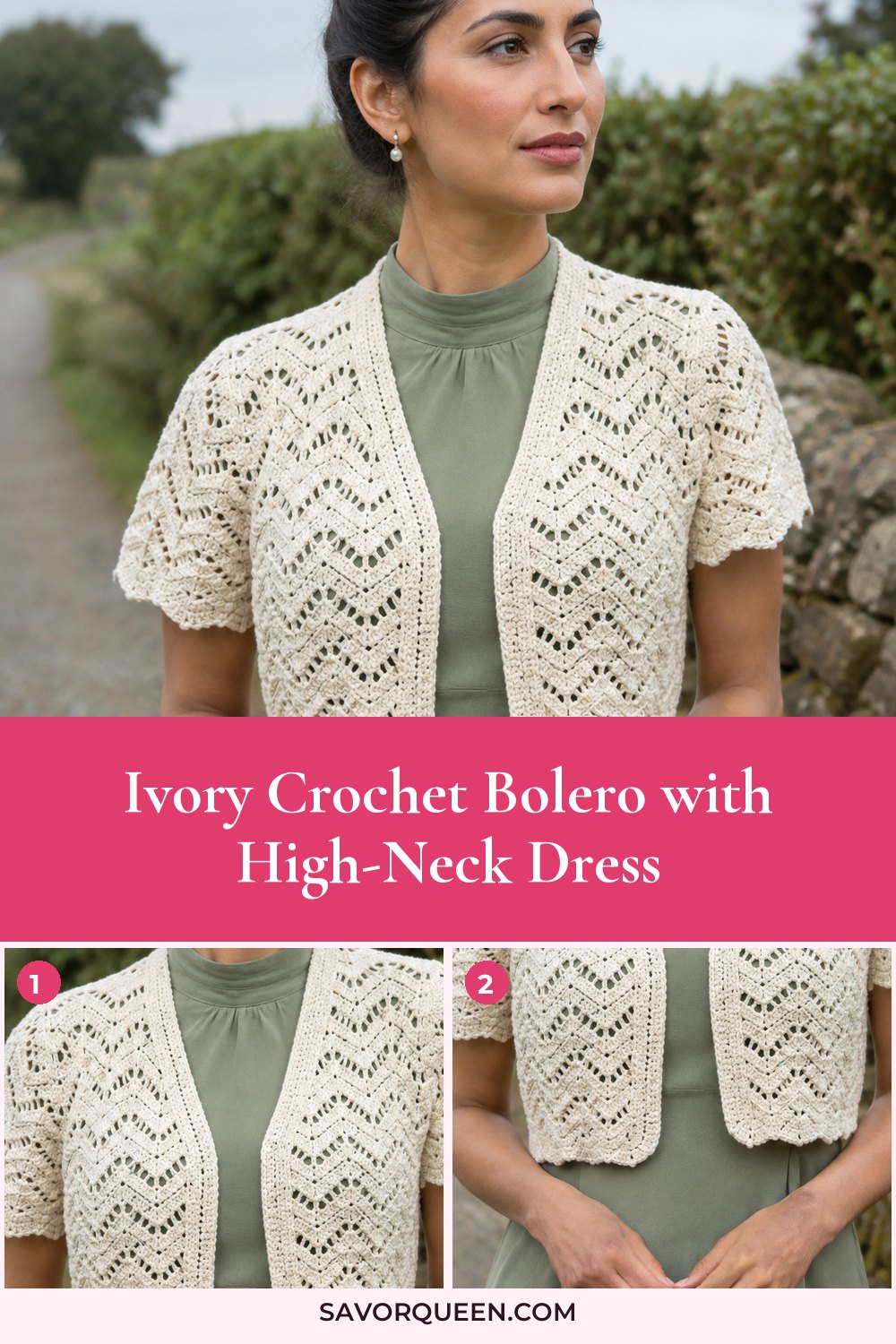
This bolero uses a simple zigzag lace stitch for a clean layer that sits well over structured necklines. A worsted cotton or cotton-linen blend with a 5 mm hook gives enough body for a neat shape while still allowing movement. Ivory keeps the look soft and wedding-friendly, especially when paired with a high-neck dress that needs a lighter shoulder layer. A slightly shorter sleeve keeps the silhouette tidy and avoids crowding the neckline.
Quick notes: yarn worsted cotton or cotton-linen, hook 5 mm, skill level easy.
Wear it over a fitted high-neck midi or maxi dress for a church ceremony or early evening event. Keep shoes classic and avoid heavy necklaces so the neckline stays clean. If the dress has a textured fabric, choose a smoother crochet stitch to keep the outfit from looking too busy.
14. Cocoa Open Front Bolero with Satin Column Dress
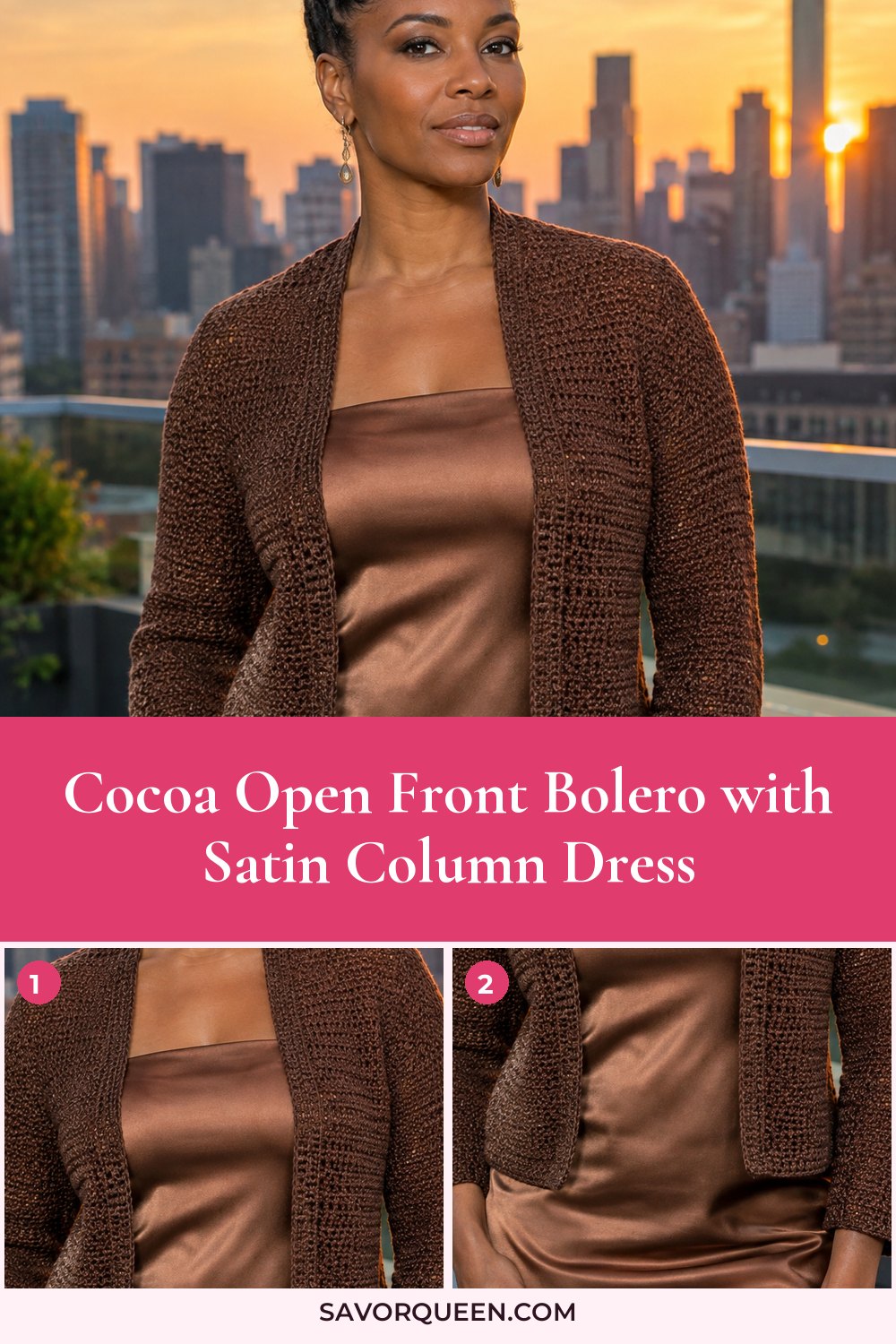
This open-front bolero uses a smooth double crochet body with a slim edge detail so it feels sleek instead of heavy. Choose a wool-acrylic blend in light worsted weight with a 5 mm hook for cooler weather and a stable drape. Cocoa brown is a strong neutral for autumn and winter weddings, especially with satin or metallic fabrics. A longline cut that stops just above the hip gives a flattering vertical line over a column dress.
Quick notes: yarn light worsted wool-acrylic blend, hook 5 mm, skill level beginner.
Style it with a satin column dress in bronze, ivory, or deep green and add heeled sandals or closed-toe pumps depending on the season. The open front lets the dress stay visible, which keeps the outfit from looking too covered up. If the hem starts to curl, block it with the edge pinned flat so the front lines stay straight in photos.
15. Pale Blue Shell Bolero with Floral Maxi
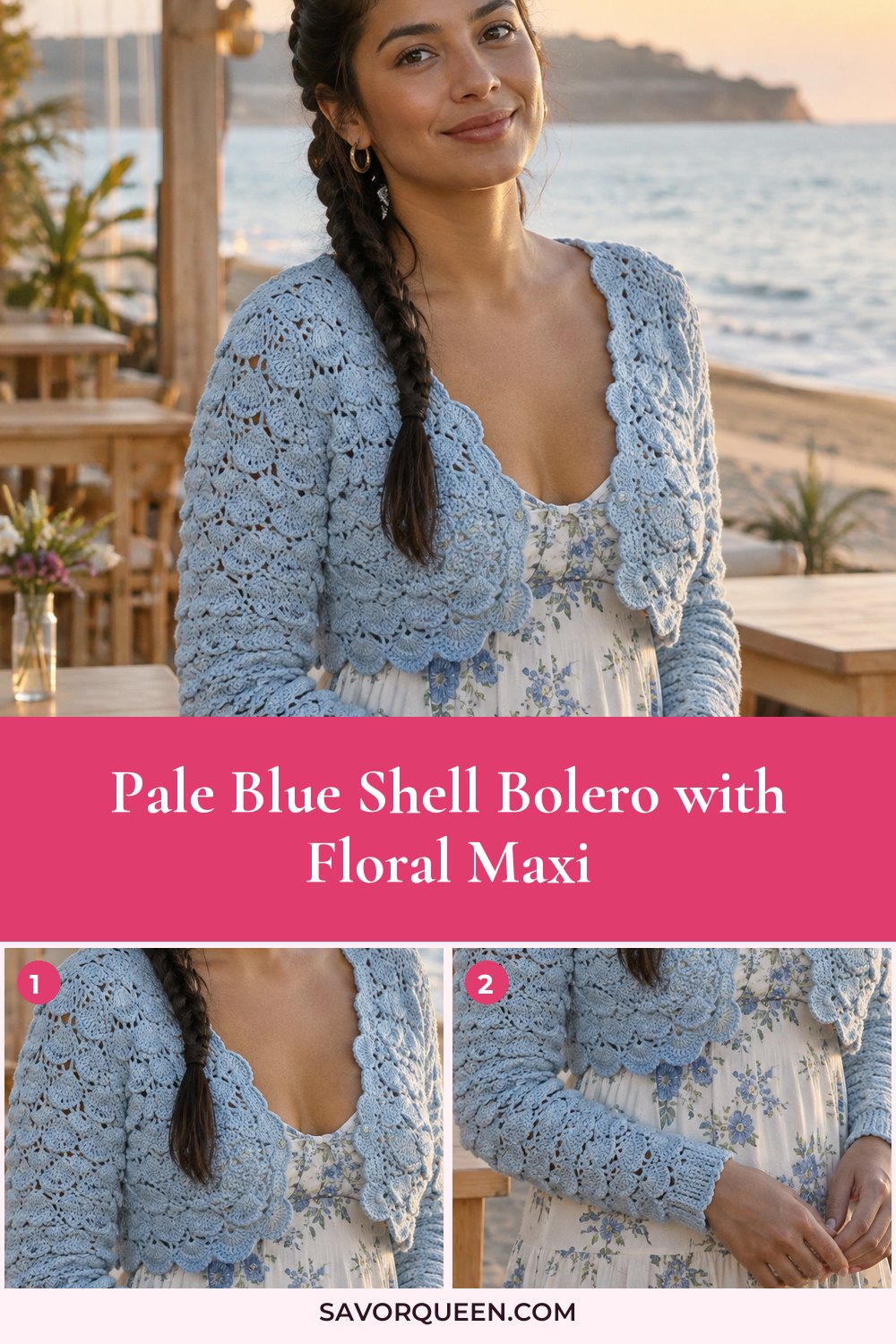
This bolero uses shell stitch in a pale blue shade that feels soft and fresh for spring weddings. Cotton-linen yarn in light worsted weight with a 4.5 mm hook gives enough texture without making the fabric stiff. The shell stitch naturally creates a gentle scalloped edge, so the silhouette can stay simple and still look finished. Keep the fit slightly cropped and the sleeves narrow so the bolero layers smoothly over a floral maxi dress.
Quick notes: yarn light worsted cotton-linen, hook 4.5 mm, skill level intermediate.
Wear it with a floral maxi in white, blue, or soft grey for a daytime wedding or outdoor lunch reception. Add low heels and a woven clutch for a relaxed but polished look. If the yarn feels too dry on the skin, choose a softer cotton blend rather than pure linen so the bolero sits more comfortably over bare shoulders.
16. Muted Mauve Crochet Bolero with Midi Skirt Suit
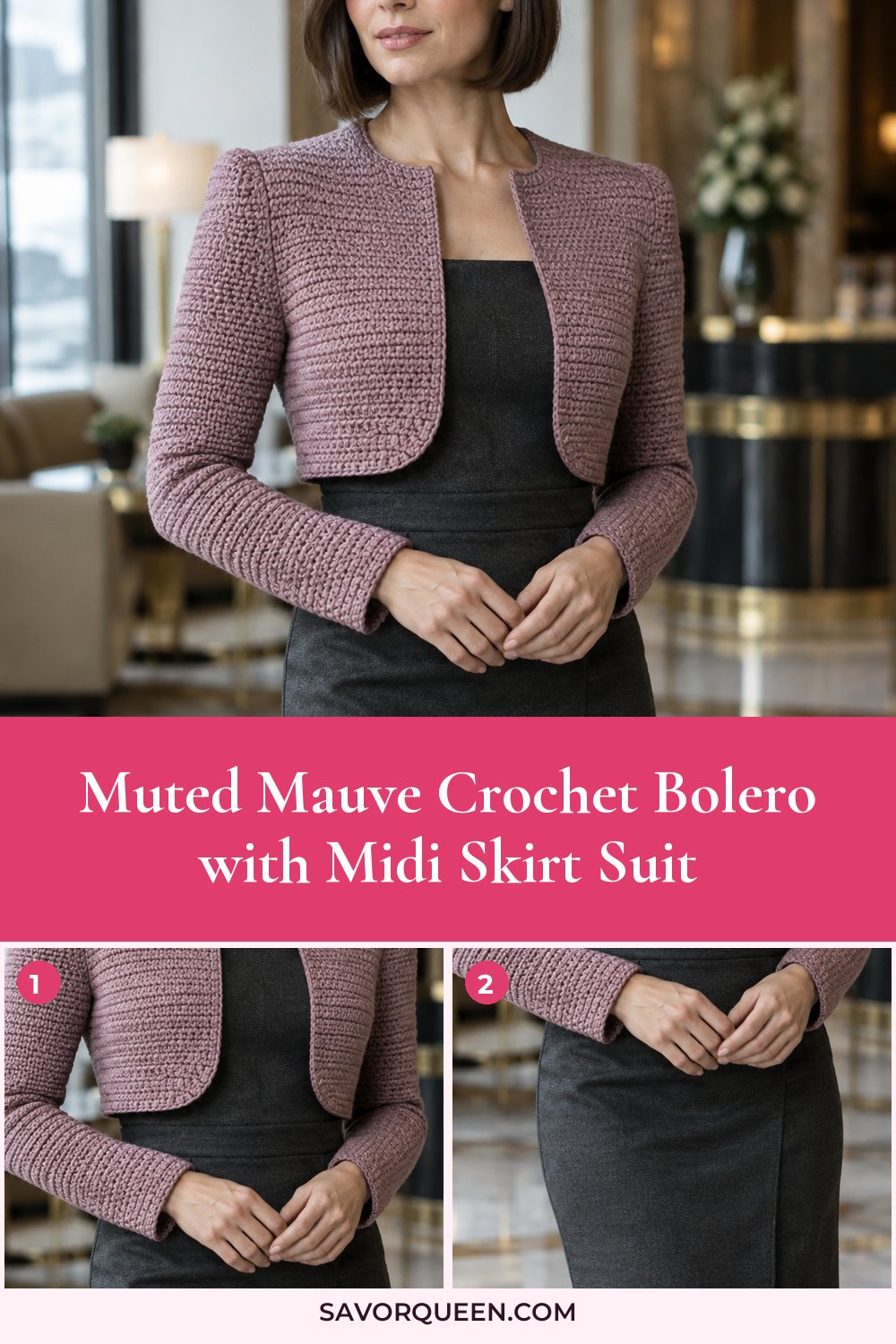
This bolero uses a dense half treble stitch for a smoother surface that reads a little more tailored. A cotton-merino blend in DK weight with a 4 mm hook gives warmth and a neat drape, which works well with suiting fabrics. Muted mauve is a strong colour for cooler weddings because it pairs with grey, charcoal, and soft metallics. A closer fit through the body helps it sit like a jacket replacement without feeling stiff.
Quick notes: yarn DK cotton-merino blend, hook 4 mm, skill level intermediate.
Style it with a midi skirt suit or matching separates for a registry office wedding or evening dinner. Keep the blouse simple and the shoes pointed to preserve the long line. If the bolero is worn over a tailored dress, press the seams lightly with steam so it sits flat and clean against the fabric.
How to choose, make and care for these
Choose yarn for the season
For summer weddings, cotton, bamboo, and cotton-linen blends keep the bolero light and tidy. For cooler months, a cotton-merino or wool-acrylic blend gives more warmth without making the layer bulky. Match fingering or sport weight to very open lace, DK to balanced texture, and worsted to denser shapes. The yarn should suit both the dress code and the venue temperature.
Pick a hook for drape
A hook that is a little larger than the yarn label can help a bolero drape over satin and crepe, but do not size up so much that the shoulders lose shape. Lace and filet stitches often work well on the smaller end of the range, while bobbles, shells, and ribbing need enough room to open up. Always check how the fabric sits across the upper back.
Keep the fit wedding-friendly
A bolero should sit smoothly at the shoulders, with sleeves that allow you to move, hug, and dance. Crop length works well over fitted dresses, while a slightly longer body suits jumpsuits and column shapes. If the dress already has volume, choose a close-fitting bolero. If the dress is sleek, a little texture or sleeve detail can add interest without overpowering it.
Block and finish cleanly
Blocking makes a big difference with wedding layers. It helps lace open evenly, straightens scallops, and settles seams before you wear the piece. Use rustproof pins, gentle steam, or wet blocking depending on the fibre. If the bolero has joins or motif seams, press them flat from the wrong side and let the piece dry fully before trying it on.
Match the bolero to the dress
Keep the crochet texture in conversation with the dress fabric. A smooth satin dress works with bobbles, shells, or motifs. A textured dress usually pairs better with ribbing, net stitch, or plain crochet so the outfit does not feel crowded. Neutral shades such as ivory, taupe, stone, and cocoa are the easiest to style across different wedding themes.
Frequently asked questions
What makes crochet bolero outfits work for weddings?
The right bolero adds coverage, texture, and polish without looking heavy. Crochet bolero outfits work best when the yarn is fine enough for drape, the fit is close at the shoulders, and the colour suits the dress. Choose lace, shell, filet, or ribbed stitches depending on how formal the event feels.
What yarn is best for crochet bolero outfits in warm weather?
Cotton, bamboo, and cotton-linen blends are the easiest choices for warm weather because they breathe well and hold stitch definition. Fingering, sport, and DK weights keep the layer light. For summer weddings, avoid thick acrylic yarn unless the venue is cool or air-conditioned.
How should crochet bolero outfits fit over a dress?
A bolero should sit flat across the shoulders without pulling at the back or bunching under the arms. Short cropped styles work best with fitted dresses, while longer open-front versions suit jumpsuits and column silhouettes. If you are between sizes, choose the size that fits your upper back comfortably.
Can crochet bolero outfits be formal enough for a wedding guest look?
Yes, especially when the yarn is fine, the colour is muted, and the stitch is neat. Pair the bolero with satin, crepe, silk, or a structured midi dress to keep the outfit refined. Pearl, ivory, champagne, taupe, and soft metallic shades usually read more formal than bright colours.
How do you care for crochet bolero outfits after the wedding?
Check the fibre label before washing, then hand wash or use a delicate cycle in a mesh bag if the yarn allows it. Lay the bolero flat to dry so the shoulders do not stretch. If it has lace or scallops, reblock it lightly after cleaning so the shape stays neat for the next wear.
More crochet ideas to save
A good bolero can change the whole feel of a wedding outfit, especially when you want coverage without losing softness or shape. These crochet bolero outfits give you a range of textures, colours, and silhouettes to work with across seasons and dress codes. For more styling inspiration, pair this round-up with these related reads: “12 Boho Crochet Halter Top Looks For Beach Days“, “10 Boho Crochet Pullover Patterns For Beginners“, and “12 Aesthetic Crochet Skirt Patterns For Warm Weather“.
Browse every design in the crochet patterns section, and learn the basics in how to crochet.