Crochet crafting essentials are the small, well-chosen tools that make every stitch easier to form, count, and finish. Whether you are working a bright cotton project or a soft wool piece, the right hook, scissors, and notion can turn a frustrating evening into a relaxed one.
In this post
Why a Thoughtful Toolkit Matters
Crochet is a craft built on repetition. A single loop, pulled a little too tight or left a little too loose, can change the whole character of a fabric. For that reason, the tools you keep beside you deserve as much attention as the yarn itself. A good toolkit does not need to be large. It simply needs to support your hands and your eyes through long stretches of work.
Think of the essentials as a set of helpers that each solve a specific problem. A hook sets the tension, a marker keeps your place, and a pair of sharp scissors gives your ends a clean finish. When these items are within reach, you spend less time searching and more time building fabric you are proud of.
Crafting Essentials Related Posts:
- Crochet Market Bag: A Practical and Eco-Friendly Essential
- Crochet Oh My Stars Scarf: A Cozy and Stylish Handmade Accessory
- Crochet Tunic Blouse: A Chic and Airy Handmade Staple
- Crochet Ribbed Beanie: A Cozy and Stylish Winter Essential
Choosing Your Hooks
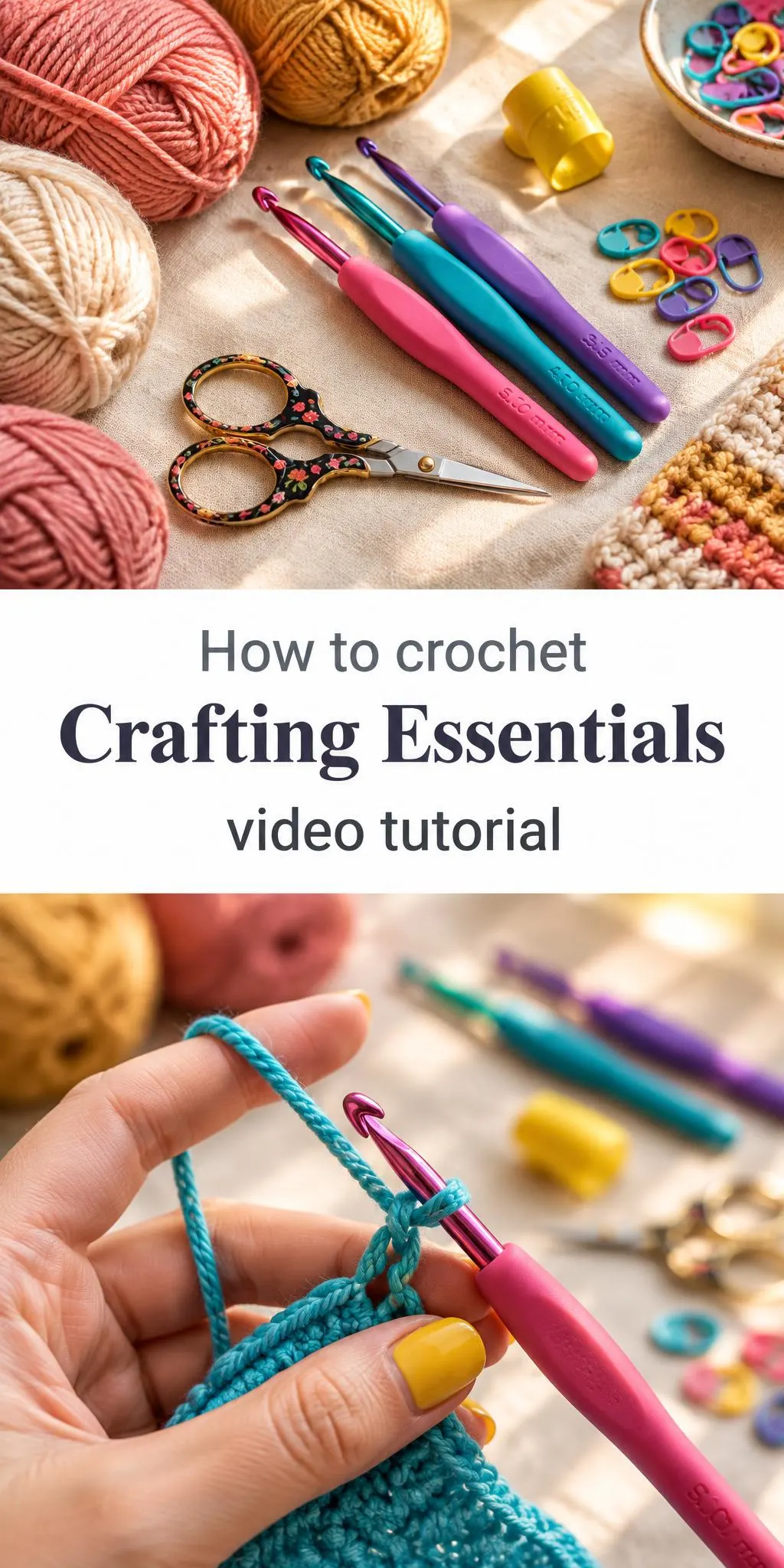
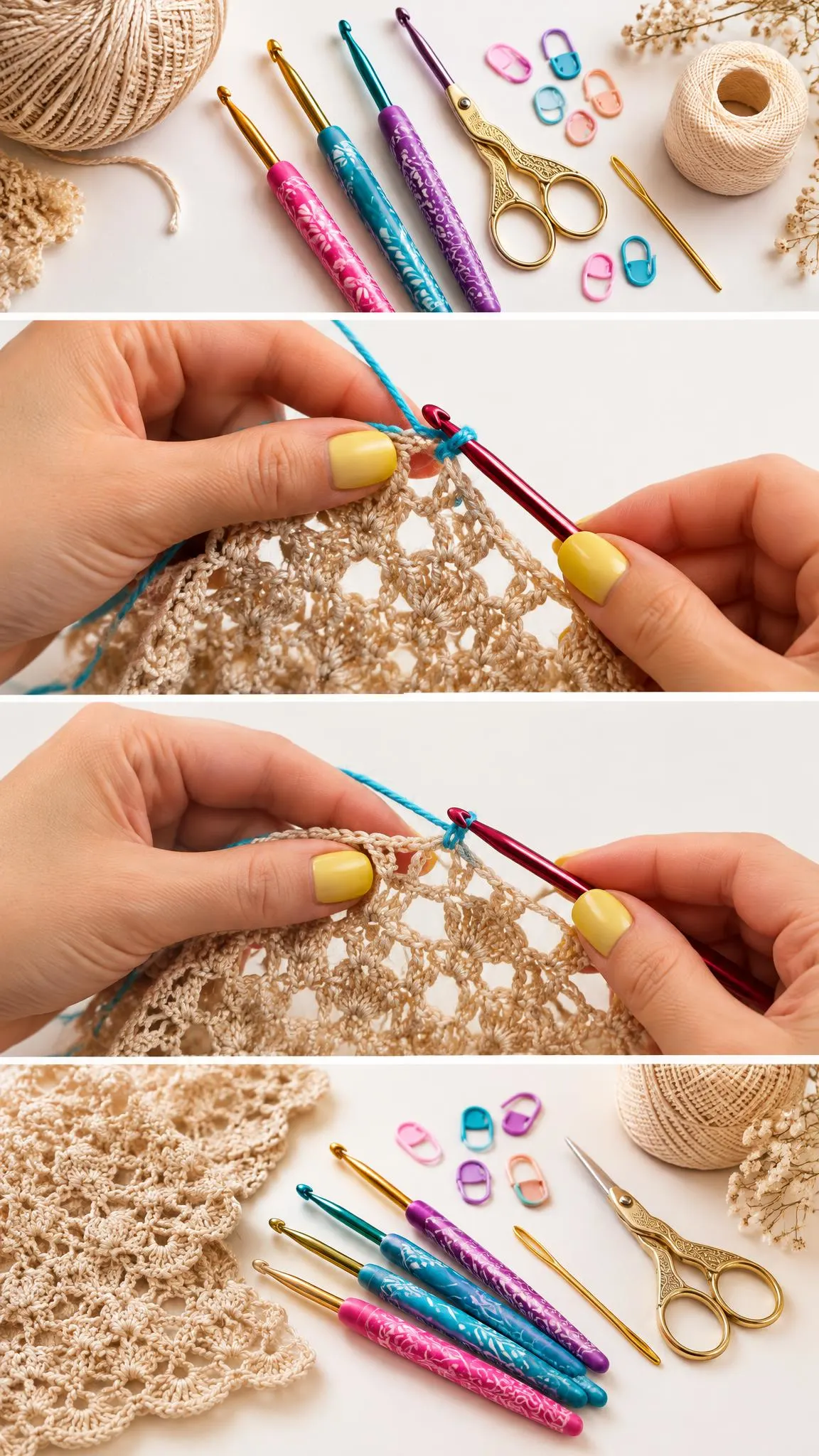
The hook is the heart of crochet, and hooks come in several materials. Aluminum hooks are light, smooth, and widely available, which makes them a reliable choice for everyday projects. Steel hooks are slim and firm, suited to fine threads and detailed work. Ergonomic handles, often wrapped in soft polymer clay or resin, help reduce hand fatigue during longer sessions.
Hook size should match your yarn and the fabric you want. A slightly smaller hook produces a denser, more structured surface, while a larger one gives an open, airy result. Keeping a range of sizes lets you test a sample before committing to a full project, which is a simple habit that prevents disappointing finished pieces.
Scissors, Markers, and Finishing Notions
Small embroidery-style scissors with pointed tips are ideal for trimming yarn close to the work. Their slim blades reach into tight corners and cut cleanly through plied fibers. A decorative pair can also add a touch of personality to your basket without sacrificing function.
Stitch markers are equally valuable. Clip one onto the first stitch of a round or the start of a repeat, and you always know where a new section begins. Split-ring markers stay put, while locking markers are handy on slippery yarns. Used consistently, they make counting far less stressful.
Yarn Organization and Storage
Yarn that tangles is yarn that slows you down. Clear zippered pouches let you see each skein’s color and keep loose ends contained. When you work from a center-pull ball, a protective bag also prevents dust and pet hair from settling into the fibers. Storing skeins in cool, dry spaces helps keep their colors vibrant over time.
Bold, multicolored skeins deserve special care. Their patterns can look dramatic in the store, but they can snag if stored carelessly. Wrapping them in a breathable bag protects both the fiber and the surface of your work.
Tension Aids and Comfort Tools
A tension ring is a small but powerful accessory. Worn on the index finger or slipped onto the hook shaft, it gives you a stable point to hold the yarn and adjust resistance. Many crafters find that a tension ring reduces hand strain and helps stitches stay uniform in size, especially when working in the round.
Other comfort tools serve similar goals. A flexible yarn guide or a smooth, rounded finger loop helps direct the strand without catching. Choosing options with soft edges keeps your fingers relaxed and your rhythm steady.
Finishing Details for a Polished Result
Clean finishing is what separates a homemade look from a professional one. Weave in ends with a blunt tapestry needle, running the tail through several stitches on the wrong side. Trim any excess only after you are sure the join is secure. This simple sequence prevents unraveling in wear and washing.
For textured or lace work, a blocking mat with pins can even out stitches and open the pattern. Check the care label of your yarn before wetting any finished piece, because different fibers respond differently to moisture and heat.
Building Your Own Essentials Kit
Start with a few reliable tools and add to them as your projects grow. A hook in your most-used size, a pair of sharp scissors, several stitch markers, a tapestry needle, and a tension ring form a practical foundation. Place them together in a pouch or small tin so they travel easily from room to room.
Over time, you will notice which items you reach for most. That knowledge is far more valuable than any checklist. Let your own projects guide your purchases, and your kit will reflect the way you genuinely crochet.
Keep this kit close as you practice, and enjoy the steady rhythm that good tools make possible. Watch the video below whenever you need a visual reminder, and pause as often as you like to match each technique to your own hands.
Follow us on Pinterest and subscribe to the Newsletter so you don’t miss a thing!
Tutorial and photos of this crafting essentials by: naztazia.