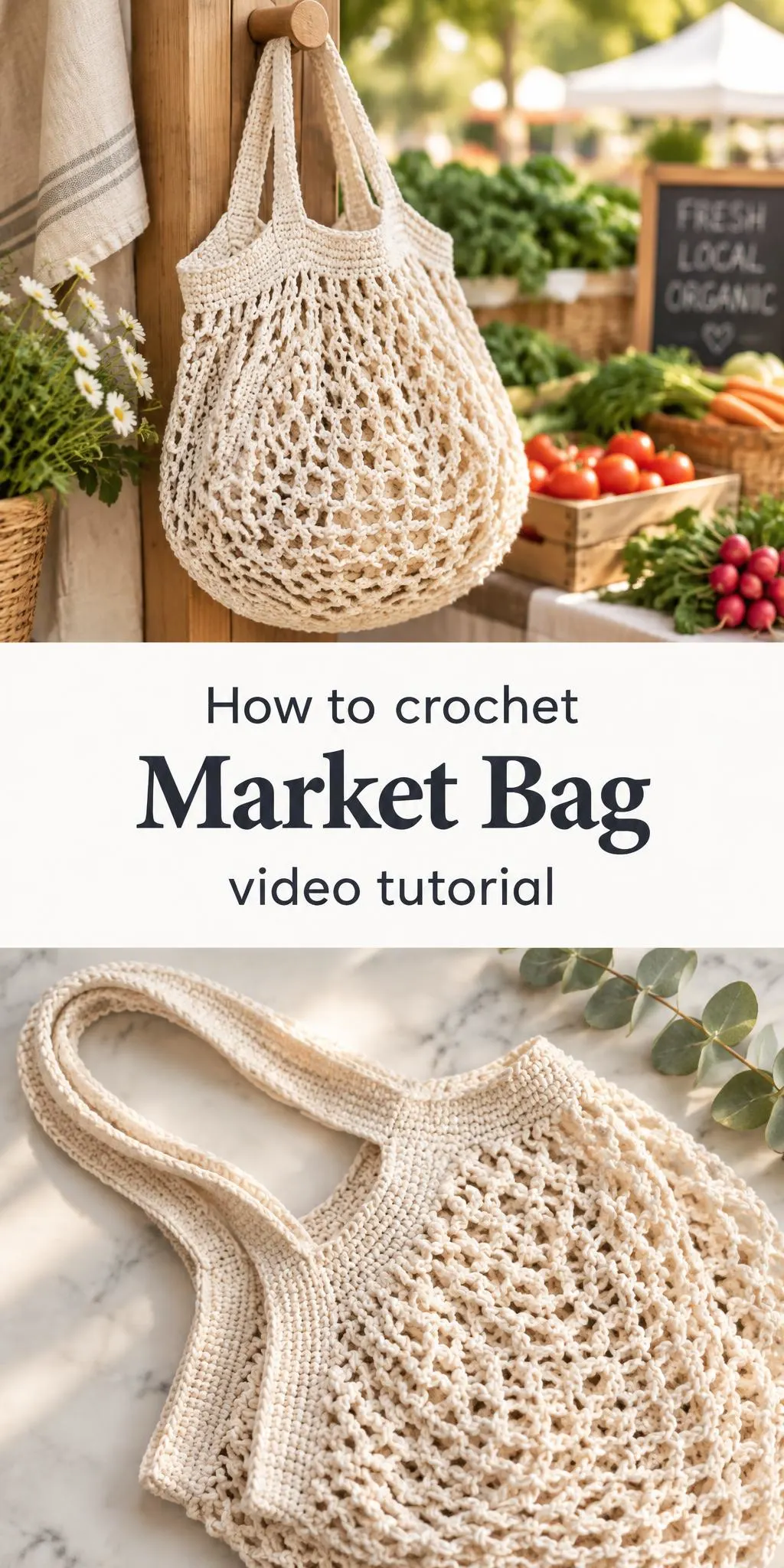
A crochet market bag is one of those projects that quickly earns a permanent place in your routine. Its open mesh body, sturdy rounded base, and long handles make it ideal for carrying produce, bread, and everyday errands while keeping things light and breathable.
In this post
Why the Crochet Market Bag Deserves a Place in Your Kitchen
The design of this bag is simple at first glance, but several details work together to make it genuinely useful. The body opens into a wide, generous shape that stretches comfortably as you fill it. Because the mesh is open rather than solid, air moves through, so fresh greens and fruit are less likely to sit in their own moisture during a long walk home.
Its silhouette is also easy to recognize. A firm, closed rim at the top gives the bag a neat finish and keeps the handles anchored, while the lower body curves outward into a round, full shape. That combination reads as both casual and considered, which is why this style works as easily at a farmers market as it does slung over a shoulder on a weekend outing.
Market Bag Related Posts:
- Crochet Tunic Blouse: A Chic and Airy Handmade Staple
- Crochet Book Cover with Picture Frame: A Charming and Personalized Handmade Accessory
- Crochet Mini Strawberry Charms: A Cute and Playful Handmade Accessory
- Crochet Textured Stitch Blanket: A Cozy and Timeless Classic
Choosing Materials for a Market Bag
For a bag like this, cotton is a natural choice. Cotton yarn has enough body to hold the mesh open, and it softens gently with use rather than stretching out of shape. Mercerized cotton adds a subtle sheen and crisper stitch definition, which suits a light neutral like cream or oatmeal. A cotton blend can offer a little more give, which may be helpful if you plan to carry heavier loads regularly.
Avoid fibers with very little structure, such as loosely spun acrylics, unless you plan to line the bag. Soft fibers can sag under weight, and the open mesh will look stretched and uneven. Pair your yarn with a hook size that produces a fabric you can see through but that still feels firm to the touch. Test a small swatch first, because the same yarn can look dense on one hook and airy on another.
Understanding the Open Mesh Texture
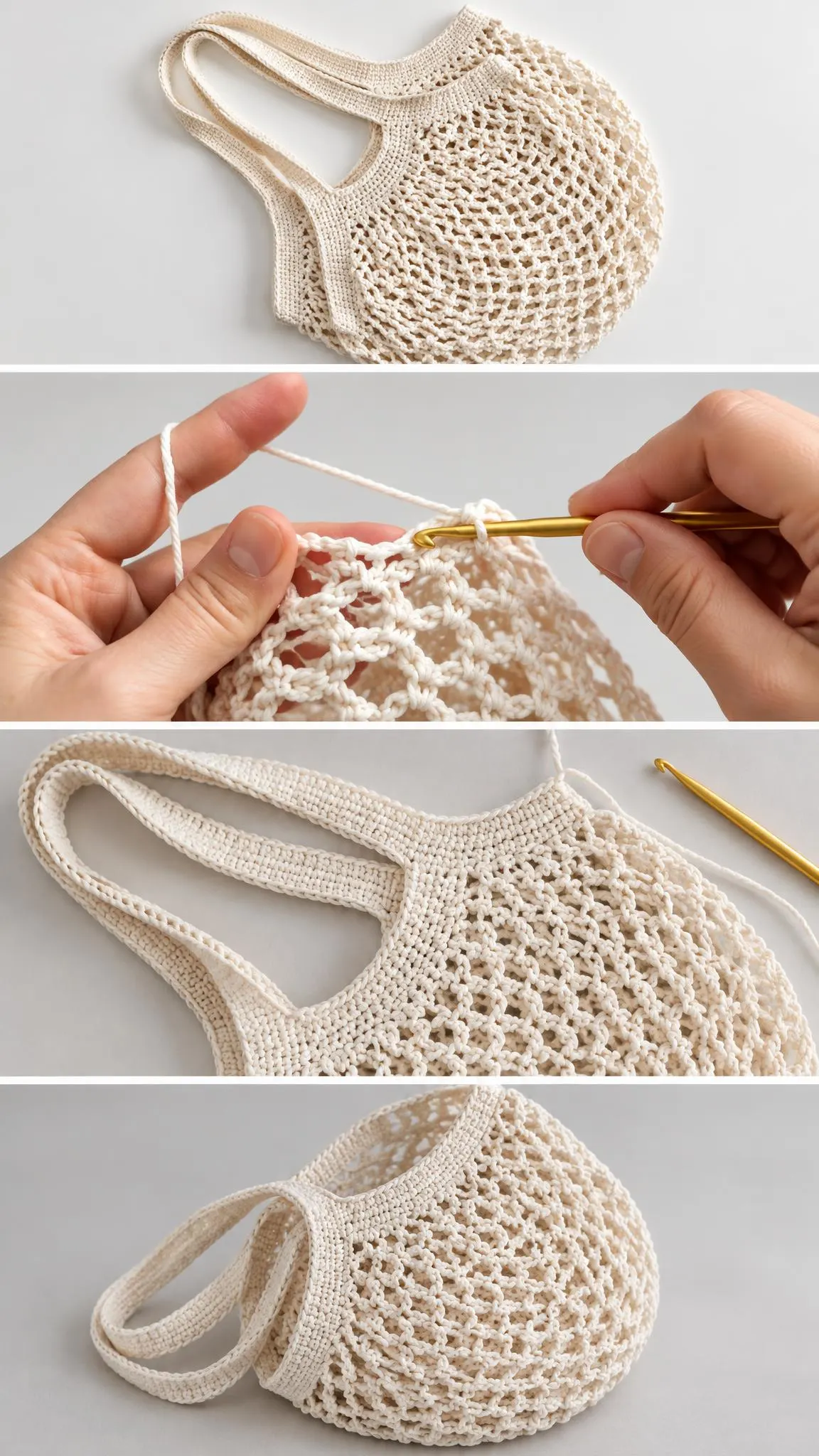
The most eye-catching part of this bag is its open lacy surface. Rather than a dense solid fabric, the mesh uses a repeating arrangement of spaces and clusters that gives the surface depth and movement. Each opening lets light pass through, so the bag looks lighter in the hand than its actual weight suggests.
Open textures are often built from chain spaces and post stitches arranged in a regular repeat. Working the repeat evenly is what makes the surface look intentional. If some openings look large and others tight, the bag can appear lopsided, even when the shape is correct. Counting your repeats carefully and checking your tension every few rows will keep the mesh uniform from base to rim.
Keeping the Mesh Even
Tension matters more in an open pattern than in a solid one, because every irregular stitch is visible. Try to keep your chains and posts consistent in height and width. If you notice one section pulling tighter, pause and relax your grip rather than forcing the stitches to match. Blocking afterward can also help even out the openings and open the mesh to its intended size.
The Rim, Handles, and Base
A well-finished market bag depends on how its parts connect. The rim is worked to give the top edge a clean, firm line, which prevents the mouth of the bag from stretching wide when you carry it. Many crocheters work this border in a denser stitch than the body, so it holds its shape and frames the open mesh neatly.
The handles deserve equal attention. Because they carry the most weight, they should be sturdy and securely joined to the body. Long, flat or lightly ribbed handles distribute pressure across the shoulder more comfortably than thin, rounded ones. Reinforcing where the handle meets the rim helps the bag last through many trips to the market.
The base of a market bag is often the part that determines how well it stands and carries. A rounded, gently curved bottom allows the bag to hold its shape when filled, while a flatter base can make it easier to set down upright. Either approach works, as long as the transition from base to sides is smooth enough that the bag does not pucker.
Using Your Market Bag Every Day
This bag is at its best when it is part of everyday life. Keep it by the front door so it is ready for grocery trips, or stash it in a bag or tote for spontaneous stops at the bakery. Because it folds flat, it takes up little room, which makes it easy to bring along even when you do not expect to shop.
For a pleasing look, pair the cream or natural tones of a cotton bag with linen trousers, a plain cotton dress, or a soft knit in a complementary neutral. A pale bag also looks fresh against brighter produce, so the colors of your market haul become part of the visual story. If you prefer a bit more contrast, a tan leather strap or a wooden bag handle could add warmth without overwhelming the open texture.
Carrying with Confidence
To keep the bag comfortable, load heavier items like squash or bottles closest to the base, and place lighter items such as bread or herbs on top. This keeps the handles from taking uneven strain and helps the bag hold its round shape. Sliding the handles over your shoulder rather than gripping them in your hand also spreads the weight more evenly.
Care and Finishing for Lasting Use
Once the bag is complete, weave in all loose ends neatly along the inside of the mesh so they do not catch on produce packaging or fingers. A small dab of fabric glue or a few extra stitches can secure any ends that feel loose, though a careful weave usually does the job.
Cotton market bags can be washed by hand in lukewarm water with a gentle soap, then reshaped while damp. Lay the bag flat on a towel and gently pull the mesh and rim back into proportion, a process known as blocking. Let it dry away from direct heat, which helps the fibers keep their softness and prevents the openings from tightening unevenly. Always check the care label of your chosen yarn, as blends and mercerized cottons may respond differently to hot water.
A Bag Worth Making Again
A crochet market bag rewards patience with a piece that is both practical and quietly attractive. Its open texture, sturdy handles, and generous shape make it a dependable companion for errands, picnics, and weekend markets. Once you have made one, you may find yourself wanting to try a second in a different color or yarn weight.
Follow along with the video below to see the construction in action, and pause or rewind whenever a section needs a closer look. Happy hooking.
Follow us on Pinterest and subscribe to the Newsletter so you don’t miss a thing!
Tutorial and photos of this market bag by: Stephanie Zed.