These crochet sleep sacks focus on baby comfort, simple shaping, and soft texture for nighttime. The list covers 14 design ideas made for newborns through early baby months, with stitches that feel gentle, yarns that wash easily, and fits that leave room for movement. Expect quiet color stories, practical closures, and styles that work in a nursery, a bassinet, or a crib routine.
Use these crochet sleep sacks as design inspiration before choosing yarn and size. Look for breathable fibers, secure construction, and a roomy lower body that supports swaddled sleep transitions. For baby items, keep details smooth, avoid loose ties or beads, and choose yarn that can handle frequent washing. Match the stitch to the season, from light cotton for warmer nights to wool blends for colder rooms.
In this post
Cozy Crochet Baby Sleep Sack Styles For Nighttime
1. Seed Stitch Sleep Sack in Oatmeal
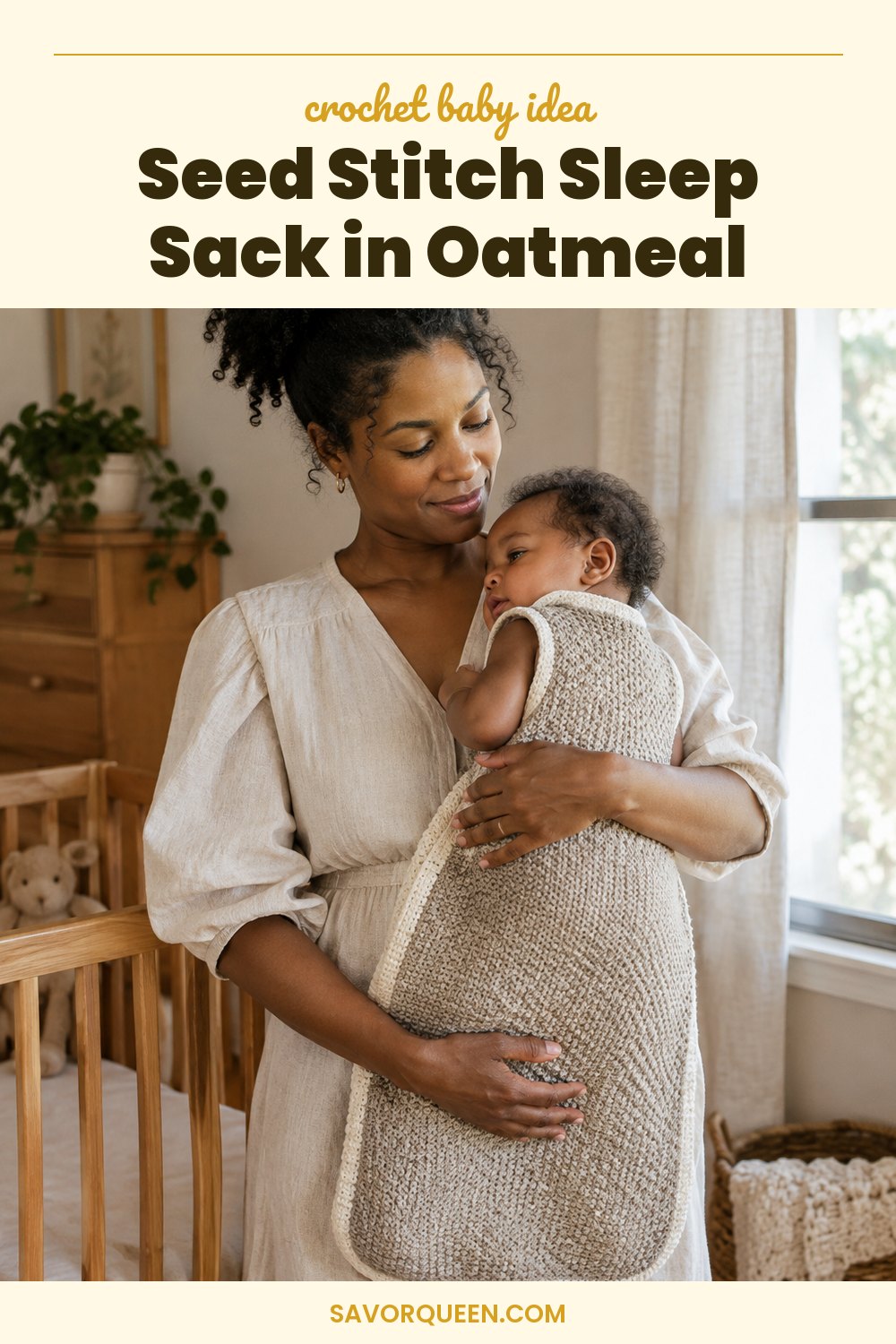
This crochet sleep sack uses a dense seed stitch body with a smooth single crochet yoke for a calm, even surface against baby skin. A light worsted cotton-bamboo blend gives enough softness for nightly wear while staying breathable and easy to wash. A 4.5 mm hook helps the stitch texture stay soft without becoming loose. The shape is gently A-line, with an open lower body for movement and a pale oatmeal tone that suits neutral nursery bedding.
Quick notes: yarn light worsted cotton-bamboo blend, hook 4.5 mm, skill level easy.
Pair it with a long-sleeve bodysuit in ivory or soft sage for cooler rooms, or a short-sleeve sleeper on mild nights. The understated texture looks tidy in a bassinet or stroller nap. A useful tip is to keep the armholes and neckline closely fitted but not tight, since baby sleep sacks should sit flat without gaping.
2. Shell Stitch Sleep Sack in Dusty Rose
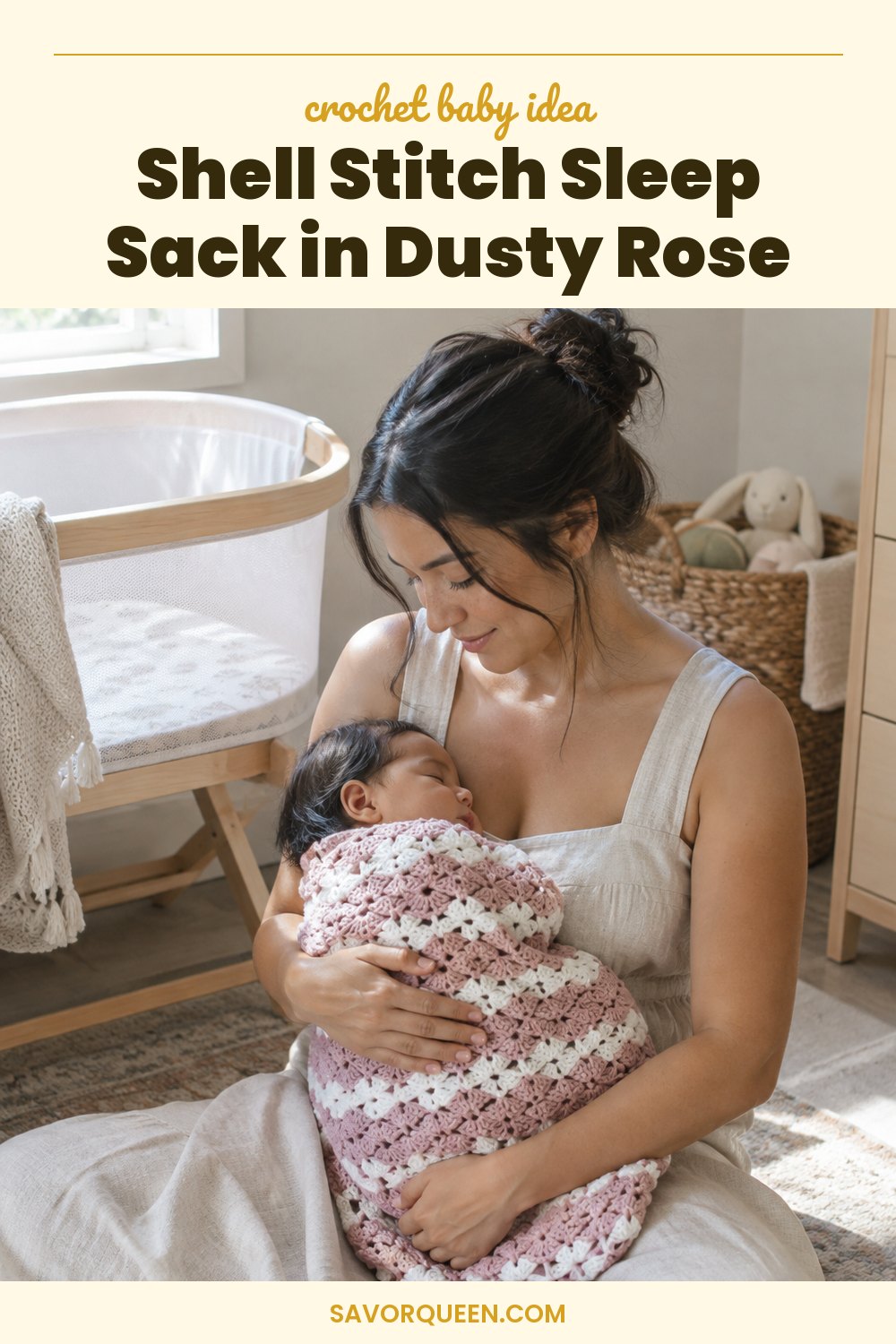
This crochet sleep sack uses shell stitch panels for a soft scalloped texture that reads sweet without feeling fussy. DK cotton makes it suitable for warmer nursery temperatures, and a 4 mm hook keeps the fabric light and flexible. The body is worked with vertical shell columns to create length and a neat drape around the torso. Dusty rose gives a gentle color story that works with white sheets, blush blankets, or wood-toned nursery pieces.
Quick notes: yarn DK cotton, hook 4 mm, skill level beginner.
Style it over a plain cotton sleeper in cream or pale grey for bedtime, or use it for a gift display with a matching bonnet nearby. The shell pattern is most appealing when the neckline sits cleanly, so block the finished piece to even out the edges. For long-term use, choose soft buttons or snaps at the shoulder instead of decorative ties.
3. Ribbed Sleep Sack in Sage Green
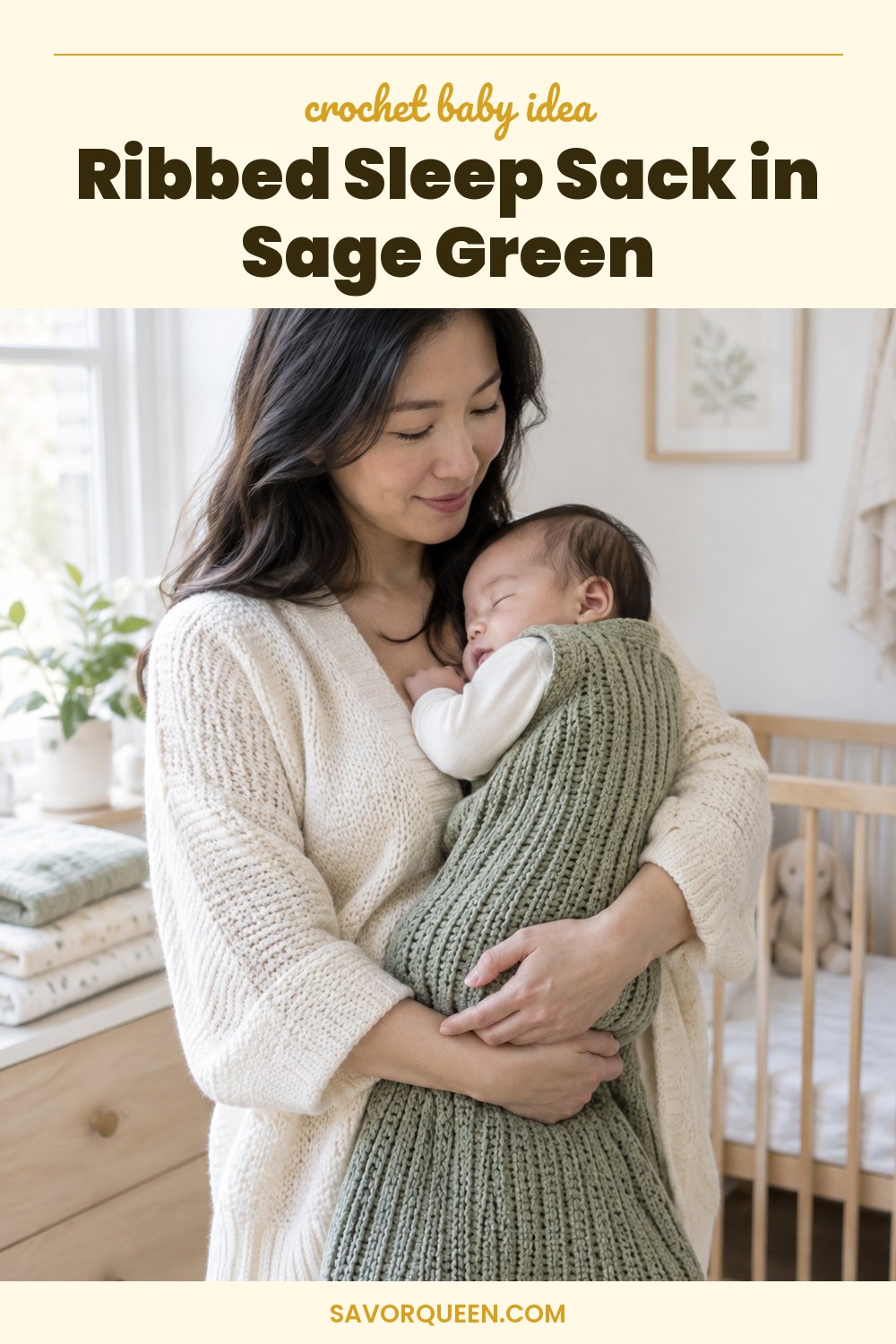
A ribbed crochet sleep sack gives a neat, tailored look while keeping the surface soft and stretchy. Front and back panels in half double crochet worked in the back loop create vertical ridges that help the piece hold shape. A washable acrylic-cotton blend is practical for repeated laundering, and a 5 mm hook keeps the ribs defined without making the fabric stiff. Sage green feels quiet and modern, especially beside white muslin sheets and natural wood furniture.
Quick notes: yarn worsted acrylic-cotton blend, hook 5 mm, skill level easy.
Wear it over a footed sleeper on cool nights or a long-sleeve bodysuit when the nursery runs warm. The ribbing looks clean under a swaddle transition layer and suits everyday use well. A practical tip is to measure chest width before seaming, since ribbed fabric can stretch more than it appears on the hook.
4. Corner-to-Corner Sleep Sack in Cream
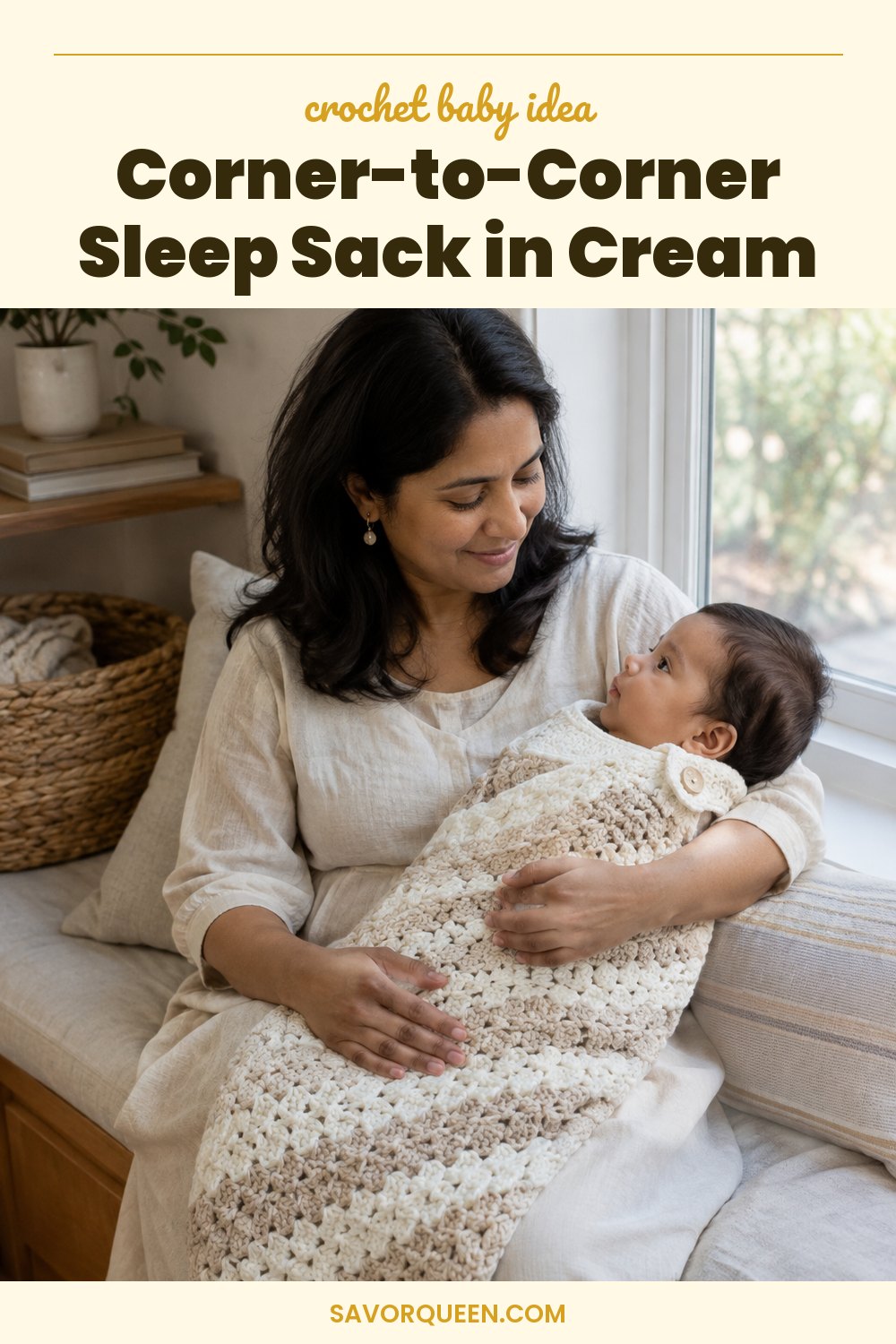
This crochet sleep sack uses corner-to-corner blocks for a geometric look that stays soft in baby weight yarn. The diagonal stitch pattern creates visual interest without bulk, and a cotton-acrylic blend works well for easy washing. Use a 4.5 mm hook for a fabric that holds shape while remaining flexible. Cream keeps the piece versatile, especially when paired with linen nursery sheets, pale oak furniture, or a simple gray swaddle blanket nearby.
Quick notes: yarn sport-weight cotton-acrylic blend, hook 4.5 mm, skill level intermediate.
It works best over a light sleeper on mild nights and can serve as a quiet gift piece for daytime photos or baby showers. The diagonal texture benefits from blocking, which helps the squares settle evenly. Keep the neckline snug enough to stay in place and avoid oversized arm openings for a secure fit.
5. Waffle Stitch Sleep Sack in Lavender
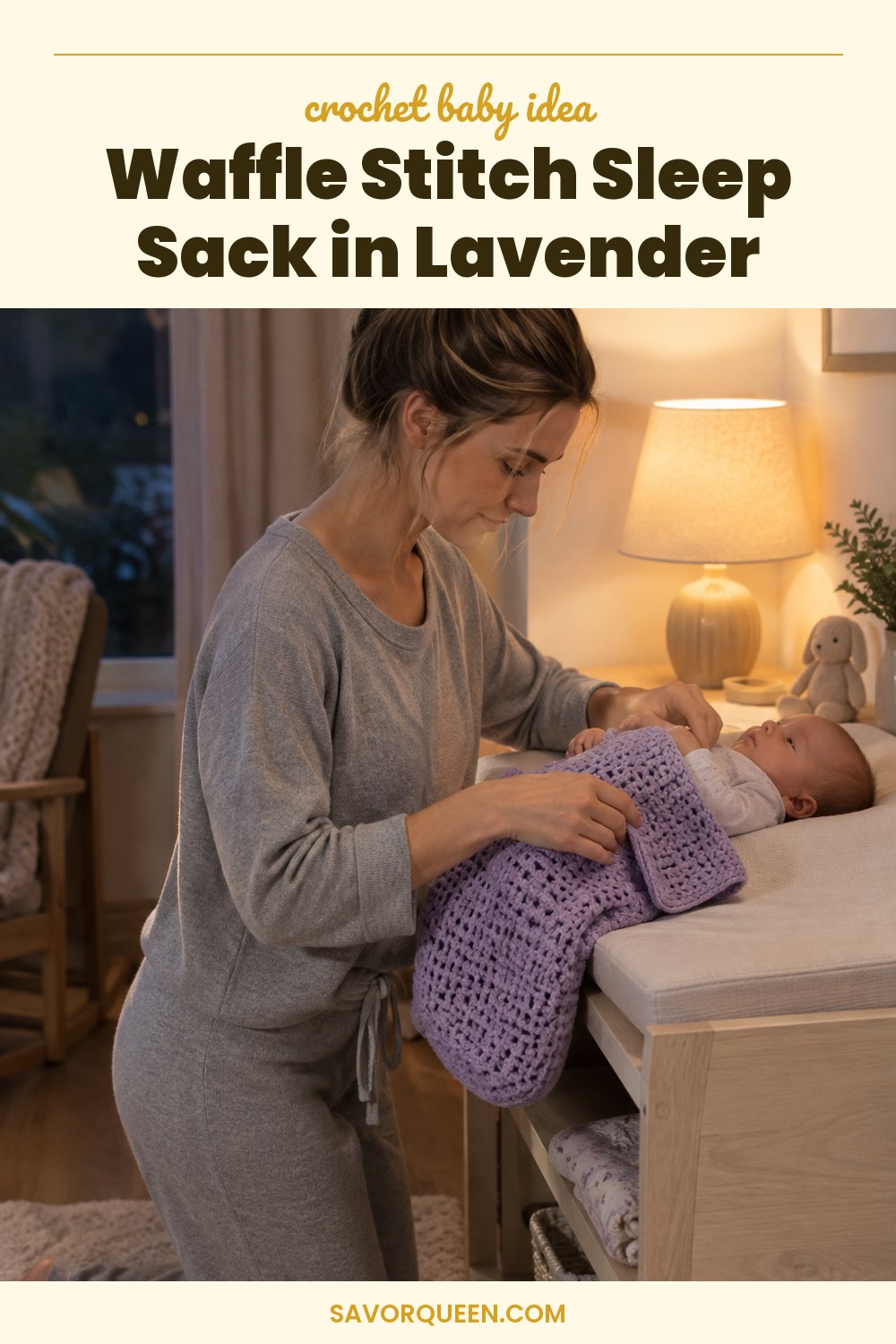
The waffle stitch gives this crochet sleep sack a cushioned texture that feels warm without looking heavy. A wool-acrylic blend in DK weight suits cooler rooms and adds a little loft around the body. A 4.5 mm hook keeps the waffle squares defined, and the shape stays gently roomy for baby movement. Lavender softens the texture and pairs well with white bedding, silver-grey blankets, or a dusty mauve nursery palette.
Quick notes: yarn DK wool-acrylic blend, hook 4.5 mm, skill level intermediate.
Style it for evening routines when the room is cooler and the baby needs a little extra layer. The raised stitch pattern stands out best in a plain color, so keep accessories simple. One practical tip is to line or reinforce the shoulder opening if using soft wool, since frequent dressing can stretch the edge.
6. Open Lace Sleep Sack in Pale Blue
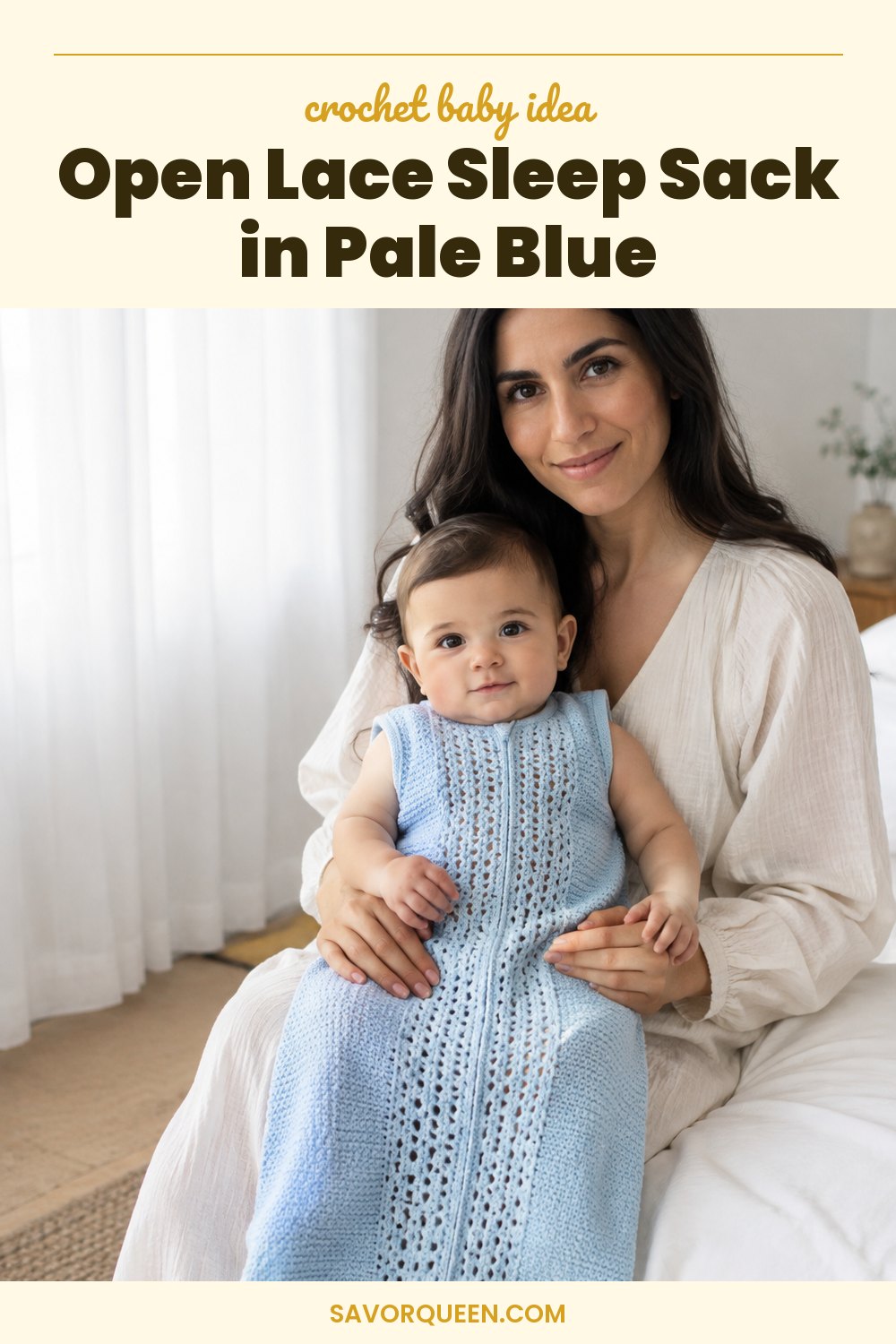
This crochet sleep sack uses a gentle lace panel down the center with solid side sections for balance. The stitch mix keeps the piece airy, so it suits warmer weather or homes with steady indoor temperature. A light cotton yarn in sport weight keeps the fabric crisp without heaviness, and a 3.75 to 4 mm hook supports the fine detail. Pale blue gives a soft, classic feel that works with white, sand, or cloudy grey nursery styling.
Quick notes: yarn sport-weight cotton, hook 4 mm, skill level advanced.
Wear it over a cotton sleeper in the same tonal range for a layered bedtime look. Keep the lace away from baby’s face and chest by positioning it lower on the body where it adds interest without fuss. A useful tip is to choose a firm neckline edging so the lace area stays flat after washing.
7. Textured Bobble Sleep Sack in Buttercream
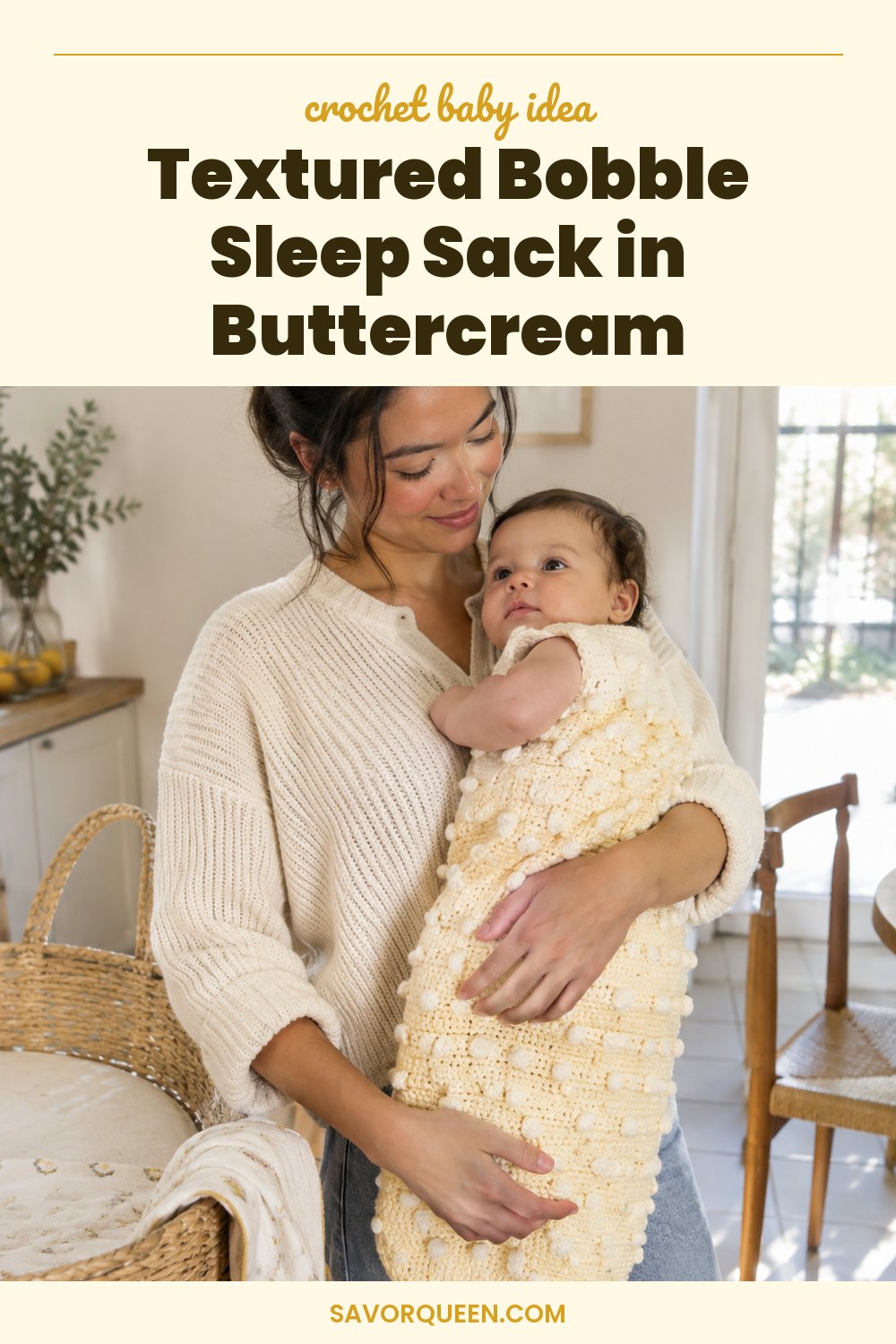
Small bobbles across the front of this crochet sleep sack give a tactile finish that feels playful while still staying simple. Use worsted cotton or a cotton blend with a 5 mm hook to keep the bobbles rounded and stable. The base fabric in single crochet or half double crochet provides enough firmness for the decorative texture to stand out. Buttercream is an easy color to pair with beige sheets, soft green blankets, or a warm nursery made with natural wood.
Quick notes: yarn worsted cotton blend, hook 5 mm, skill level easy.
This style works well for photos, gifts, and everyday bedtime when the rest of the outfit stays plain. Keep the bobbles on the front and avoid placing them where they press into the baby’s back. A practical tip is to wash it inside a mesh bag so the texture keeps its shape.
8. Garter Stitch Sleep Sack in Soft Gray
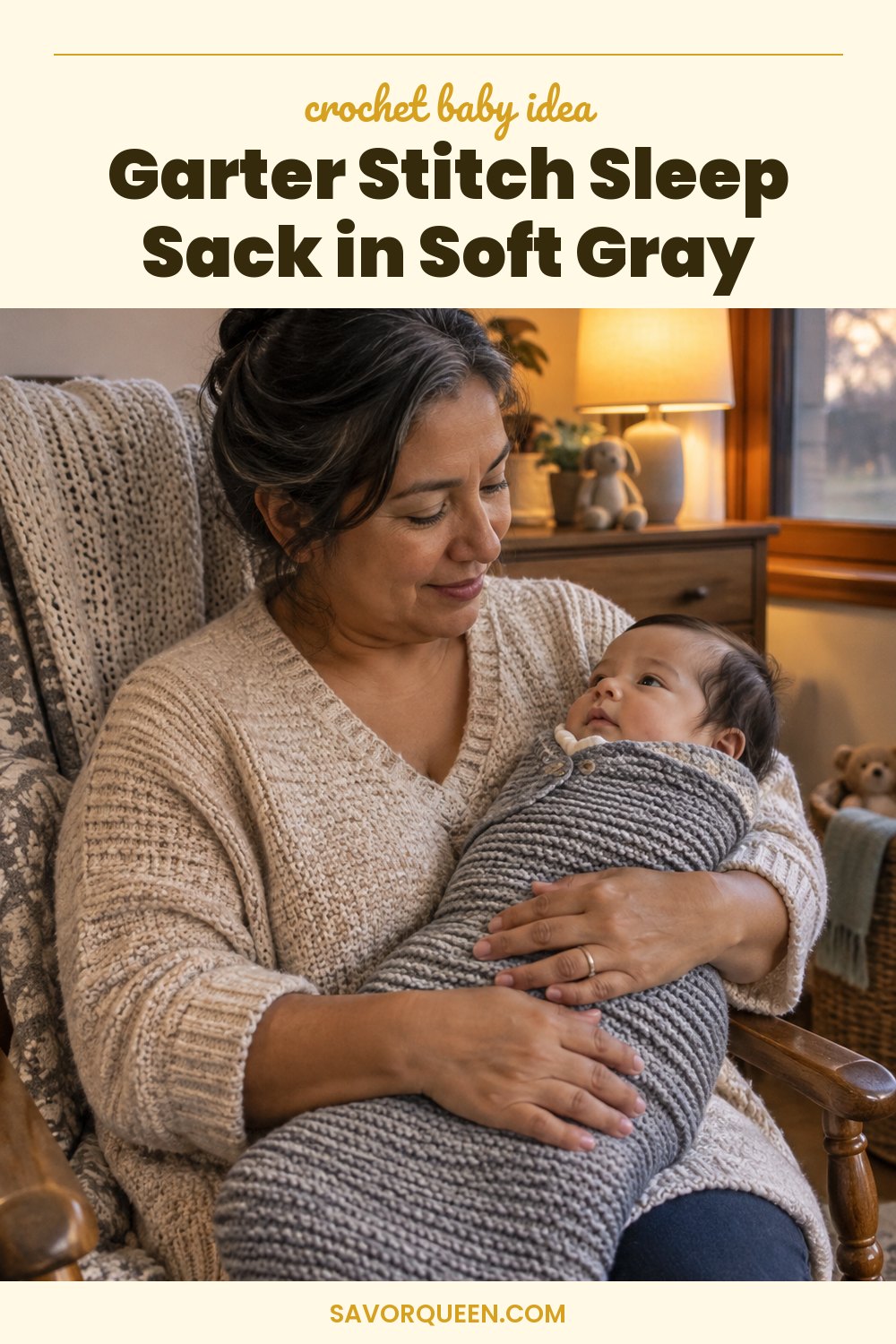
The garter-like look here comes from rows of back-loop half double crochet, which gives a ridged but relaxed surface. A merino-acrylic blend in baby-friendly worsted weight offers warmth without scratchiness, and a 5 mm hook creates a soft, flexible fabric. Soft gray gives the piece a calm, modern look and blends easily with white sleepwear, navy swaddles, or a charcoal nursery chair nearby.
Quick notes: yarn worsted merino-acrylic blend, hook 5 mm, skill level beginner.
Use it for cooler nights, especially when the room needs a little extra warmth without a heavy blanket. It pairs well with a footed sleeper and a sleep sack routine for nighttime consistency. One helpful tip is to keep the yarn smooth and pill-resistant, since this style gets handled often and should stay tidy after repeated washing.
9. Chevron Sleep Sack in Honey Gold

A low-profile chevron stitch gives this crochet sleep sack a steady rhythm without creating bulky texture. Worked in cotton-acrylic worsted weight with a 5 mm hook, the fabric stays smooth and practical for daily baby use. Honey gold brings warmth to the piece and looks especially nice with cream bodysuits, eucalyptus nursery accents, and natural baskets. The zigzag lines make the shape feel lively while the body remains soft and roomy.
Quick notes: yarn worsted cotton-acrylic blend, hook 5 mm, skill level intermediate.
This style works well for daytime naps and bedtime alike, especially when you want a cheerful color that still feels calm. Keep the chevrons subtle so the fabric lies flat under a blanket or swaddle. A practical tip is to align the side seams carefully, since chevrons can show even a slight mismatch.
10. Moss Stitch Sleep Sack in Cream and Olive
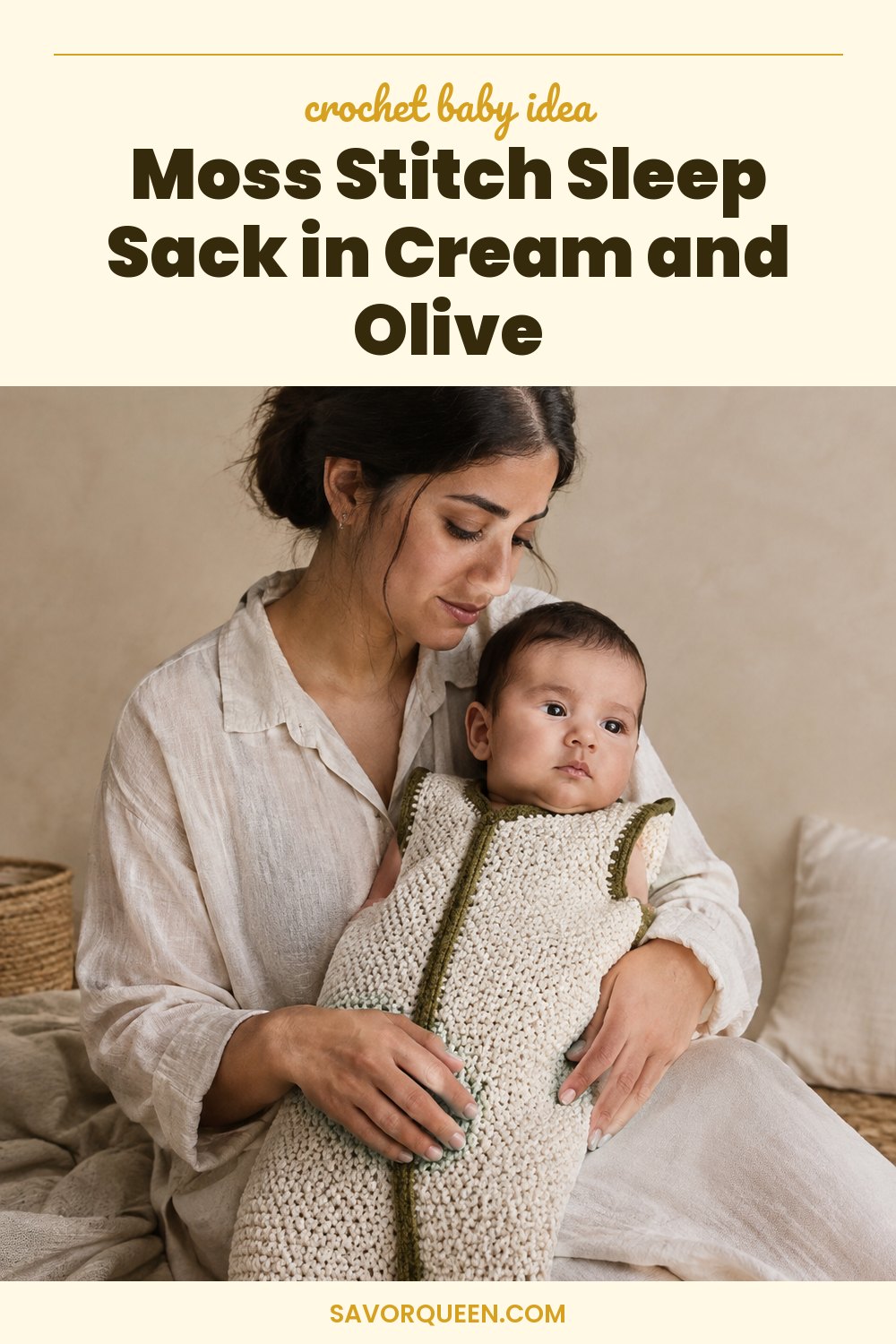
The moss stitch creates a tiny, woven-looking surface that feels neat and understated on baby gear. A cotton-bamboo blend in DK weight gives this crochet sleep sack a soft drape and enough breathability for everyday use. Use a 4 mm hook to keep the stitch definition compact and smooth. The cream body with olive edging gives a grounded color palette that works with natural wood, terracotta accents, and simple muslin bedding.
Quick notes: yarn DK cotton-bamboo blend, hook 4 mm, skill level easy.
This is a strong choice for families who want a clean look without visible bulk. Wear it over a plain sleeper and keep the rest of the bedding understated so the texture can stand out. One practical tip is to steam-block lightly instead of heavy blocking, which helps keep the moss stitch even without flattening it.
11. Spaced Puff Sleep Sack in Blush
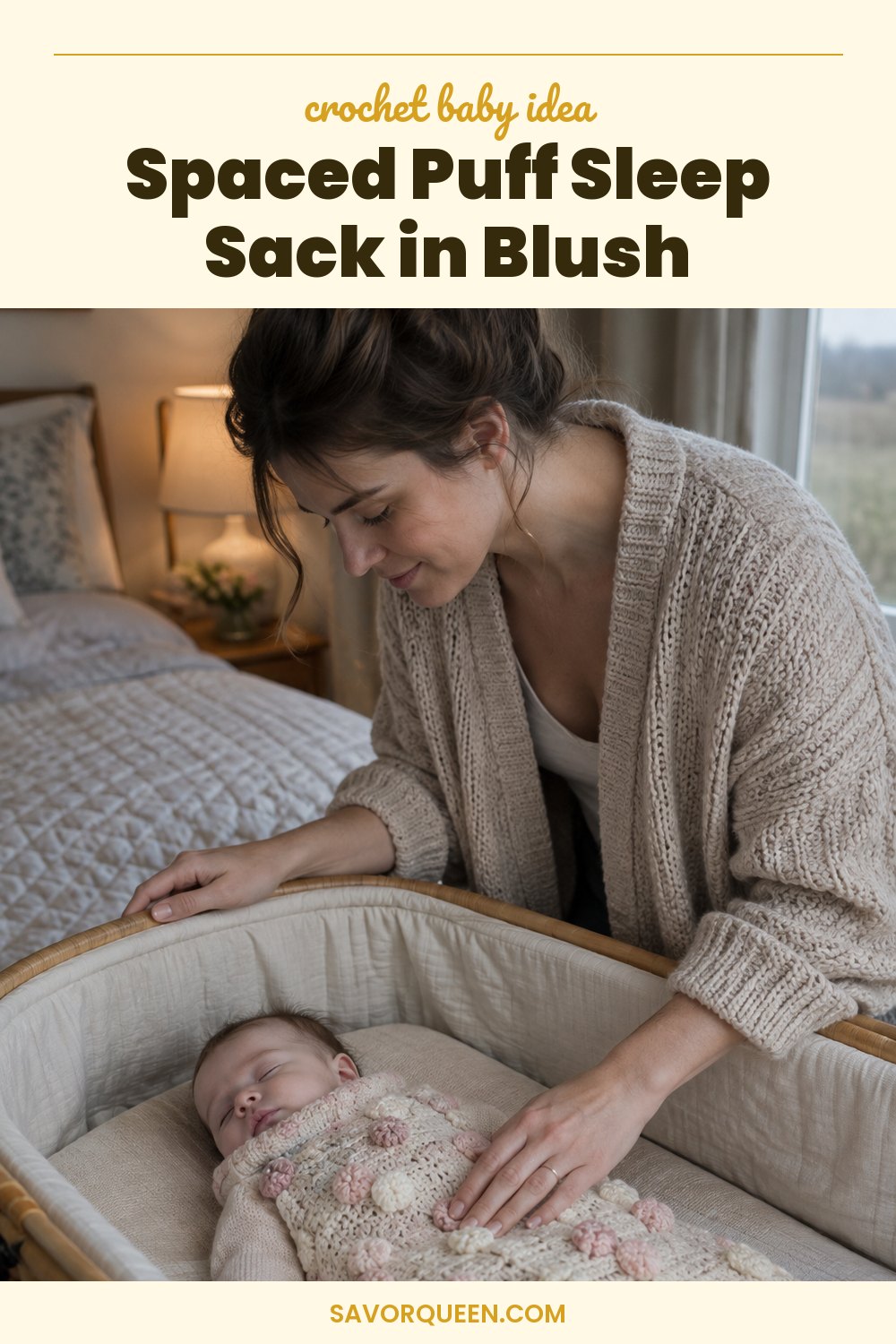
This crochet sleep sack uses small spaced puff stitches only in select zones, so the texture feels soft and controlled instead of bulky. A light worsted cotton blend and 5 mm hook keep the fabric washable and gentle. The blush tone is warm and sweet, but the overall design stays restrained with plain sides and a smooth back. It gives the sleeping layer a little interest while keeping the silhouette tidy for newborn and early infant wear.
Quick notes: yarn light worsted cotton blend, hook 5 mm, skill level intermediate.
Pair it with a simple white sleeper or a pale taupe onesie for a soft bedtime look. The puff texture works best when kept away from the edges that rub against the bassinet. A useful tip is to check the inner seam finish carefully, since baby skin responds best to smooth joins and minimal bulk.
12. Basket Weave Sleep Sack in Taupe
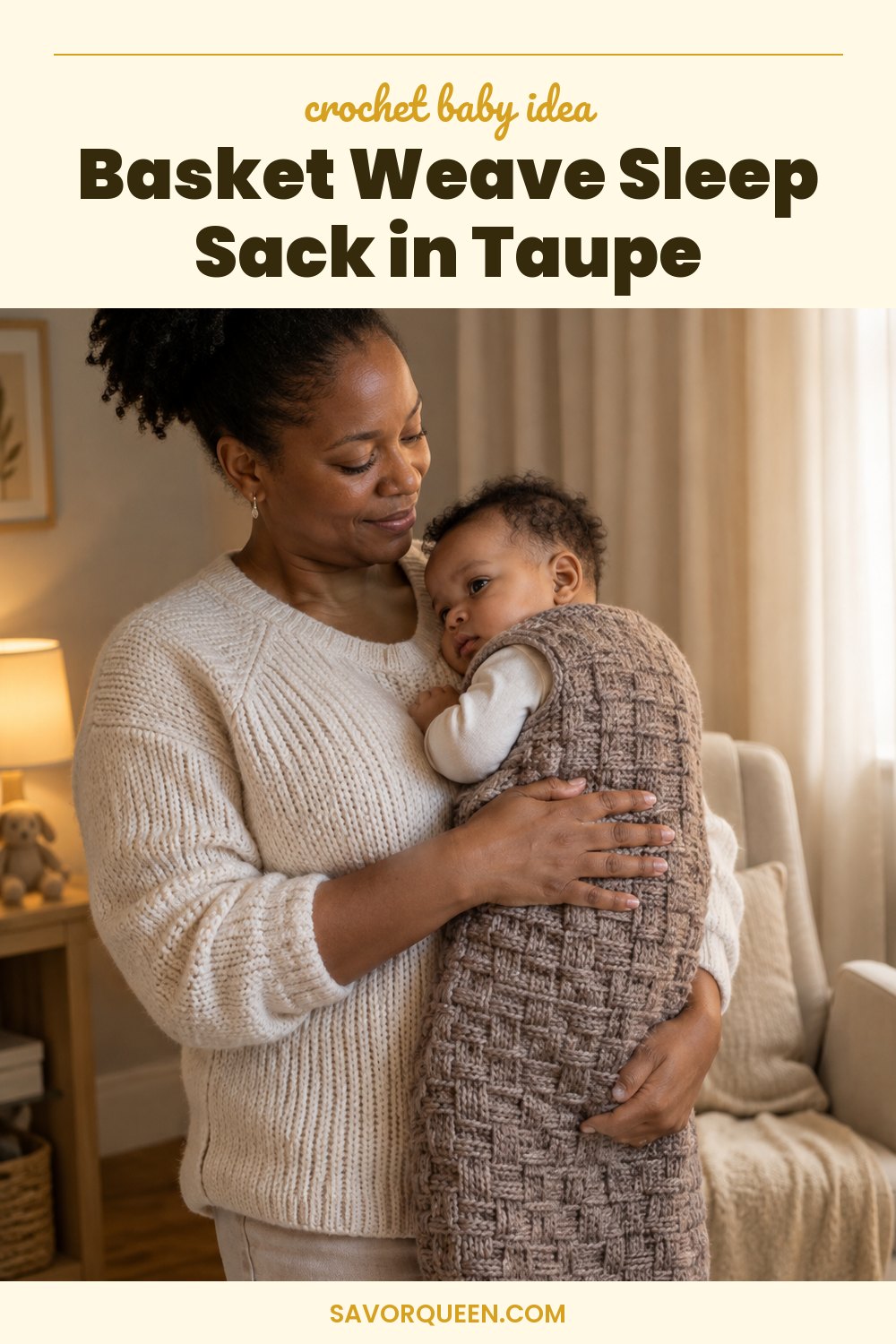
Basket weave stitches give this crochet sleep sack a structured, tactile surface that feels cozy for cooler seasons. Worked in a soft wool blend with worsted weight yarn, the fabric has enough warmth for bedroom nights without feeling dense. A 5.5 mm hook helps the weave remain supple, and taupe keeps the design quiet and easy to coordinate with linen sheets, cream knits, and natural wood nursery furniture. The shape stays roomy through the hips and legs for comfortable movement.
Quick notes: yarn worsted wool blend, hook 5.5 mm, skill level intermediate.
Use it as an outer bedtime layer over a cotton sleeper when the nursery feels cool. The woven texture looks best in a single earthy shade so the stitch pattern stays clear. One practical tip is to avoid overstuffing the sack with thick underlayers, since the weave already adds warmth and body.
13. Diagonal Puff Sleep Sack in Pebble
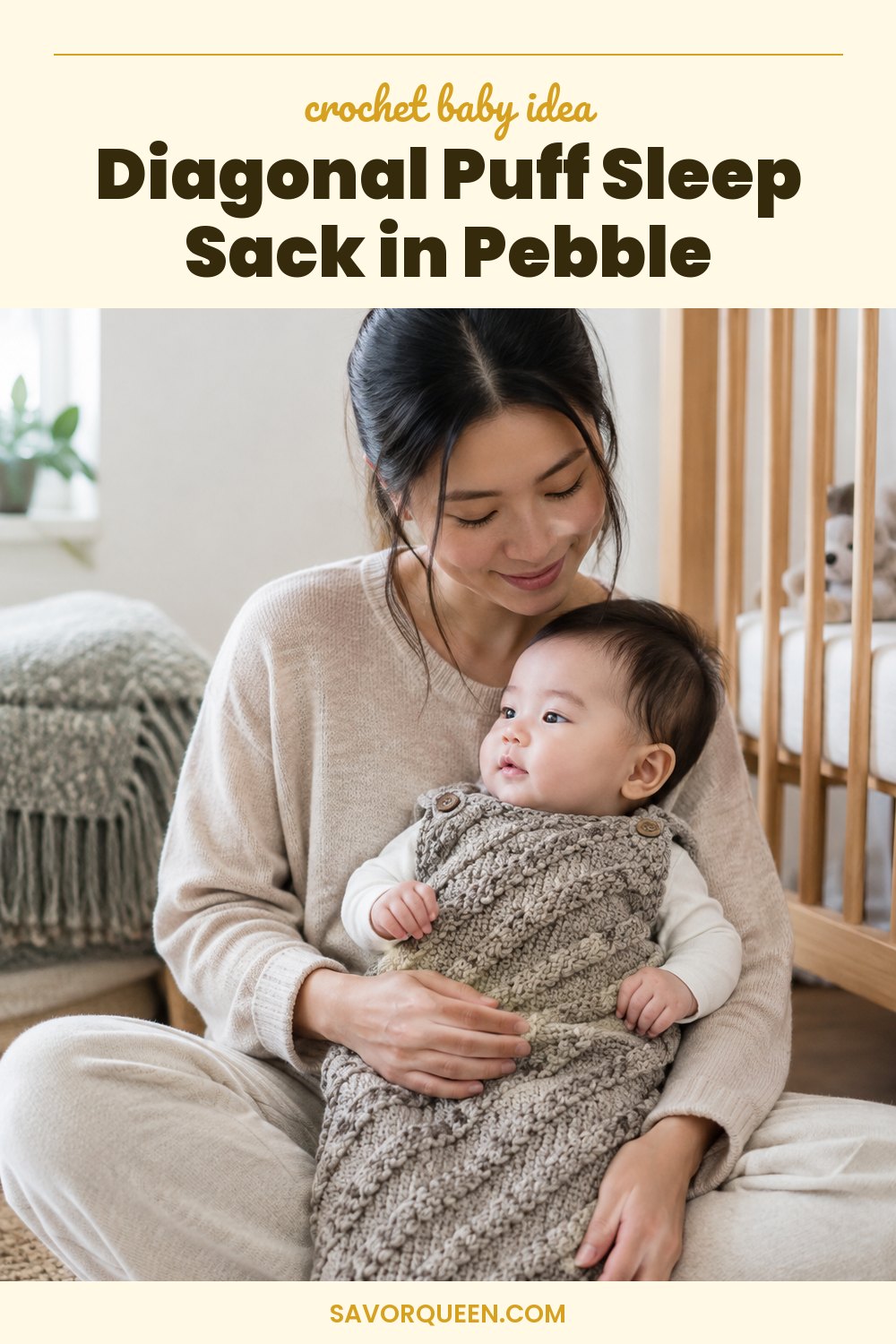
Diagonal puff lines give this crochet sleep sack a subtle movement that feels modern and cozy at the same time. Use baby acrylic in worsted weight with a 5 mm hook for a washable finish that keeps its shape after regular use. The pebble color sits between gray and beige, which makes it easy to pair with white sleepwear, muted blue blankets, or a neutral nursery palette. The construction remains simple, with smooth sides and a softly textured front panel.
Quick notes: yarn worsted baby acrylic, hook 5 mm, skill level easy.
This style works well for everyday nighttime wear because the puff texture is decorative but not bulky. Pair it with a long-sleeve bodysuit and keep the rest of the bedtime setup pared back. A useful tip is to check stitch counts carefully on each diagonal row, since uneven tension can make the lines drift.
14. Striped Sleep Sack in Cream and Blue
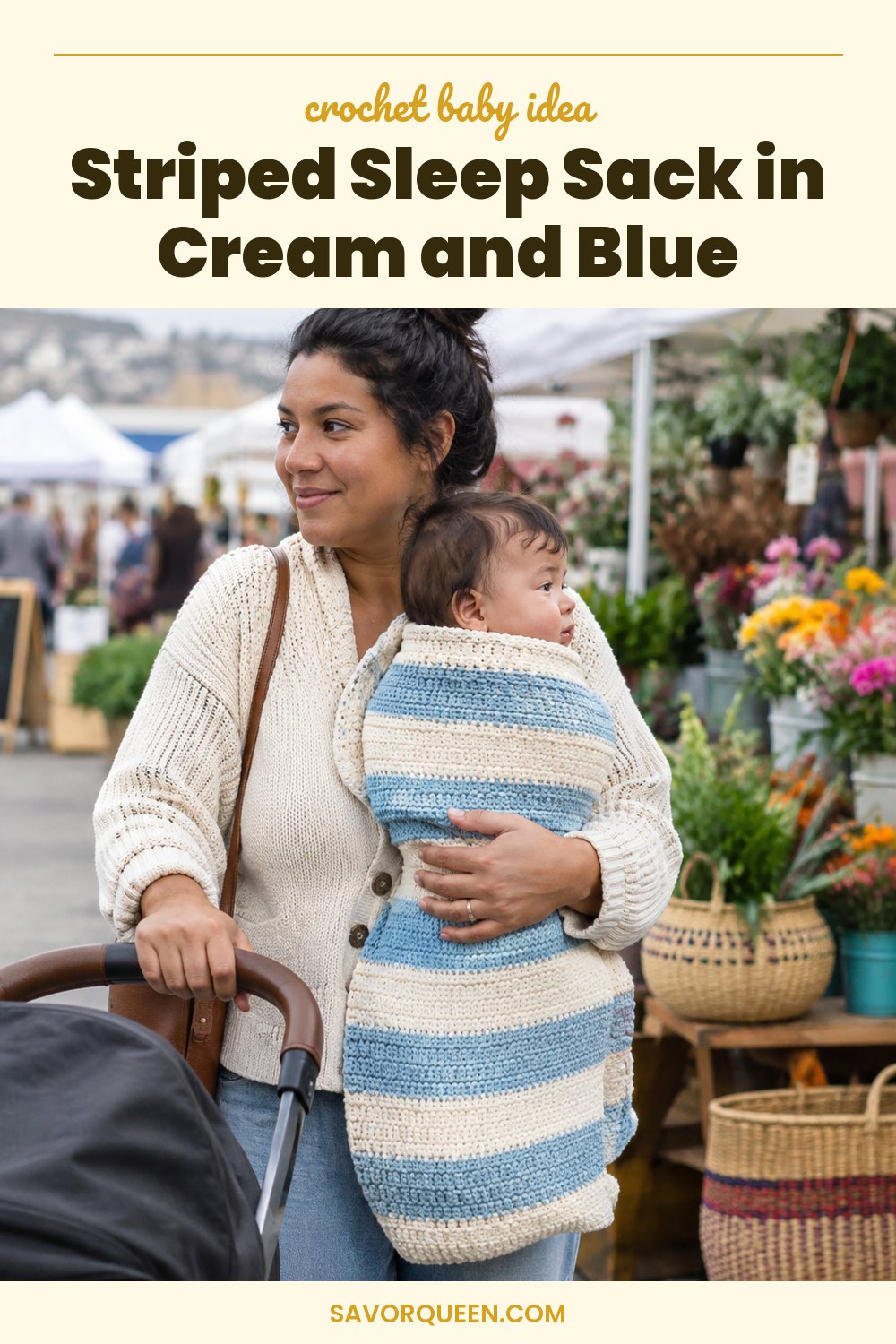
This crochet sleep sack uses broad stripes in cream and soft blue for a clean, classic look. The stitch fabric is simple half double crochet worked in smooth rounds, which makes the stripes easy to read and keeps the sack flexible. A DK cotton yarn is ideal for mild weather and frequent washing, while a 4 mm hook gives the fabric a neat finish. The stripe placement can be adjusted to flatter the shape and keep the visual rhythm balanced from chest to hem.
Quick notes: yarn DK cotton, hook 4 mm, skill level beginner.
It pairs well with white sleepers, denim-blue nursery details, or a simple swaddle in soft gray. The striped color story feels fresh in a daytime nursery and still calm enough for night. A practical tip is to carry yarn loosely at color changes so the seams do not pull or pucker.
How to choose, make and care for these
Choose breathable yarn first
For warm rooms, use cotton, bamboo blends, or cotton-acrylic yarn in DK or sport weight. For cooler rooms, choose a wool blend with a soft hand and a washable finish. Baby sleep sacks should feel soft, not heavy, and the yarn should be easy to launder after repeated nighttime use.
Keep the neckline and armholes safe
A baby sleep sack should sit close enough to stay in place, but never so tight that it pulls. Keep armholes smooth, avoid loose decorative ties, and use secure closures like snaps or buttons placed away from the face. If the fabric stretches a lot, measure after blocking before final seaming.
Pick stitch texture by season
Dense stitches like moss, ribbing, or basket weave work well for cooler months because they trap a little warmth. Lighter stitches like shell, lace, or open diagonals suit warmer weather or heated homes. Keep texture away from the face and choose flatter stitches for everyday nursery use.
Wash and block with care
Most baby sleep sacks need gentle washing and flat drying to keep the shape even. Use a mesh bag for textured designs and reshape the neckline and hem while damp. Light blocking helps stitches settle, especially on diagonal, lace, or corner-to-corner constructions.
Plan for growth and layering
Size the sack with enough room for a bodysuit or sleeper underneath, but keep the upper body neat. Newborn and early infant sacks often need a slightly shorter torso and a roomy lower section. If you are between sizes, choose the larger fit and adjust the shoulder closure for a cleaner line.
Frequently asked questions
Are crochet sleep sacks safe for babies at night?
They can be a good bedtime layer when they are made with breathable yarn, a secure neckline, and no loose embellishments. Keep the fit close at the top and roomy at the bottom, and follow safe sleep guidance for the baby’s age and room temperature.
What yarn works best for crochet sleep sacks?
Soft cotton, cotton-bamboo, and washable wool blends are common choices. For warmer rooms, lighter cotton and bamboo blends work well; for cooler rooms, choose a soft wool blend with a baby-friendly hand and clear washing instructions.
Which stitch is best for crochet sleep sacks in summer?
Lighter stitches such as shell stitch, open lace panels, or simple half double crochet rows work well for warmer weather. Keep the structure smooth and use a breathable yarn so the sack stays comfortable over a thin sleeper.
How do you size crochet sleep sacks for a growing baby?
Measure chest, length, and armhole depth, then add a little ease for layering. Babies grow quickly, so a slightly generous lower body is useful, but the neckline and shoulders should stay secure. When in doubt, size up and keep closures adjustable.
Can crochet sleep sacks be washed often?
Yes, if the yarn is chosen for machine washing and the stitches are finished neatly. Use gentle cycles, a mesh laundry bag for texture, and flat drying when needed. This is especially helpful for cotton, cotton-acrylic, and washable wool blends.
More crochet ideas to save
These 14 cozy crochet sleep sack styles give you a calm starting point for baby bedtime makes, from simple ribs to textured bobbles and soft lace. For more nursery layering ideas, check out “14 Easy Crochet Baby Onesie Patterns To Try“, “16 Cozy Crochet Toddler Sweater Patterns For Layering“, and “15 Classic Crochet Baby Cardigan Patterns For Boys“. Together, they make a practical set of related baby wardrobe reads for warmer days, cooler nights, and thoughtful handmade gifts.
Browse every design in the crochet patterns section, and learn the basics in how to crochet.