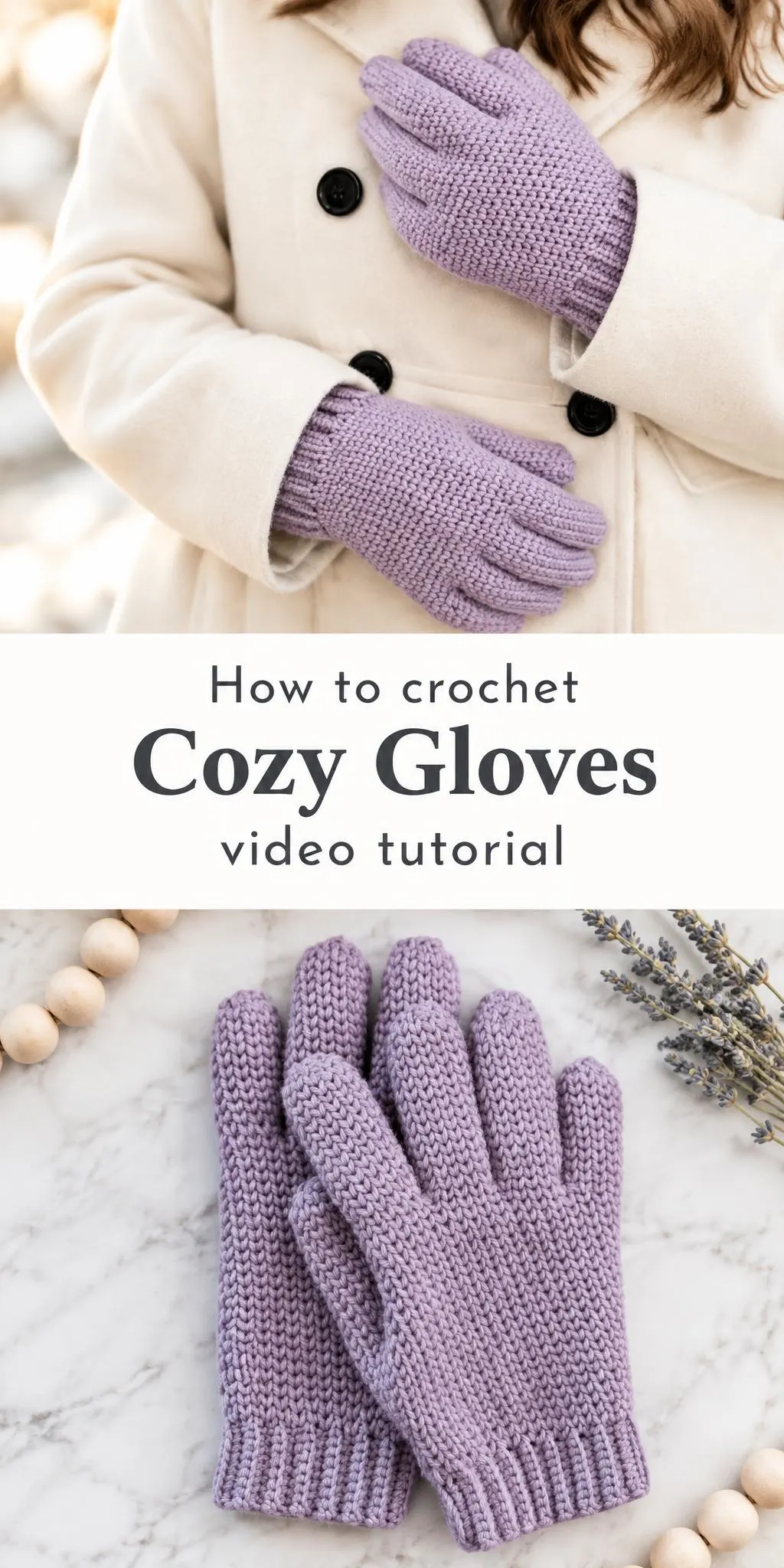
Crochet cozy gloves combine the warmth of a snug knit with the satisfying texture of stitch-by-stitch crochet. This lavender pair pairs a sturdy ribbed cuff with a fabric that feels dense and comfortable against the hand, making them a practical choice for chilly walks, errands, and commutes.
In this post
Why Cozy Gloves Earn a Permanent Place in Your Wardrobe
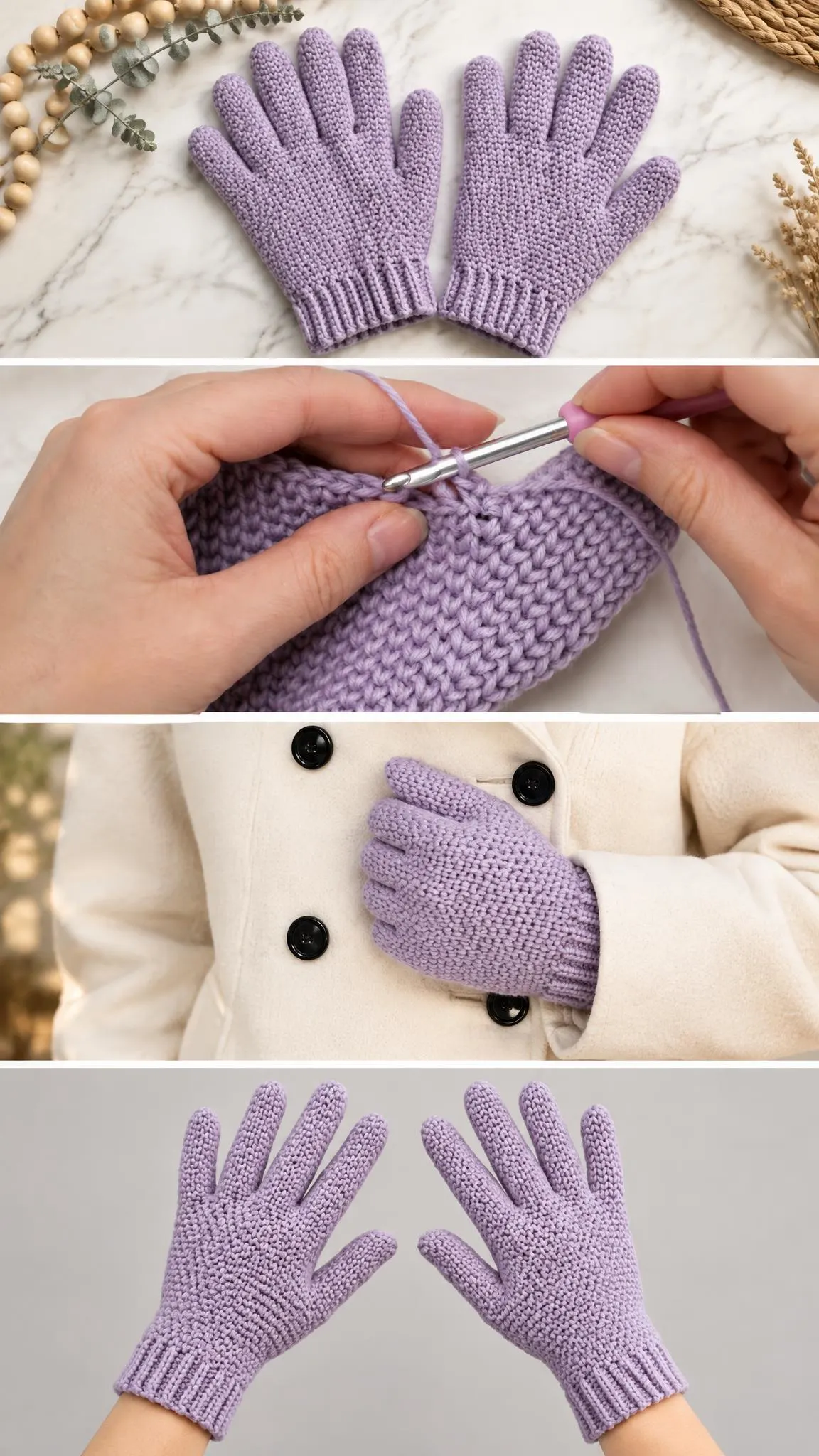
These gloves stand out first for their clean silhouette. Each finger is shaped separately, with a rounded tip and a gentle taper toward the base, so the finished glove looks tailored rather than bulky. The surface shows a fine, even stitch pattern that reads as a neat textured fabric, and the ribbed cuff at the wrist creates a defined edge that keeps the glove feeling put-together.
The appeal goes beyond looks. Gloves are one of the most used accessories in cold weather, and a well-fitted pair stays on the hand when you need to grip keys, sip a hot drink, or zip up a jacket. A pair like this suits everyday wear, pairs well with coats in neutral tones, and makes a thoughtful handmade gift for someone who spends time outdoors.
Cozy Gloves Related Posts:
- Crochet Textured Stitch Swatches: A Colorful and Practical Guide
- Crochet Mini Strawberry Charms: A Cute and Playful Handmade Accessory
- Crochet Oh My Stars Scarf: A Cozy and Stylish Handmade Accessory
- Crochet Textured Tote Bag: A Stylish Handmade Staple
Materials
For a glove that holds its shape and feels soft, a medium-weight yarn with some elasticity is a good starting point. Wool blends and acrylic-wool mixes offer warmth and resilience, while a smooth, tightly plied yarn will show stitch definition more clearly. Choose a fiber that you can wash without distorting the fingers, since gloves are often handled roughly.
Pair the yarn with a crochet hook sized to produce a firm, dense fabric. A slightly smaller hook than the label suggests can help the gloves stay warm and prevent gaps between stitches. Stitch markers are useful for keeping track of the finger placements, and a tapestry needle will help you weave in ends neatly. If you want a glove that stretches comfortably over the hand, consider a yarn with a little natural bounce.
Understanding the Glove Construction
Crochet gloves are usually worked from the cuff upward, with the hand section built in rounds and the fingers added as separate tubes. This approach lets the cuff set the fit at the wrist while the hand section shapes itself to the palm. The thumb is typically worked as a separate element and joined to the main body, which is why careful placement matters.
The finger shaping deserves special attention. Increases and decreases must be placed so the fingers taper naturally and the tips close smoothly. If the finger tubes feel too loose, you can adjust the number of stitches in the next round rather than forcing a snug fit later. Working each finger with consistent tension makes it easier to achieve matching lengths across both gloves.
Creating the Texture and Stitch Definition
The texture of these gloves comes from a dense, repeating stitch that produces a subtle horizontal rhythm across the back of the hand. Single crochet and its variations are a popular choice for this effect because they create a firm, close fabric that resists stretching. Working in back loops can accentuate ridges, giving the surface a knitted appearance.
Consistent tension is what makes this texture look polished. Uneven stitches will show as bumps or gaps, especially on the fingers where the fabric is turned. Take time to keep each stitch the same height, and count stitches at the end of each round to confirm that the fabric remains even.
Working the Ribbed Cuff
The cuff offers a strong contrast to the hand section. A ribbed texture is built by working through the back loops only, which pulls the fabric into raised ridges. This creates elasticity that helps the glove stay snug at the wrist without restricting movement. A cuff worked in a slightly smaller hook or a tighter tension will fit more securely.
Styling Your Cozy Gloves
Lavender is a gentle, versatile shade that works in many settings. Against a cream or white coat, the gloves appear soft and airy, while darker outerwear like charcoal or navy creates a crisp, cool contrast. Lavender also pairs nicely with muted neutrals such as oatmeal, taupe, and stone, which keep the look calm and cohesive.
For everyday wear, match the gloves with a knit hat or scarf in a complementary tone for a coordinated winter set. Gloves in this style are easy to carry in a coat pocket or tuck into a tote bag, so they are always ready when the temperature drops. They also make a meaningful gift paired with a mug of hot cocoa or a small winter care basket.
Finishing Touches for a Polished Result
Weave in all ends securely along the inside of the fabric, especially at the finger tips and where the thumb joins the hand. Loose ends can work free after a few wears, so a few extra passes with the needle are worth the effort. Keeping the inside neat also makes the gloves more comfortable against the skin.
Once complete, lightly shape each glove by smoothing the fingers and gently stretching the cuff to even out the stitches. If the fabric seems uneven, a light steam or a short blocking session can help it settle, provided your yarn allows it. Always check the yarn label before washing, and lay the gloves flat to dry so they keep their form.
A Warm Finish That Feels Like Yours
Cozy gloves are a rewarding project because they combine careful shaping with a result you will wear every day. Each finger, each stitch, and each cuff contributes to a glove that is both functional and attractive. Take your time with the finger placements and tension, and the finished pair will reward you with comfort for many winters.
If you would like to see each stage in action, follow the video below. Pause whenever you need to match a stitch or check a finger length, and return to the section that matches your progress.
Follow us on Pinterest and subscribe to the Newsletter so you don’t miss a thing!
Tutorial and photos of this cozy gloves by: B.Hooked Crochet.