The crochet openwork stitch shawl is a project that rewards patience with a fabric full of light, texture, and movement. Its airy lattice and scalloped edge make it equally at home over a plain dress, a winter coat, or a pair of jeans on a cool evening.
In this post
Why This Openwork Shawl Stands Out
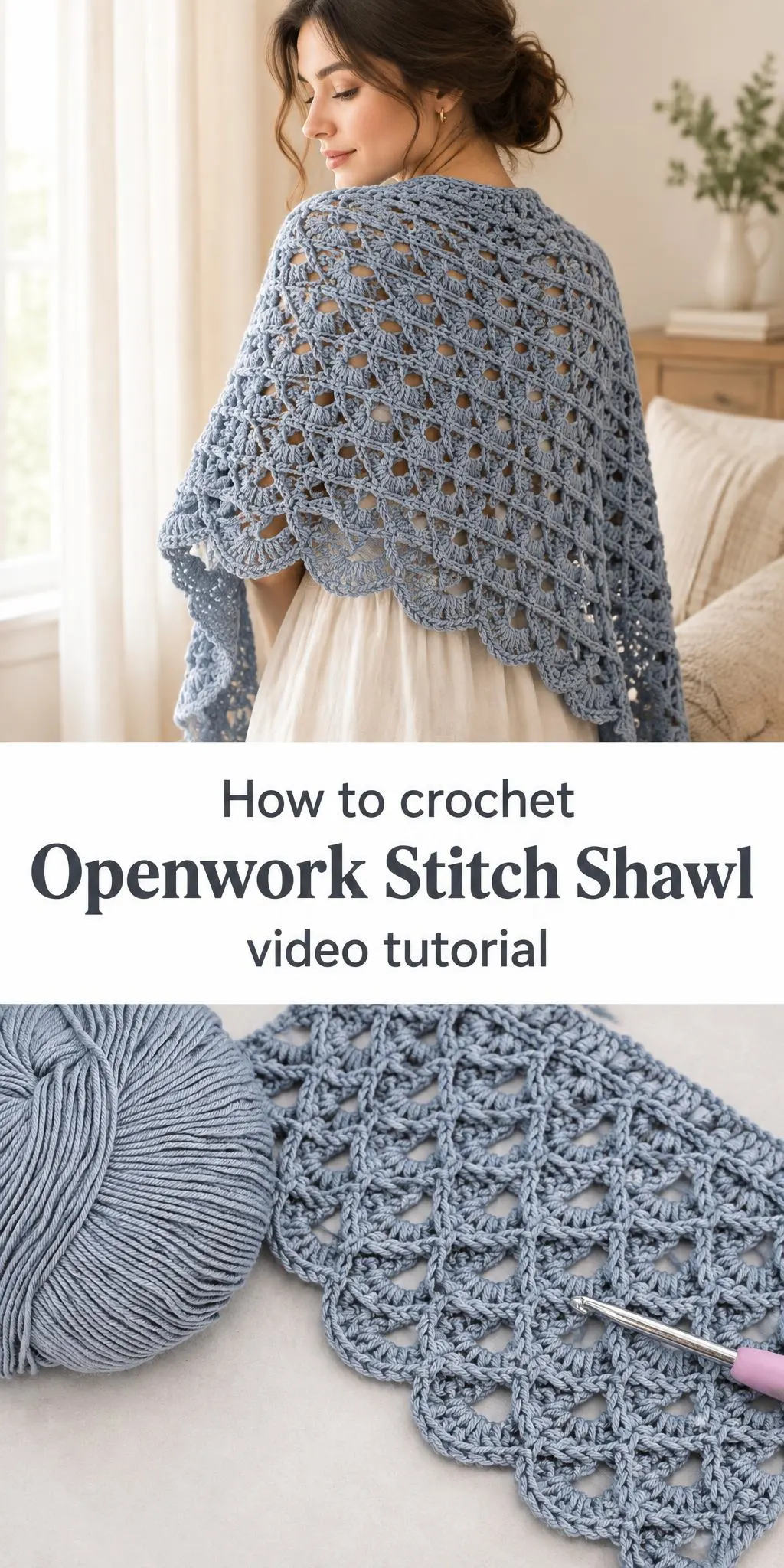
What first draws the eye in this piece is its lattice of open triangular windows. Each opening is framed by raised, rounded clusters that pull the fabric into a crisp, almost geometric rhythm. The stitches sit in staggered rows, so the openings look like a pattern of small diamonds rather than a simple grid. Light passes through these gaps, which gives the shawl a softness that a solid fabric could never achieve.
The finished shape also matters. The shawl grows into a generous rectangle or triangle with a scalloped border that softens its edges and adds a feminine finish. That border is useful as well as decorative, because it hides the slight curl that open stitches sometimes develop along a raw edge. Many people find this kind of shawl works well for transitional weather, since it drapes around the shoulders without the bulk of a cardigan.
Stitch Shawl Related Posts:
- Crochet Simple Tote Bag with Pocket: A Stylish Handmade Essential
- Crochet Zigzag Stitch Pattern: A Striking and Eye-Catching Textured Design
- Crochet Tunic Blouse: A Chic and Airy Handmade Staple
- Crochet Book Cover with Picture Frame: A Charming and Personalized Handmade Accessory
Choosing Materials for Drape and Definition
Yarn choice shapes how this stitch behaves. A smooth, mercerized cotton or a cotton blend tends to show the openwork clearly, because each stitch keeps its outline. Soft acrylic blends are gentler on a budget and easy to care for, though they can look slightly fuzzy around the raised clusters. For a lightweight, airy result, choose a fine to light worsted yarn; for a slightly warmer, more substantial wrap, a heavier yarn will fill the openings with more presence, but the lattice may look less delicate.
The color you select changes the entire mood of the shawl. A soft, dusty grey-blue like the one used here reads calm and modern, and it pairs easily with denim, white linen, and black knitwear. If you prefer something warmer, a cream or oatmeal shade keeps the texture visible while feeling cozy. Deeper tones such as navy or forest green make the openings look darker, which can make the stitch pattern appear more sculpted. Consider how much you want the holes to read as shadow or as light.
Hook Size and Fabric Feel
Hook size controls the openness of the lattice. A slightly smaller hook than the label suggests produces a firmer fabric with sharper triangular gaps, while a larger hook creates a looser, airier wrap. Test a small swatch first. If the fabric feels stiff and the openings look pinched, move up a size. If the edges wobble or the stitches look loose, go down. A swatch also reveals how the clusters will sit once you start working the full piece.
Understanding the Openwork Design
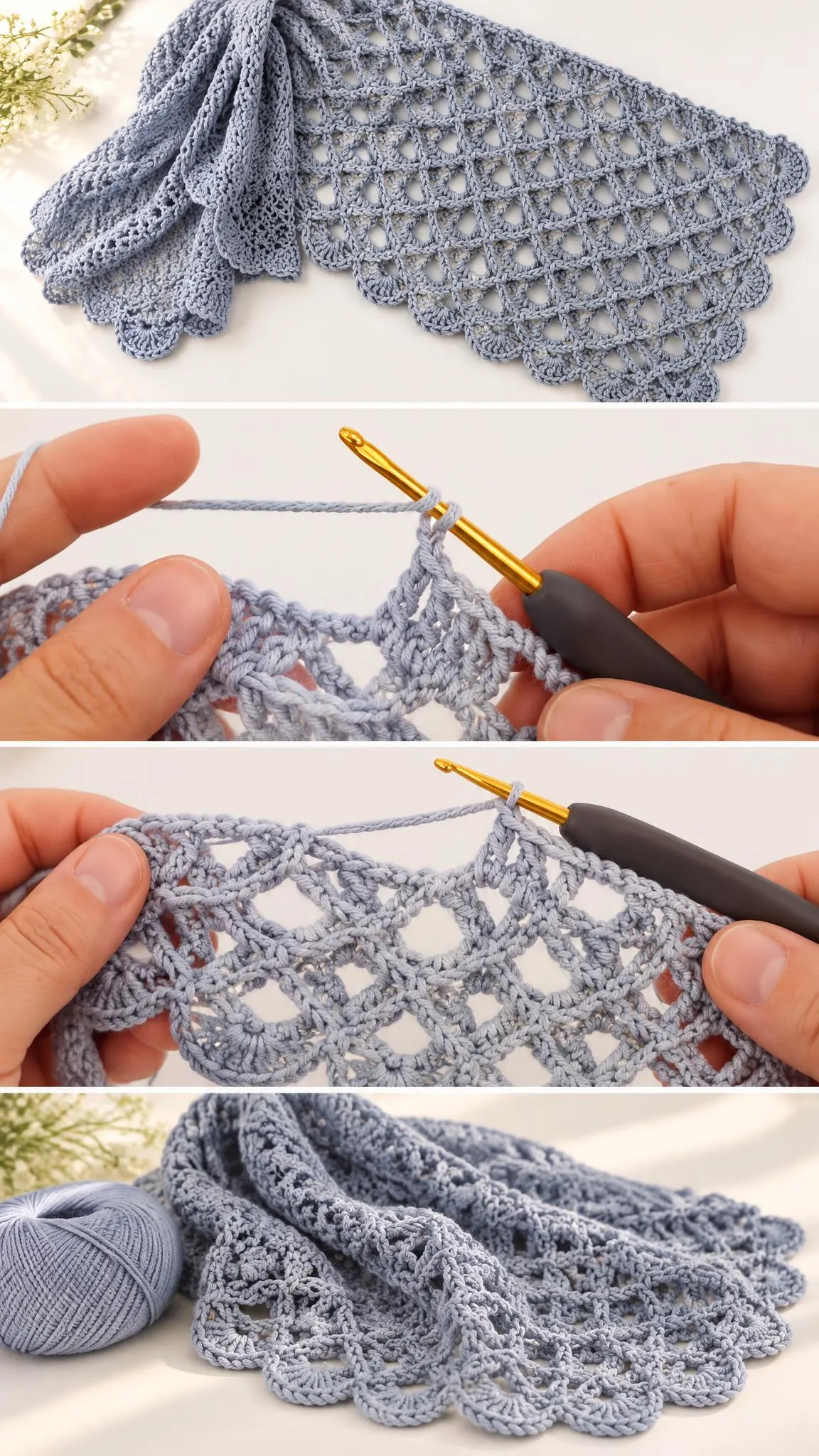
The openings are created by combining solid stitch groups with open chain spaces, which is the basic logic of most lattice patterns of this kind. The raised, rounded forms come from grouping several stitches into one place, then anchoring them so they stand forward. Because the rows are staggered, each new row sits partly over the gaps of the row before, which locks the lattice together. Understanding this relationship helps you read your work and notice whether the openings are lining up correctly as you go.
Counting carefully is especially important here. Openwork patterns depend on consistent repeats, so a single missed chain space can shift the whole diagonal and disrupt the balance of the triangles. Many crocheters mark the start of each repeat with a stitch marker or a contrasting thread. This simple habit keeps the lattice even and makes it easy to spot a mistake before it travels across several rows.
Working the Scalloped Edge
The scalloped border is what finishes this shawl with a distinctive, handmade look. Scallops are typically worked by placing clusters of stitches into a single point and then skipping a few stitches before the next group, which creates a rounded curve. Keep the tension steady along the border, because uneven scallops can make the whole edge look wavy in a way that is hard to correct. Working the border slightly more loosely than the body often helps it lie flat and drape gracefully.
Wearing and Styling the Finished Shawl
This shawl works beautifully as a layering piece. Drape it over the shoulders of a fitted knit dress for a soft, romantic silhouette, or wear it open over a plain t-shirt and wide-leg trousers for a relaxed everyday look. The open lattice means it does not overwhelm an outfit, so it adds warmth and detail without competing with a patterned blouse.
For evenings and occasions, consider a lighter color such as ivory or pale blush paired with a simple black dress. The shawl becomes a focal point that catches light at the shoulders. In cooler months, a heavier yarn in a neutral shade can be wrapped twice around the neck and secured with a wooden toggle or a decorative pin, turning the piece into a cozy scarf.
Think about the setting too. A shawl in soft grey-blue suits a bright breakfast table or a seaside walk, while deeper colors look striking against a winter coat. Because the piece is so versatile, it makes a thoughtful gift for someone who appreciates handmade textiles and enjoys having options for changing weather.
Finishing Touches and Care
Blocking makes a significant difference in how an openwork shawl looks. After weaving in your ends, soak the finished piece in lukewarm water with a gentle wool or cotton wash, then press out the excess moisture without wringing. Pin the shawl to shape on a flat, clean surface, gently stretching the edges and the scallops until the openings look even. Let it dry completely before unpinning. Blocking opens the lattice, relaxes the stitches, and helps the border sit flat.
Care depends on your yarn. Cotton can usually be washed on a gentle cycle or by hand and laid flat to dry, while acrylic blends tolerate machine washing on a delicate setting. Avoid high heat, which can distort both the openings and the scalloped border. Store the shawl folded rather than hung, so the weight of the fabric does not stretch the lattice out of shape over time.
Take the time to weave in every end neatly, especially along the scalloped edge where loose threads are most visible. Small details like these are what make a handmade shawl feel finished and ready to wear.
A crochet openwork shawl offers a rewarding balance of pattern, texture, and everyday usefulness. Watching the lattice take shape row by row is part of the pleasure, and each triangular opening becomes a small reminder of the care that went into it. If any part of the stitch sequence feels unclear, the video below will walk you through it, and you are welcome to pause and rewatch as often as you need. Enjoy every row of the journey.
Follow us on Pinterest and subscribe to the Newsletter so you don’t miss a thing!
Tutorial and photos of this openwork stitch shawl by: Crochet Knitting Sort.