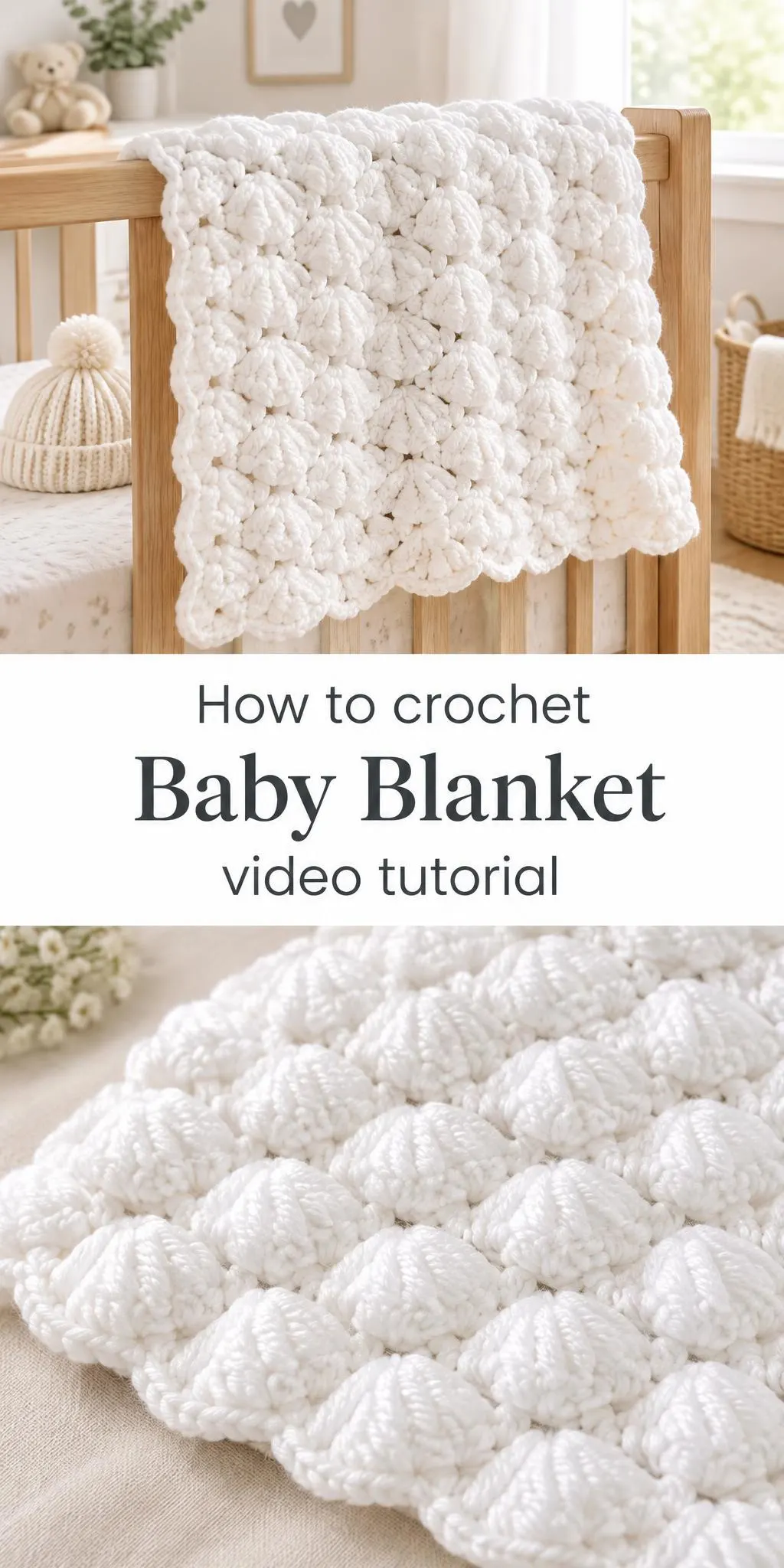
A crochet baby blanket is one of those projects that feels like a true treasure from the first stitch to the last. Its raised, shell-like texture catches the light beautifully, and its soft white yarn promises warmth and gentleness for the little one who will wrap up in it.
In this post
- Why a Crochet Baby Blanket Deserves a Place in Your Queue
- Baby Blanket Related Posts:
- Choosing Materials for a Soft Baby Blanket
- Understanding the Textured Design
- Shaping the Blanket and Planning the Size
- Using and Styling the Finished Blanket
- Finishing Touches and Care
- A Blanket Made to Be Treasured
Why a Crochet Baby Blanket Deserves a Place in Your Queue
The most striking quality of this blanket is its dimensional surface. Rows of rounded, puffed clusters rise from the fabric, separated by open, lacy channels where the background stitches show through. Each cluster looks like a small shell or bud, and when they repeat across the blanket they create a gentle rhythm that is calm to look at and pleasant to run your fingers over.
That same texture makes the blanket practical as well as pretty. Raised stitches trap a little air, which helps the fabric feel light yet cozy. The open channels let the blanket breathe, so it suits a nursery in a warm season as easily as a cool one. Because the pattern is made of repeated units, it is also satisfying to work on. You can settle into a rhythm, track your progress row by row, and watch the design build steadily.
Baby Blanket Related Posts:
- Crochet Big Easy Pullover: A Cozy and Stylish Wardrobe Essential
- Crochet Hanging Kitchen Towel Topper: A Cheerful and Practical Kitchen Essential
- Crochet Splendid Shawl: An Elegant Handmade Wrap
- Crochet Lorrie Bag: A Chic and Elegant Handmade Tote
Choosing Materials for a Soft Baby Blanket
For a baby blanket, you might choose a smooth, washable yarn in a light fiber such as cotton or a cotton-acrylic blend. Acrylic offers softness, bright white, and easy machine care, while cotton gives a crisp stitch definition and a fabric that stays cool against the skin. Avoid rough or scratchy yarns, since babies have very sensitive skin and the raised clusters will feel more pronounced against it.
Choose a yarn weight that gives the puffs enough body to stand up. A medium weight is a sensible starting point for a textured stitch like this, because it balances visible detail with a comfortable, drapable fabric. Pair your yarn with a hook that matches the yarn label and produces a fabric that feels neither stiff nor floppy. Test a small swatch first. If the clusters look flat, try a slightly smaller hook; if the fabric feels stiff, go up a size.
Understanding the Textured Design
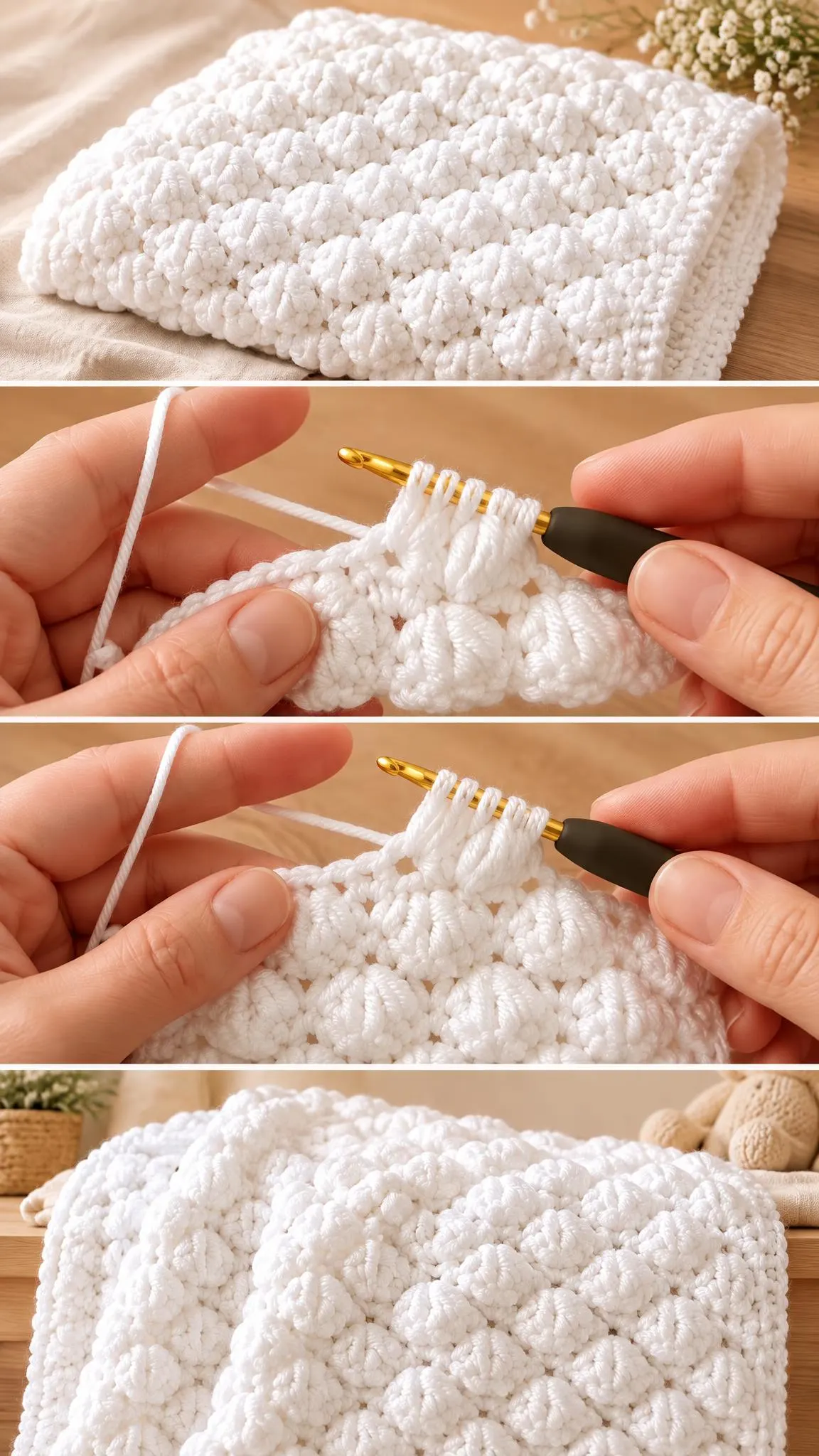
The raised clusters are the heart of this blanket. Textured stitches of this kind are built by working several stitches into the same place or around a post, then gathering them into a rounded shape. The number of stitches in each cluster controls how tall and full the puff becomes, so a group of stitches worked tightly will look more compact than one worked with extra space.
Keeping the Clusters Even
Consistency is what gives this design its neat, flowing look. Try to keep the tension of every cluster the same, because a tight group beside a loose one will make the rows look uneven. Work each cluster at a steady pace, and resist the urge to pull the loops too tight at the top. Small, even clusters across the row will give the blanket a polished, professional appearance.
The open channels between the puffs are just as important. They give the blanket its airy quality and define the edges of each cluster. When these spaces are kept consistent in size, the entire surface reads as a unified pattern rather than scattered bumps. Counting your stitches at the end of each row helps you catch drift before it becomes a visible problem.
Shaping the Blanket and Planning the Size
A baby blanket is usually a generous rectangle, and the proportions matter. A square or near-square shape is easy to use for tummy time, stroller covers, or wrapping, while a longer rectangle can drape over a crib rail or a rocking chair. Decide on your finished size before you begin, then work out roughly how many repeats of the pattern will fit that width.
Border work is a natural finishing choice for a textured blanket. A simple, flat edge lets the raised pattern remain the star, while a slightly denser border can frame the design and keep the corners from curling. Choose a border that complements the clusters rather than competing with them.
Using and Styling the Finished Blanket
This blanket is at home in many settings. Spread it across a crib as a soft layer, drape it over a nursery glider for a lovely pop of texture, or use it as a photo prop for a newborn session. Its neutral white tone lets it sit comfortably beside pastel accents, wooden furniture, or a range of nursery color schemes.
For gifting, a folded blanket tied with a satin ribbon makes a warm and thoughtful presentation. Pair it with a handmade toy or a set of matching booties to create a complete welcome gift. The textured surface also shows off well when it is folded so that a few clusters peek out at the edge.
Finishing Touches and Care
Weave in all loose ends carefully, especially on a blanket that will be used by a baby. Trim tails neatly and tuck them through the back of the stitches so nothing can loosen with washing. Block the blanket gently if your yarn allows it, which helps the rows lie flat and encourages the clusters to sit evenly.
Care instructions depend on your chosen fiber. Cotton and acrylic blends are usually suitable for gentle machine washing in a mesh bag on a cool, delicate cycle, then laying flat to dry. Check your yarn label before washing, and avoid harsh dryer heat, which can flatten the puffs and soften the pattern’s definition over time.
A Blanket Made to Be Treasured
A crochet baby blanket combines softness, texture, and meaning in a single piece. Its raised clusters give it character, its open channels keep it breathable, and its repeating rhythm makes the making as rewarding as the finished result. Take your time with the tension and the edges, and the blanket will become a keepsake many families return to for years.
Watch the video below to see the stitches in motion. Pause and rewind whenever a cluster feels unfamiliar, and practice on a small swatch before committing to the full blanket. Happy crocheting.
Follow us on Pinterest and subscribe to the Newsletter so you don’t miss a thing!
Tutorial and photos of this baby blanket by: Crochet workshop.