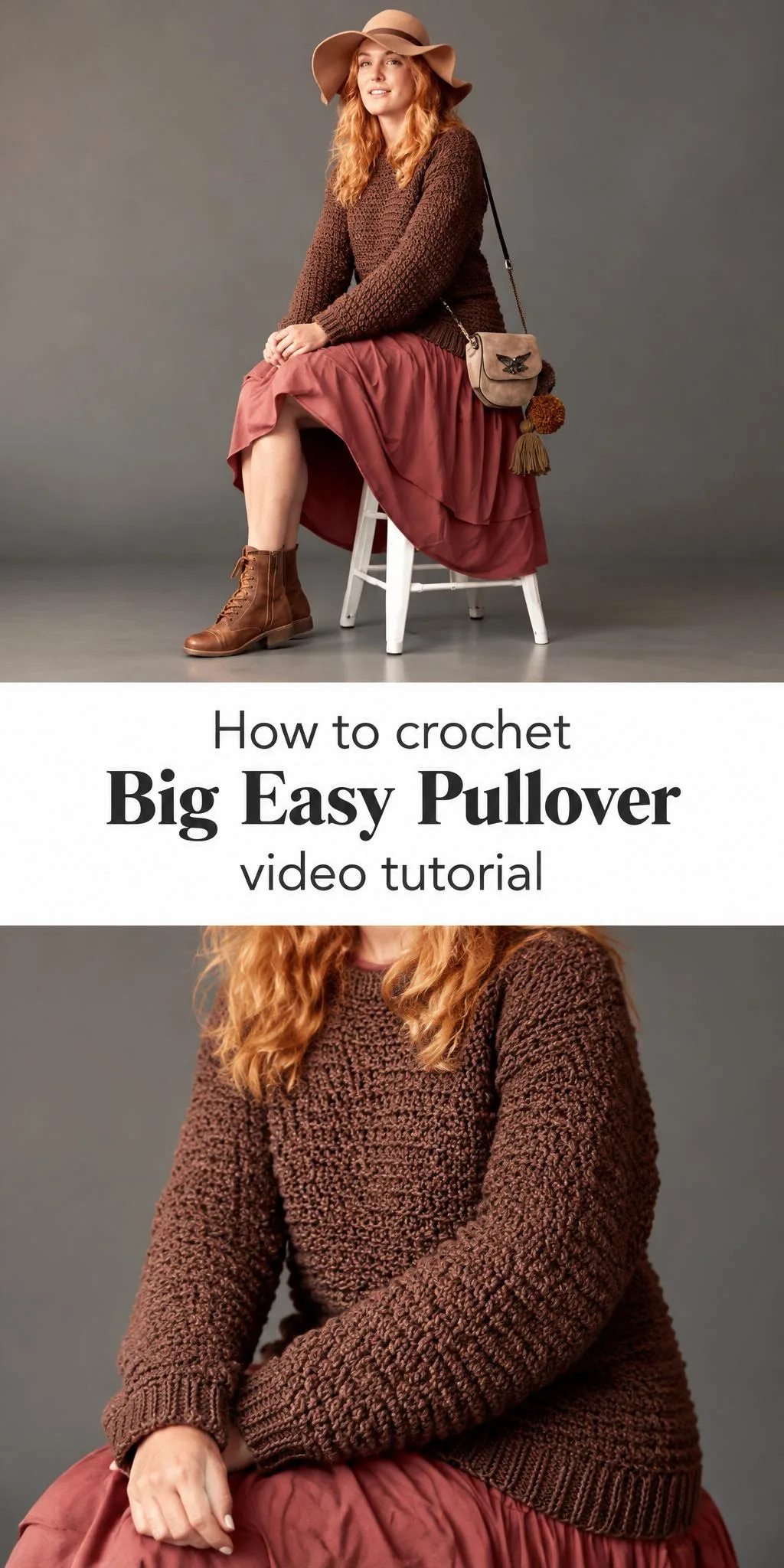
The Big Easy Pullover is a relaxed crochet sweater with a textured body, roomy fit, and a warm, earthy palette that works from autumn through early spring. It is the kind of garment you reach for again and again, and it looks just as at home with a floaty skirt as it does with jeans.
In this post
Why the Big Easy Pullover Earns a Place in Your Wardrobe
The first thing you notice about this pullover is its generous, unfussy silhouette. The body falls straight from the shoulders with a little ease through the torso, and the long sleeves are full enough to layer over a fitted top without feeling cramped. This is a sweater designed to be comfortable first, and the relaxed proportions are what give it its easy character.
The texture is the real star. Across the body and sleeves, a dense, bumpy stitch pattern creates a fabric with depth and movement. Light catches the raised clusters, so the surface reads as richly dimensional rather than flat. That same texture also helps the pullover hold its shape, so it keeps a tidy outline when worn with a belt or tucked into a high-waisted skirt.
Easy Pullover Related Posts:
- Crochet Textured Stitch Blanket: A Cozy and Timeless Classic
- Crochet Zigzag Stitch Pattern: A Striking and Eye-Catching Textured Design
- Crochet Striped Tunisian Stitch Shawl: A Cozy and Elegant Essential
- Crochet Amigurumi Plushies: A Cute and Charming Handmade Companion
Choosing Materials for a Pullover That Lasts
For a garment like this, a worsted-weight yarn is a sensible starting point. It is thick enough to show off a textured stitch without becoming so heavy that the sweater sags. Wool or a wool blend gives you warmth, good stitch definition, and a little natural elasticity, which helps the cuffs and hem recover after wear. Cotton blends are a good option if you prefer a lighter sweater for milder days, though they will show the pattern a little differently and may need more care to keep their shape.
When you choose a yarn, pay attention to its plies and smoothness. A tightly plied yarn gives crisp stitch definition, which suits a textured design. A softer, fuzzier yarn can blur the lines of the stitches, which might be lovely for a cozy look but less effective for showcasing the pattern. Work a small swatch in the stitch family you plan to use and wash it the way you intend to wash the finished piece. This reveals how the fabric will behave before you commit to hours of work.
Hook size matters as much as the yarn itself. A hook that is slightly smaller than the label suggests will produce a denser fabric with more warmth and better stitch clarity. A larger hook gives a more open, airy result that drapes softly. Neither is wrong, but the choice should match the look you want.
Building the Textured Body and Sleeves
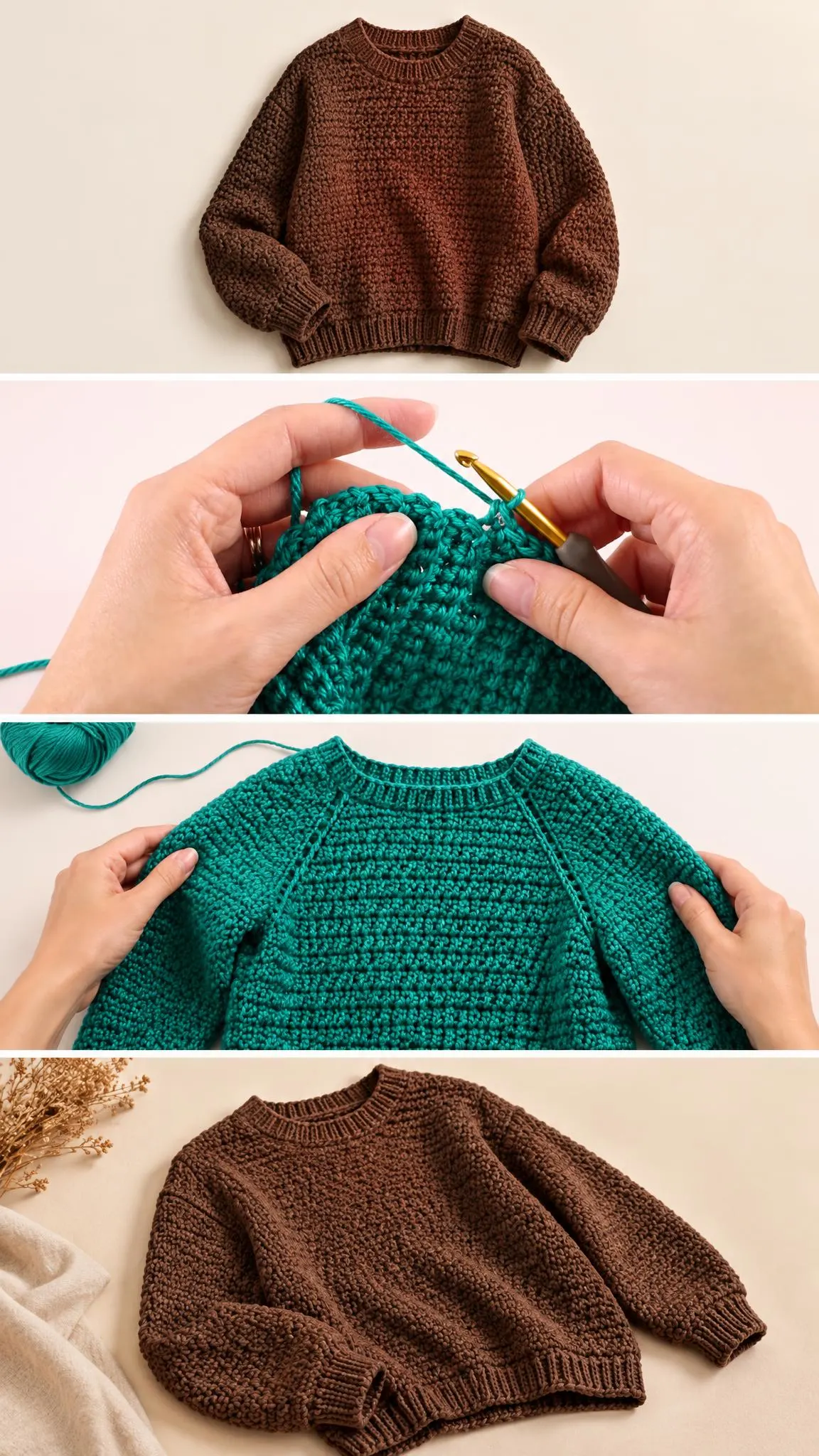
The bumpy surface of the Big Easy Pullover comes from a stitch family that builds up height and dimension within each row. Clustered or puff-style stitches are commonly used for this effect, and they work by gathering several loops together so they rise above the fabric. The result is a surface that looks almost knitted, with a rhythmic, ribbed feel.
Because the texture is so prominent, consistency is essential. Keep your tension even from row to row, and try to work each cluster to the same height so the pattern repeats neatly down the body. Uneven tension is easiest to spot in textured fabric, so a few stitch markers placed at the start of each repeat can help you track your progress and catch drift early.
The fabric also changes slightly at the sides and underarms, where the work turns or where sleeve stitches are joined. Take a moment to check that the texture continues evenly across these transitions. A little attention here keeps the sweater looking cohesive rather than as if it were assembled from separate parts.
Shaping the Neckline and Armholes
The neckline and armholes are where a sweater either feels comfortable or pulls in the wrong places. On the Big Easy Pullover, a simple, rounded neckline sits close to the collarbone without restricting movement. A round neck keeps the focus on the textured body and complements the relaxed fit, and it is easy to layer under a scarf.
When shaping the armholes, aim for a depth that allows free arm movement without making the shoulder seam sit too low. Measuring a sweater you already love is a helpful reference point. Compare the armhole depth and sleeve width to that garment, and adjust if your intended fit differs. Armholes that are too tight are one of the most common reasons a sweater feels uncomfortable, so it is worth checking the fit as you go.
Styling the Big Easy Pullover
This pullover pairs beautifully with flowing, midi-length skirts in warm tones. A rust or clay-colored skirt, for example, echoes the chocolate-brown yarn and creates a monochromatic look that feels intentional and calm. Add a wide-brimmed felt hat and tan ankle boots for a complete autumn outfit with a touch of vintage charm.
For a more casual day, try the sweater over slim, dark jeans or leggings. The textured body adds visual interest without needing much else, so a simple pair of boots and a crossbody bag is enough. A suede or leather bag in a neutral shade works especially well, since its softer finish complements the wool.
Layering is another strength of this style. Wear a collared shirt underneath, letting the neckline fold slightly, or add a lightweight scarf in a contrasting color for depth. The relaxed fit means the sweater never feels bulky, even when you add extra layers.
Finishing Touches and Care
Take time with the finishing. Weave in all ends neatly along the back of the fabric, especially at the cuffs and hem, where stress is greatest. Tucked, secure ends prevent loosening during wear and keep the surface smooth. If you join pieces, match the stitch pattern carefully at the seams so the texture flows across them.
Blocking helps the pullover settle into its intended shape and evens out the stitch texture. Lay the finished piece flat, gently shape it to its measurements, and allow it to dry fully. Blocking method depends on your yarn, so check the label before wetting the fabric. Wool generally responds well to gentle blocking, while some blends may need a lighter touch.
For everyday care, hand washing in cool water and laying the sweater flat to dry will keep the texture crisp and the fit true. Avoid wringing, and store the pullover folded rather than hung, so the shoulders keep their shape.
Make Your Big Easy Pullover
The Big Easy Pullover rewards patience with a garment that is warm, comfortable, and genuinely versatile. Its textured surface, relaxed shape, and easy colors make it a piece you will want to wear through many seasons. Working through the body, sleeves, and neckline one section at a time keeps the project manageable and lets the texture develop steadily.
For exact stitch sequences, sizing, and step-by-step instructions, follow the video below. Pause and rewind whenever a section needs a closer look, and enjoy the process of watching this cozy sweater come together.
Follow us on Pinterest and subscribe to the Newsletter so you don’t miss a thing!
Tutorial and photos of this big easy pullover by: B.Hooked Crochet.