A crochet cozy beanie is one of those projects that earns a place in your rotation quickly. It keeps your head warm through the coldest months, and when you make it in two contrasting shades, it stands out as a handmade piece with real personality.
In this post
Why the Cozy Beanie Deserves a Spot in Your Queue
This beanie is built around a clear, two-part structure that makes it both practical and visually interesting. The lower band is worked in a deep heathered grey, with vertical columns of raised texture that run from the brim toward the crown. These ridges give the fabric a sturdy, ribbed feel that hugs the head without feeling tight. Above that band, a creamy white section opens into a more airy, lacy-looking pattern, with small openings scattered across the surface. The contrast between the dense grey base and the lighter, open top gives the hat a sense of layered depth.
Beyond its looks, the beanie solves a very real problem. A hat that fits well, sits comfortably over the ears, and keeps its shape after many wears is harder to find than it sounds. Because the brim band is worked in a firm, textured stitch, it holds its position on the head rather than sliding around. That makes it suitable for daily errands, winter walks, commutes, and outdoor sports. It also makes a thoughtful gift, since the two-tone palette suits a wide range of wardrobes and ages.
Cozy Beanie Related Posts:
- Crochet Cozy Gloves: A Warm and Wearable Essential
- Crochet Unicorn Plush: A Sweet and Cuddly Companion
- Crochet Textured Stitch Blanket: A Cozy and Timeless Classic
- Crochet Flower Hair Clip & Multicolor Headband: A Charming Handmade Accessory
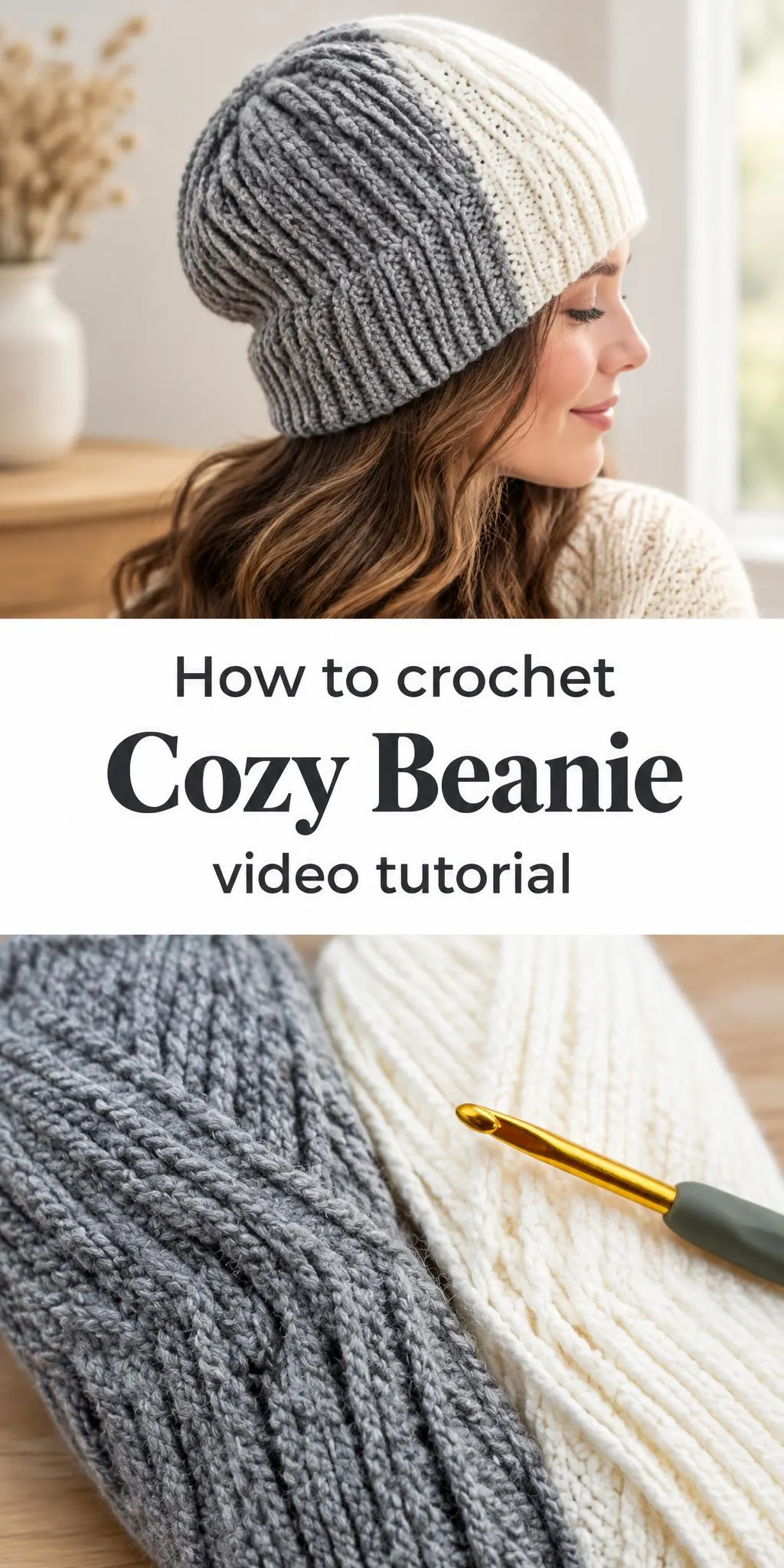
Choosing Materials for a Warm, Lasting Hat
Yarn choice has an enormous effect on how a beanie feels and wears. For a hat like this, a medium-weight acrylic or an acrylic-wool blend is a sensible starting point. These fibers are soft against the skin, hold their shape well, and are generally easier to wash than pure wool. If you prefer natural fibers, a wool blend adds warmth and a bit of springiness, which helps the ribbed texture stay crisp. Choose a yarn with a smooth, even plies so the stitch definition shows clearly. A very fuzzy or novelty yarn may hide the vertical ridges and soften the lacy top too much.
For hooks, choose a size that suits your yarn label and gives you a fabric that feels firm but not stiff. A slightly smaller hook than the yarn recommends often produces a denser, warmer fabric, which is ideal for a winter beanie. You will also want a sharp yarn needle for weaving in ends, stitch markers to keep your place in repeating rounds, and a pair of small scissors. Optional finishing extras such as a leather label, a pom-pom, or a decorative button can be added once the main construction is complete.
Understanding the Grey Band and Its Vertical Texture
The grey lower section is where the hat gets much of its character. Its vertical ridges come from working stitches in a way that pushes some of the fabric forward while leaving the surrounding stitches recessed. This creates a rhythm of columns that rises up the sides of the hat. When you work this kind of texture, consistent tension matters a great deal. If some stitches are pulled tight and others loose, the ridges will look uneven and the brim may ripple.
A useful habit is to pause after each round and look at how the columns are lining up. If they are drifting, adjust your tension or check whether you have skipped a post or a stitch. Working with a stitch marker at the start of each round helps you spot small errors early, before they multiply. Because the ridges run in one direction, they also draw attention to the proportion of the hat. A taller band will make the beanie look more substantial, while a shorter band gives it a casual, relaxed profile.
Keeping the Ridges Crisp
Crisp ridges depend on firm, even stitches and a yarn that has enough body to hold its shape. Avoid over-stretching the fabric as you work, and block lightly after finishing if the texture looks flat.
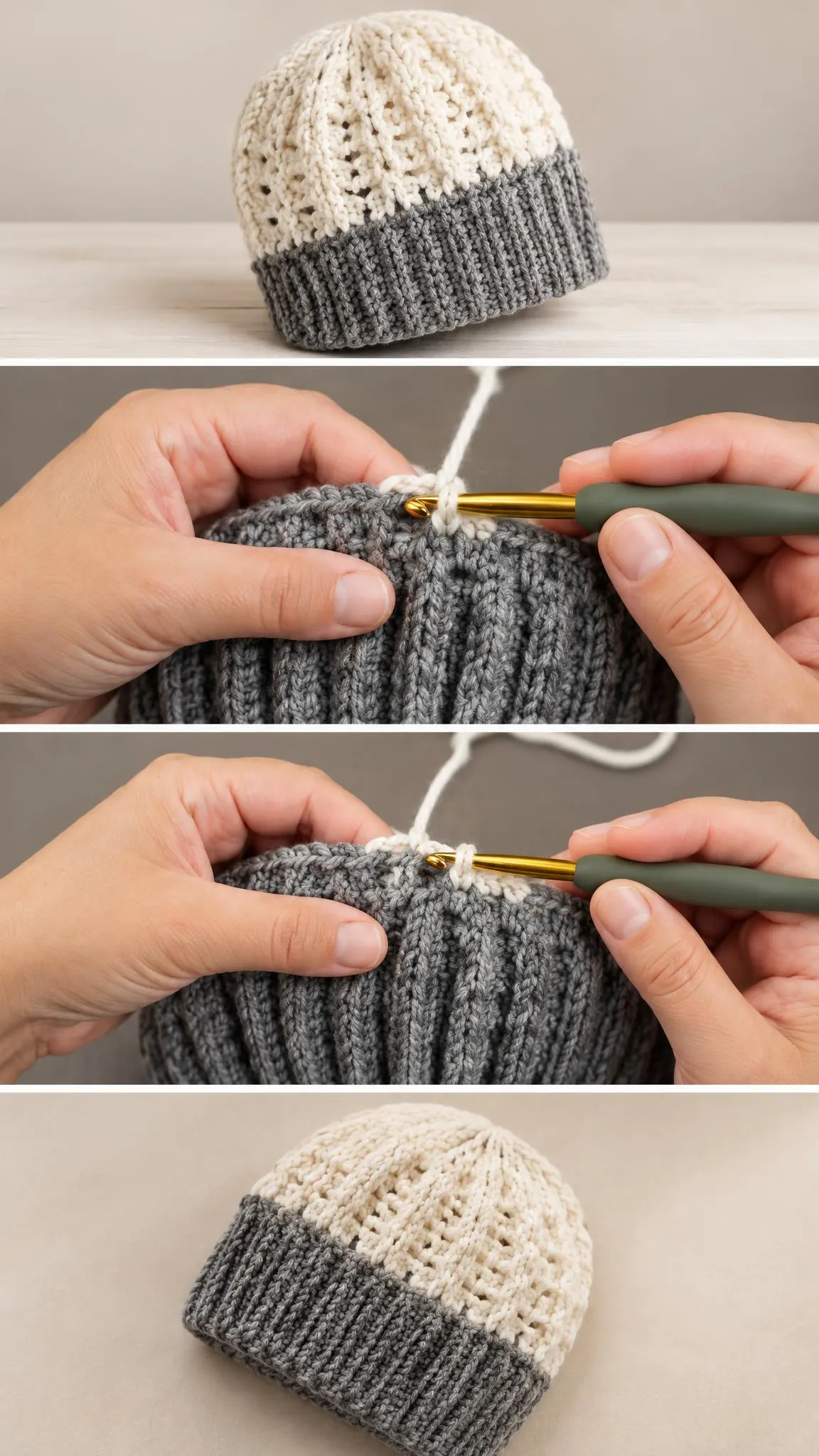
The Lacy White Crown
The cream-colored top is where the beanie becomes more decorative. Its openwork texture uses small gaps and clusters that let the surface breathe, which gives the crown a lighter visual weight. Stitches that create open spaces, such as those built around chain spaces and clustered groupings, are common choices for this look. The effect is subtle when the yarn is soft and the stitches are even, but it becomes striking when the openings are consistent across the crown.
Because open stitches are looser, they can distort more easily than dense ones. Count your repeats carefully and keep the number of stitches consistent from round to round. Decreasing evenly as you approach the crown is essential, since it keeps the top rounded instead of pointed or lopsided. If you are new to decreasing in a textured pattern, work a practice swatch first. This lets you see how the openings shift as you reduce stitches, and it gives you a chance to adjust before committing to the full hat.
Wearing and Styling Your Beanie
The two-tone palette makes this beanie easy to wear. The grey base pairs naturally with dark coats, denim, and neutral knitwear, while the cream crown brightens the look and keeps it from feeling heavy. Try it with a camel or oatmeal scarf for a soft, layered winter outfit, or with a charcoal peacoat for something more structured. For a cozy weekend look, pair it with an oversized sweater and wide-leg trousers so the hat becomes a focal point rather than competing with the rest of your outfit.
Consider the occasion as well as the wardrobe. The beanie works well for daily wear, school runs, hiking, and casual outings. It also suits holiday gatherings, especially when paired with a festive scarf in a complementary shade. For gifting, the neutral palette fits most recipients, and a small handwritten note about the colors or stitch style makes the present more personal. Because the hat fits snugly and sits low on the head, it can also be a good choice for children, teens, and adults who want something warm without excess bulk.
Finishing Touches and Care
Finishing is where a handmade hat gains its polished look. Weave in all yarn ends carefully, running them along the inside of the stitches rather than leaving them loose. Short tails tucked diagonally are less likely to work loose after washing. Check the brim for any gaps or uneven spots and smooth them out before you move on. A neat finish inside the hat also makes it more comfortable against the skin, which is especially important for anyone with sensitive skin.
Care depends on the yarn you choose. Acrylic and acrylic blends are usually machine-washable on a gentle cycle, while wool blends generally need hand washing in lukewarm water and a mild wool-safe detergent. Lay the beanie flat to dry, away from direct heat, and reshape it gently while it is still damp. If the crown looks flattened, a light steam at a distance can help the openwork relax. Avoid wringing the hat, since this can stretch the ribbing and dull the stitch definition.
Make It Your Own
The cozy beanie is a satisfying project because it balances bold texture with a relaxed, wearable shape. The dense grey band grounds the design, the lacy cream crown adds lightness, and together they produce a hat that feels both practical and special. Whether you are making one for yourself or for someone you care about, take your time with the tension, the decreases, and the finishing. Follow the video below to see the stitches in action, and feel free to pause and rewind whenever a section needs a closer look.
A hat you make with patience will keep you warm for many winters to come.
Follow us on Pinterest and subscribe to the Newsletter so you don’t miss a thing!
Tutorial and photos of this cozy beanie by: Realza Crochet.