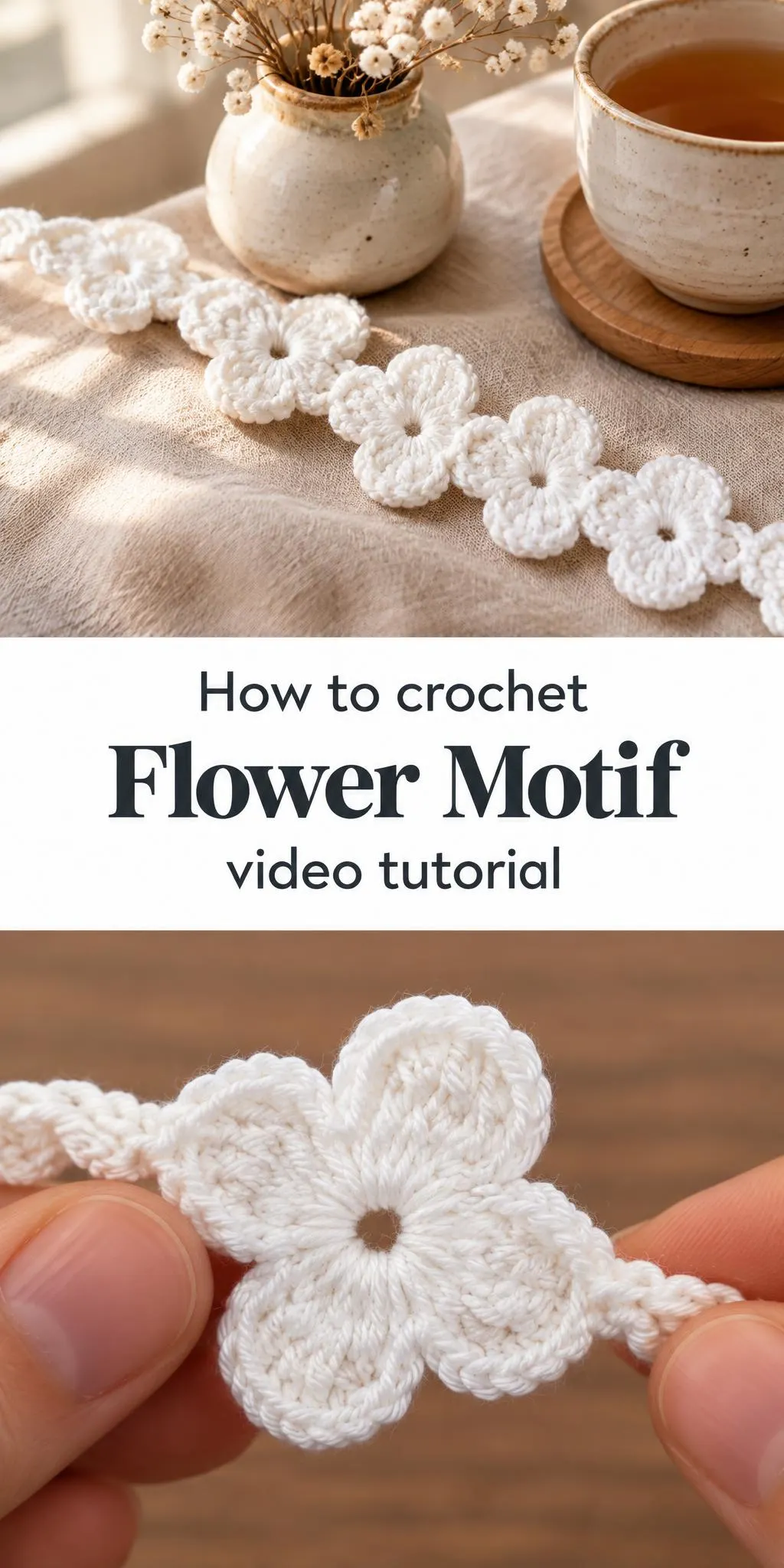
A crochet flower motif is one of the most rewarding small projects you can make, combining delicate petals with an open center that catches the light. Whether you stitch a single motif as a brooch or join many into a long trim, this design brings a soft, handmade charm to almost anything it touches.
In this post
The Charm of the Flower Motif
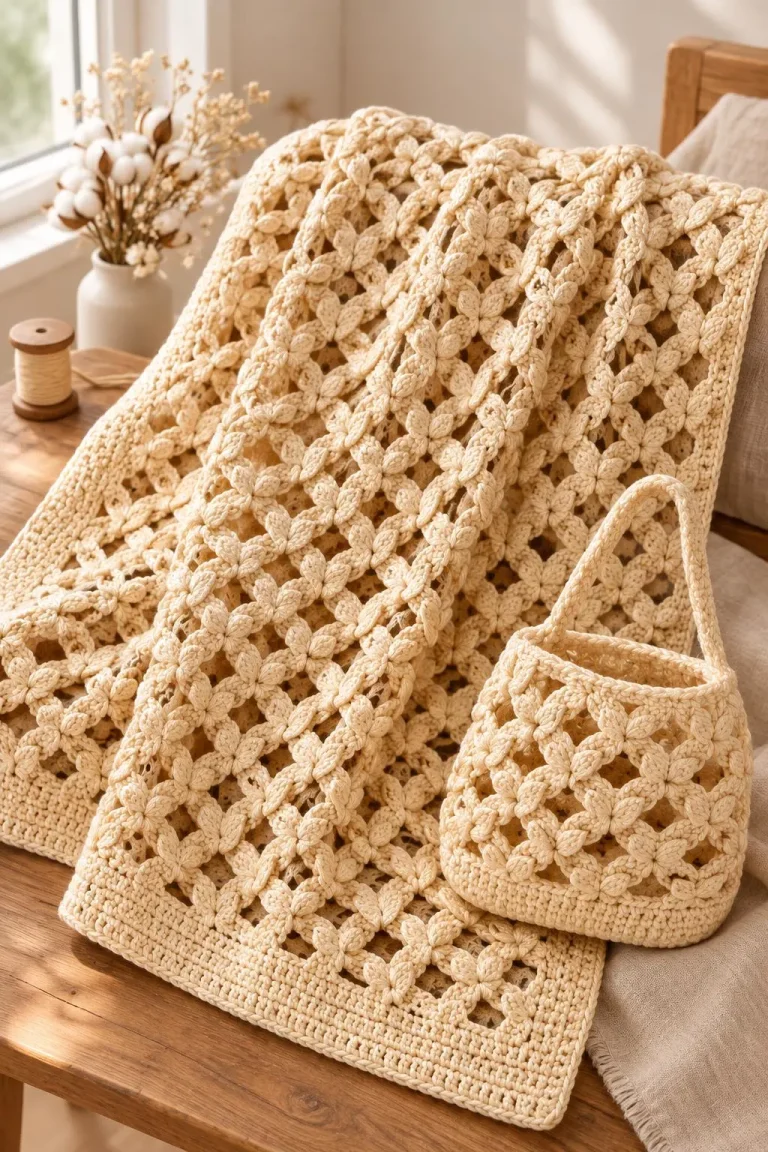
The motif in this project is built from five rounded petals arranged around a small central opening. Each petal has a plump, scalloped edge, so the flower reads as dimensional rather than flat. Where several motifs are joined, the petals of one flower meet the petals of its neighbor, creating a lacy band with small window-like spaces between the blossoms.
What makes this design so appealing is its balance. The petals are generous enough to look full, yet the open centers and the gaps between flowers keep the overall fabric airy. That combination suits projects that need to feel decorative without becoming heavy or stiff.
This kind of motif is wonderfully versatile. A single flower can become a hair clip, a button replacement, or an accent on a tote bag. A longer strip of joined flowers works beautifully as a trim along a towel edge, a lace-style border on a blouse, or a band across the top of a cushion cover. Because each motif is small and self-contained, you can make exactly as many as your project needs.
Flower Motif Related Posts:
- Crochet Yarn Pom Poms: A Colorful and Cheerful Handmade Accent
- Crochet Mile-A-Minute Blanket: A Cozy and Charming Handmade Keepsake
- Crochet Tunic Blouse: A Chic and Airy Handmade Staple
- Crochet Textured Stitch Swatches: A Colorful and Practical Guide
Choosing Materials
Cotton yarn is the classic choice for a flower motif. Its smooth surface shows every stitch clearly, which means the petal edges and the little center openings stay crisp. A mercerized cotton adds a gentle sheen that suits a bright white palette, while a matte cotton gives a softer, more vintage feeling. For a flower meant to be washed frequently, cotton holds its shape well and is easy to care for.
Acrylic or cotton-acrylic blends are also a practical option, especially for beginners or for items that will be handled a lot. They tend to be affordable and come in a wide range of colors, though they can look slightly less defined than pure cotton. Choose a hook size that suits your yarn and the look you want: a slightly smaller hook produces firmer petals with tighter openings, while a larger hook gives a looser, more relaxed flower.
Understanding the Petal Structure
The defining feature of this motif is its five-petal construction. Each petal is worked as a rounded group of stitches, and the petals are anchored to a common center. Consistent tension is the key to making all five petals match. If one petal is stitched more tightly than the others, the flower will look lopsided, so take a moment to check your rhythm before moving on.
Begin with a snug ring at the center, then work each petal in turn, fastening off or joining as your pattern requires. Keep the petals roughly equal in height and width. When you finish the flower, gently pull the center to close the ring neatly. A tidy center makes a noticeable difference in how polished the motif looks.
Shaping the Petal Edges
The scalloped edges are what give this flower its soft, rounded character. Working several stitches into the same space builds the curve, while spacing them evenly keeps the outline smooth. If your petals look pointed rather than round, try adding a stitch or two to the top of each petal. If they look bulky, loosen your tension slightly.
Joining the Flowers
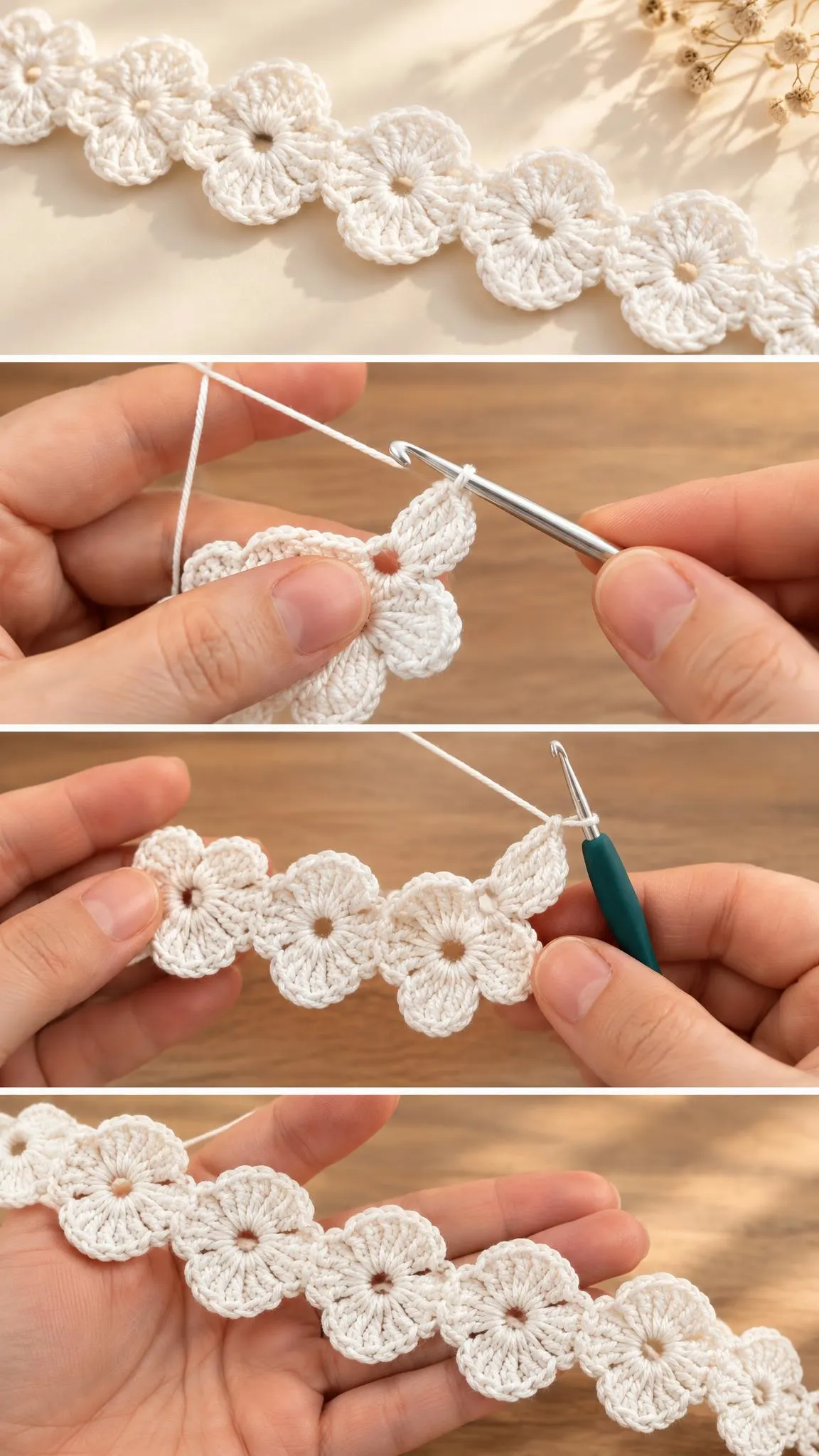
When you join motifs into a strip, the connection points become part of the design. You can join petals as you go, which gives a seamless, connected look, or stitch the motifs separately and sew them together afterward. Joining as you go is efficient and keeps the spacing consistent, while sewing separately gives you more control if you want to adjust the layout.
Pay attention to the spaces between flowers. These open gaps are what make the band look lacy, so keep them even. A stitch or two of difference can shift the whole rhythm of the strip, so check the alignment every few motifs as you progress.
Styling and Everyday Use
A flower motif works especially well in a palette of white or cream, where its texture stands out without competing with color. On a white blouse, a band of joined flowers along the neckline or cuff reads as a subtle, romantic detail. Pair it with simple denim or a plain skirt so the trim remains the focal point.
For home décor, consider using the motifs as a runner along a dresser or a border on a table linen. In a pastel palette of soft pink, pale blue, or sage green, the flowers take on a fresh, spring-like feeling. A single flower pinned to a bag strap or stitched onto a gift box lid adds a personal touch with minimal effort.
Finishing Tips
Finishing is where a good motif becomes a great one. Weave in all yarn ends carefully on the back of the work, so they do not show through the open petals. Trim any stray fibers close to the fabric to keep the outline clean.
If you plan to wash the finished piece, consider gentle blocking. Lightly dampen the flowers, pat them into shape on a towel, and let them dry flat. This helps the petals open evenly and the scalloped edges settle into a neat curve. Hand washing in cool water is the safest choice for most cotton and blended yarns.
A Delicate Accent to Make and Keep
A crochet flower motif rewards patience with a charming result that feels both delicate and generous. Its open center, rounded petals, and easy-to-join structure make it a project you can return to again and again. Once you have made a few, you will start imagining them on every hat, bag, and gift.
Follow the video below to see the petal construction and joining steps in action. Pause or replay any section that feels tricky, and take your time with the center ring, since everything else builds from it.
Thank you for reading. May your flowers bloom beautifully on every project you touch.
Follow us on Pinterest and subscribe to the Newsletter so you don’t miss a thing!
Tutorial and photos of this flower motif by: Knitting Love 💗.