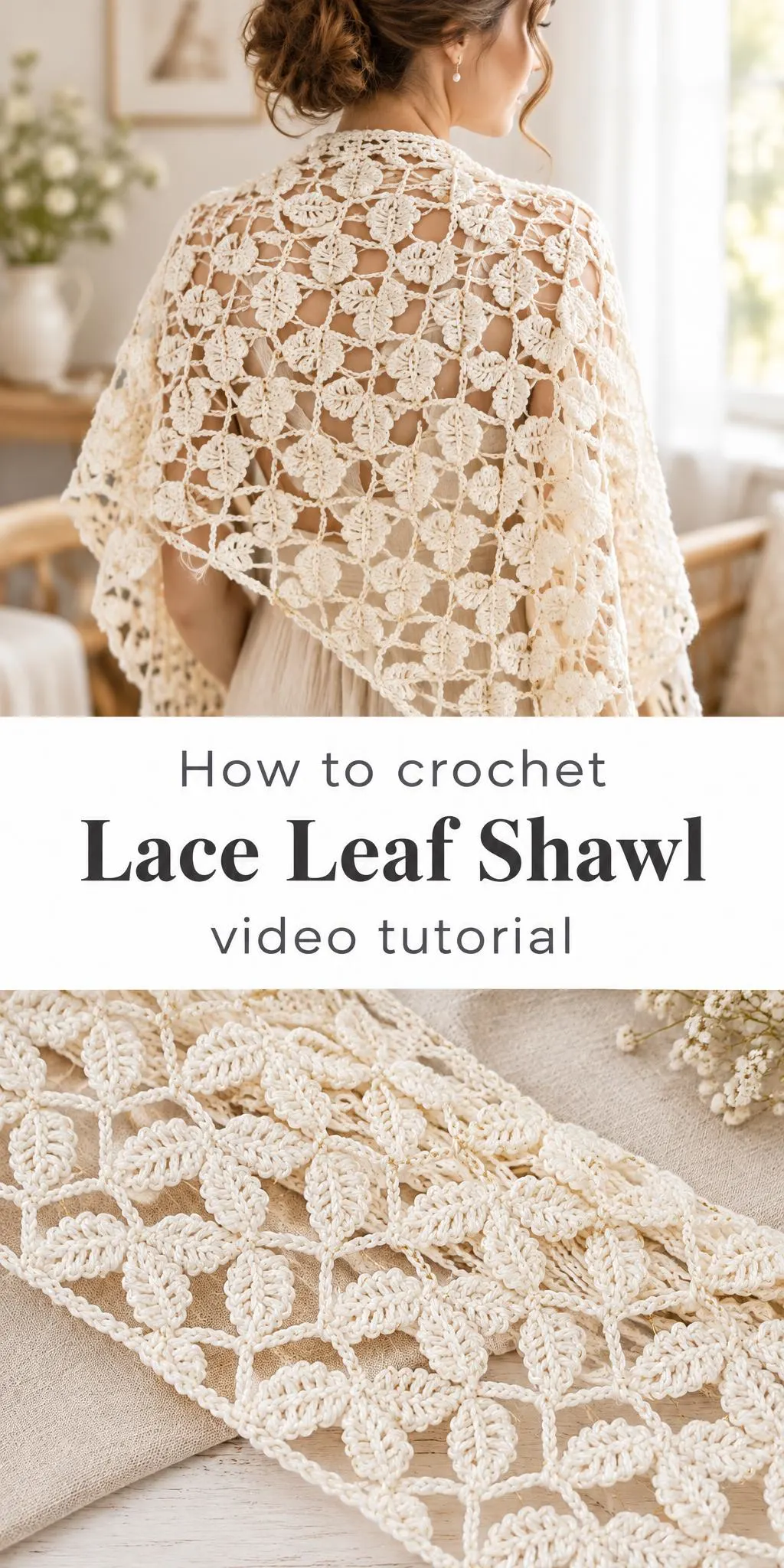
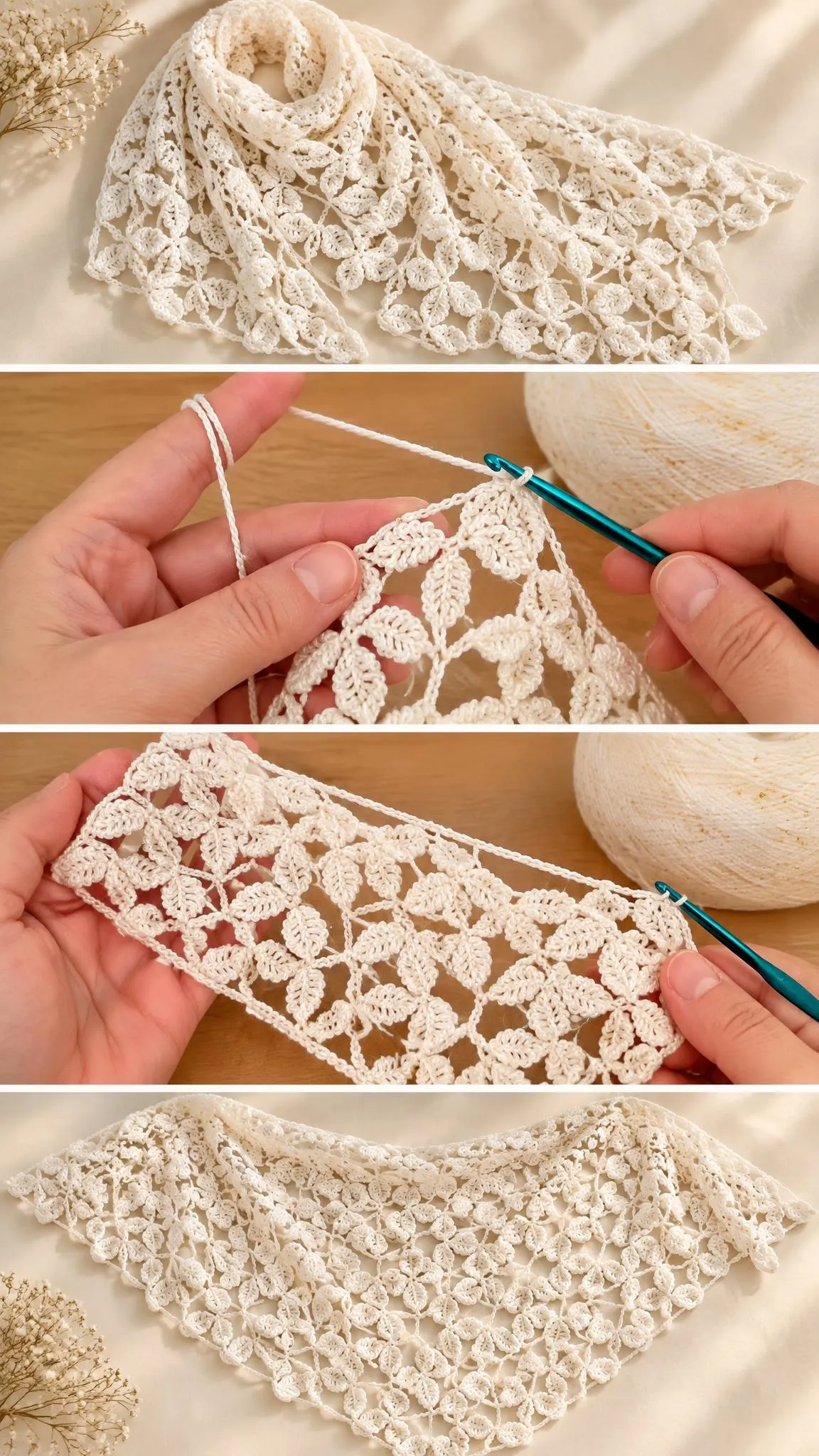
The crochet lace leaf shawl is a graceful project that combines open lacework with clusters of raised leaf motifs, creating a piece that feels both airy and textured. It suits anyone who wants a wrap that feels special without requiring complicated shaping.
In this post
Why the Lace Leaf Shawl Stands Out
The most striking thing about this shawl is the way its leaves seem to rise from the surface. Each leaf is worked as a small, dimensional cluster, and the leaves sit within a network of open mesh and chain lines. The contrast between solid, puffed foliage and the see-through spaces around it gives the fabric depth. Light moves through the open areas, and the leaves catch it in a soft, layered way.
The design also works well in a range of settings. Draped over the shoulders for an evening event, it adds softness to a plain dress. Worn over a cardigan during a cool afternoon, it looks deliberate rather than casual. Because the open pattern breathes, the shawl is comfortable in mild weather, while its visual interest keeps it from feeling like a simple wrap. That balance between decoration and everyday wearability is part of its appeal.
Leaf Shawl Related Posts:
- Crochet Rolled Rose: A Charming Handmade Blossom
- Crochet Openwork Stitch Shawl: A Versatile and Timeless Handmade Piece
- Crochet Cozy Beanie: A Warm and Timeless Essential
- Crochet Textured Cord Handle: A Stylish Handmade Accent
Materials
For a shawl like this, a smooth, lightly sheened yarn is a sensible starting point. Cotton blends and fine acrylic yarns with a subtle metallic thread tend to show stitch definition clearly, which helps each leaf keep its shape. Softer, fuzzy yarns can blur the edges of the lace, so they are better saved for projects where texture matters more than crispness. A cream, ivory, or pale grey shade keeps the focus on the pattern, while a slightly brighter white gives the piece a fresh, bridal-inspired look.
Choose a hook that suits your yarn and the fabric you want. A hook a size or two smaller than the label suggests will produce a firmer fabric with crisper leaves, while a slightly larger hook will open the lace and give the shawl more drape. Test a small swatch before committing to the full piece. Stitch markers, a blunt tapestry needle for weaving in ends, and a measuring tape for checking the finished length are also useful to keep at hand.
Understanding the Leaf Motifs
The leaves are the heart of this design. They are built from clustered stitches that form rounded, slightly cupped shapes, and their outlines are defined by the joins to the surrounding mesh. Working each leaf with even tension is important, because loose leaves will look flat while overly tight ones can pull the surrounding lace out of shape. A consistent tension keeps the motifs uniform across the whole shawl.
Keeping the Motifs Aligned
When leaves repeat across the fabric, small inconsistencies become noticeable. Counting stitches between motifs and checking alignment at regular intervals helps the repeat remain balanced. If you notice a leaf sitting slightly off, it is usually better to correct it early than to hope it will blend in later. Patterns with a strong diagonal or repeating grid rely on this kind of attention.
The open lace between the leaves matters just as much. These spaces create the airy quality that makes the shawl pleasant to wear. Keeping the chain lines relaxed rather than stretched allows the mesh to lie flat and show off the leaves. A relaxed hand is often the difference between a fabric that looks delicate and one that looks stiff.
Shaping and Proportion
Shawls depend on their outline. A triangular or rectangular shape each draws the eye differently, and the leaf repeat should suit the chosen silhouette. Larger leaves give a bolder statement and work well across a wide wrap, while smaller motifs feel refined on a narrow stole. Consider how the design will sit on the body before deciding how many repeats to work across the width.
Edges need particular care. A clean border frames the leaves and prevents the lace from looking unfinished. A simple plain edging in the same yarn can echo the outline of the leaves, while a slightly denser border adds weight at the hem. Blocking the finished shawl gently helps the edges settle and reveals the true shape of the motifs.
Styling Your Finished Shawl
A cream lace shawl pairs naturally with neutral wardrobes. Try it over a black or navy dress for a crisp contrast that makes the leaves stand out. With a soft blush or sage outfit, the shawl reads as a gentle, romantic layer. For a more relaxed look, drape it over denim and a knit top, letting one end fall loosely to show the pattern.
For occasions, a shawl like this adds warmth to outdoor ceremonies and cool evenings. It can also be folded over the arm as a light accessory for restaurants or gardens. Pair it with simple pearl or silver jewelry rather than heavy pieces, so the lace remains the focal point. A small brooch placed at the shoulder can secure the shawl without covering its texture.
As a gift, the shawl is especially thoughtful. Present it folded with a sprig of dried flowers or a ribbon, and mention that the leaves are meant to catch the light. Recipients often appreciate knowing the piece was made by hand and how carefully the motifs were placed.
Finishing and Care
Weave in all ends neatly, running them along the back of the leaves where they will be hidden. Loose ends can pull free over time, so a secure finish is worth the extra minute. Check the edges for any uneven stitches and correct them before blocking.
Blocking is the most effective finishing step for lace. Dampen the shawl, press it gently into shape, pin the edges, and let it dry fully. This opens the mesh, evens the leaf repeat, and gives the outline a crisp finish. Choose a washing method that suits your yarn; some blends relax well with a gentle hand wash and lay-flat drying, while others need a lighter touch to avoid losing their sheen. Store the shawl folded rather than hung for long periods, so the leaves keep their shape.
Take your time with the closing rows and the edging. Work slowly enough to keep the tension even, and pause when the pattern feels confusing. The video below follows the project step by step, so you can return to any section you want to review. Enjoy the process, and let the leaves unfold one cluster at a time.
Follow us on Pinterest and subscribe to the Newsletter so you don’t miss a thing!
Tutorial and photos of this lace leaf shawl by: Crochet Knitting Sort.