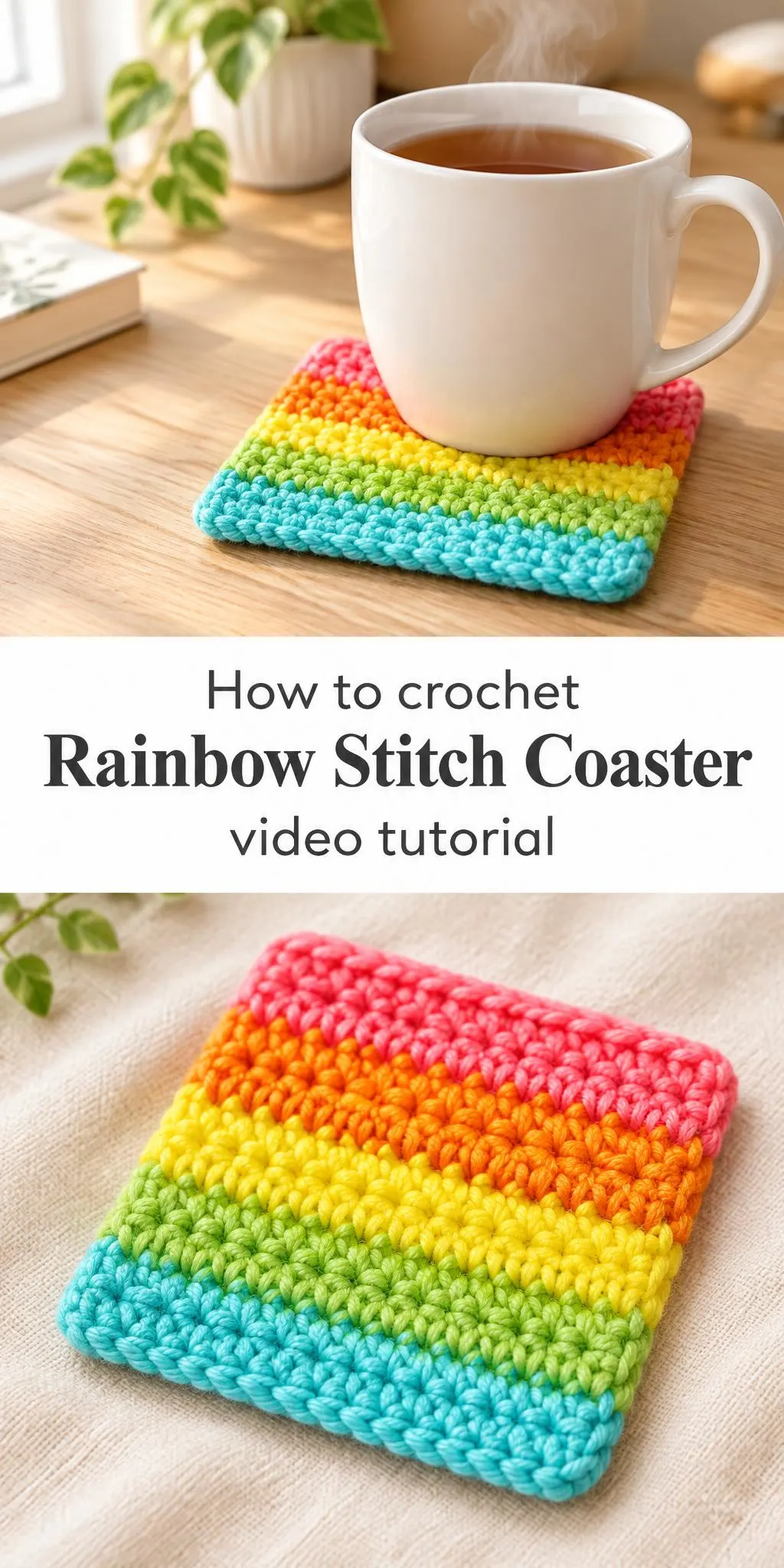
The Crochet Rainbow Stitch Coaster brings a burst of cheerful color to any tabletop, turning a small everyday item into a handmade statement. Its stacked bands of pink, orange, yellow, green, and aqua make it a bright and welcoming addition to a kitchen, desk, or living room.
In this post
A Rainbow of Stripes on a Practical Little Square
The Rainbow Stitch Coaster is built from horizontal bands of color that stack neatly on top of one another. Each stripe sits crisply against the next, so the eye moves naturally from the cool aqua at the base up to the warm pink at the top. The overall shape is compact and sturdy, with a flat surface that rests evenly on a table and a slightly textured fabric that looks inviting to touch.
The texture is one of the most appealing qualities of this design. Rows of dense, rounded stitches create a fabric that feels substantial without being bulky. Because the stripes change color row by row, the coaster also reads as a small study in pattern, showing how a simple repeat can produce a lively, layered effect. It is a project that feels cheerful at a glance and rewards a closer look.
Stitch Coaster Related Posts:
- Crochet Zigzag Stitch Pattern: A Striking and Eye-Catching Textured Design
- Crochet Mini Sling Bag: A Chic and Practical Handmade Accessory
- Crochet Hanging Kitchen Towel Topper: A Cheerful and Practical Kitchen Essential
- Crochet Book Cover with Picture Frame: A Charming and Personalized Handmade Accessory
Choosing Yarn for a Coaster That Lasts
Yarn choice shapes how a coaster behaves on the table. A smooth, tightly plied acrylic is a popular option because it holds its color well and resists pilling with regular use. A cotton blend can be another good choice when you want a crisper finish and a fabric that absorbs less heat from warm mugs. Choose a yarn with a sturdy feel rather than a very fluffy one, since loose fibers can snag and blur the stitch definition that makes the stripes so clear.
Color selection is equally important. A bright palette like the one shown here relies on clear contrast between neighboring stripes. If you prefer a softer look, you could move to pastel tones such as blush, butter, mint, and sky blue, which keep the rainbow sequence while feeling calmer. For a bolder scheme, deepen the shades to ruby, tangerine, lemon, lime, and teal. Either approach works, as long as the stripes remain distinct from one another.
Understanding the Stitch Texture
The Rainbow Stitch Coaster gets its character from a dense, textured stitch family that produces raised, bumpy rows. Stitches of this kind stack closely, which gives the fabric a firm body that suits a surface that will hold drinks and hot dishes. The texture also hides small irregularities well, making the coaster forgiving for those who are still refining their tension.
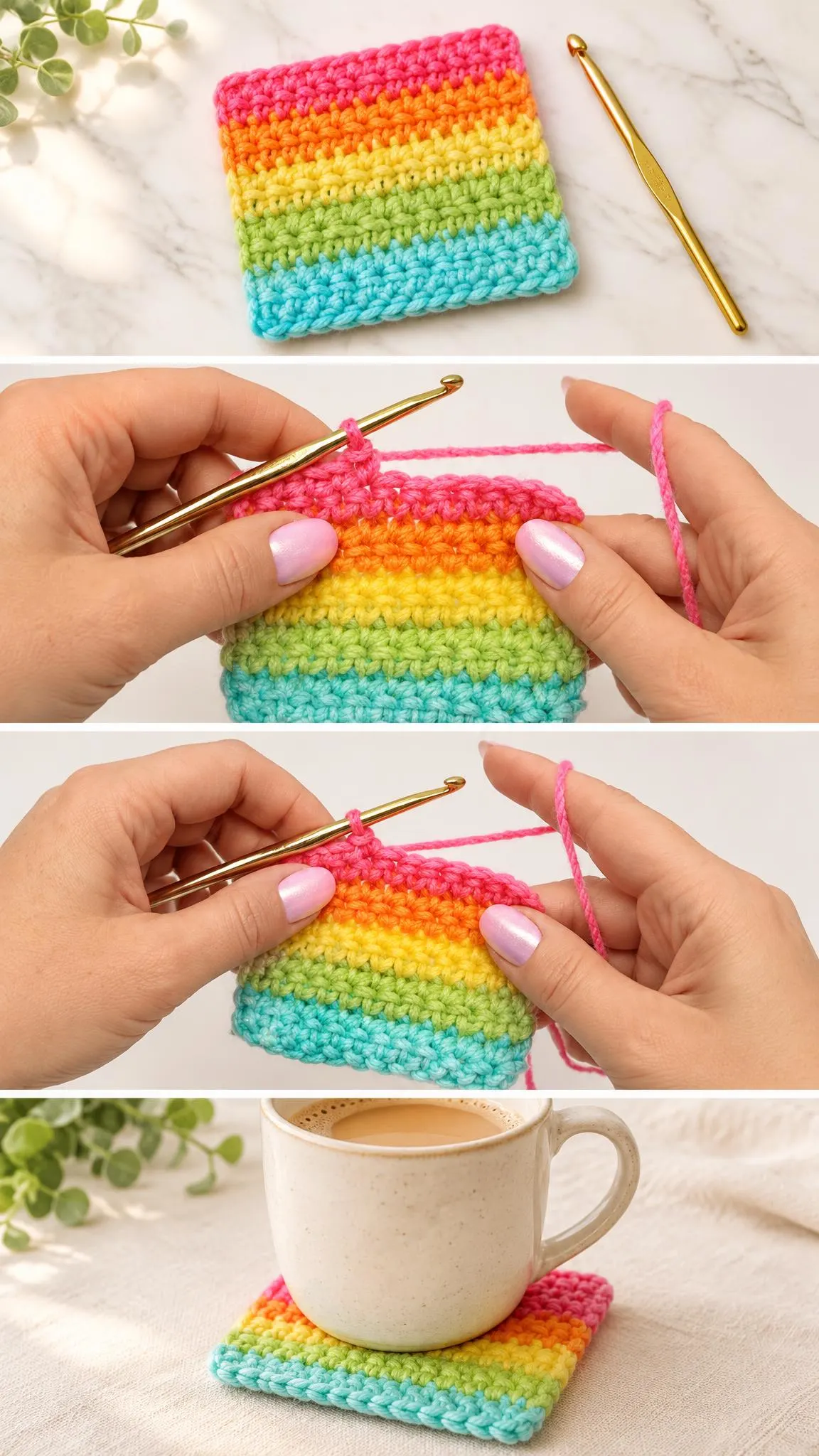
When working color changes between stripes, keep the join neat so that the edges stay clean. Carry the yarn carefully up the side of the work and avoid pulling it too tightly, since that can cause the edges to pucker. A consistent tension across each row helps every stripe sit flat and even, which is what gives the finished coaster its tidy appearance.
Working Edges for a Clean Finish
The outer edges of a coaster are where the shape is defined. Take a moment to check that each side is the same length and that the corners look balanced before fastening off. Weaving in ends through the back of several stitches anchors them securely and keeps them from working loose during repeated use.
Ways to Use Your Finished Coaster
This coaster is most at home beside a morning cup of tea or a glass of lemonade, where its color adds warmth to the table. Its small size also makes it practical for protecting furniture from condensation. Because the palette is so cheerful, it pairs well with plain white or natural wood tones, letting the stripes stand out as the focal point.
Consider making coasters in sets. Working several in the same palette creates a coordinated group that looks thoughtful on a serving tray, and mixing a few variations, such as reversing the color order, adds interest without losing cohesion. A set also makes a generous gift for a housewarming, a host, or a friend who loves bright, handmade touches.
Think about the setting as well. On a dark wooden table, the bright stripes glow, while on a pale marble surface they feel fresh and modern. Placing a coaster slightly off-center, rather than squarely under a mug, can make a small arrangement feel more relaxed and intentional.
Care and Finishing Advice
Once your coaster is complete, a gentle block can help even out the stitches and set the shape. Lightly dampen the fabric, pin it to a flat surface, and let it dry fully before use. Always check the care label of your chosen yarn first, since some fibers require more delicate handling than others.
For everyday cleaning, spot clean with mild soapy water and allow the coaster to air dry flat. Avoid wringing or twisting the fabric, which can distort the stripes. With careful use and simple upkeep, a well-made coaster can stay bright and smooth for a long time.
The Crochet Rainbow Stitch Coaster rewards patience and attention to color and texture. Its stacked stripes, dense stitches, and cheerful palette make it a small project with a big visual effect. Whether you keep it for your own table or share a set with someone you care about, it offers a satisfying way to bring color into daily life.
If you would like to see how the stripes come together, follow the video below and pause whenever you need to check a stitch or a color change. Take your time with the join points, and the rainbow will build up row by row, one bright band at a time.
Follow us on Pinterest and subscribe to the Newsletter so you don’t miss a thing!
Tutorial and photos of this rainbow stitch coaster by: naztazia.