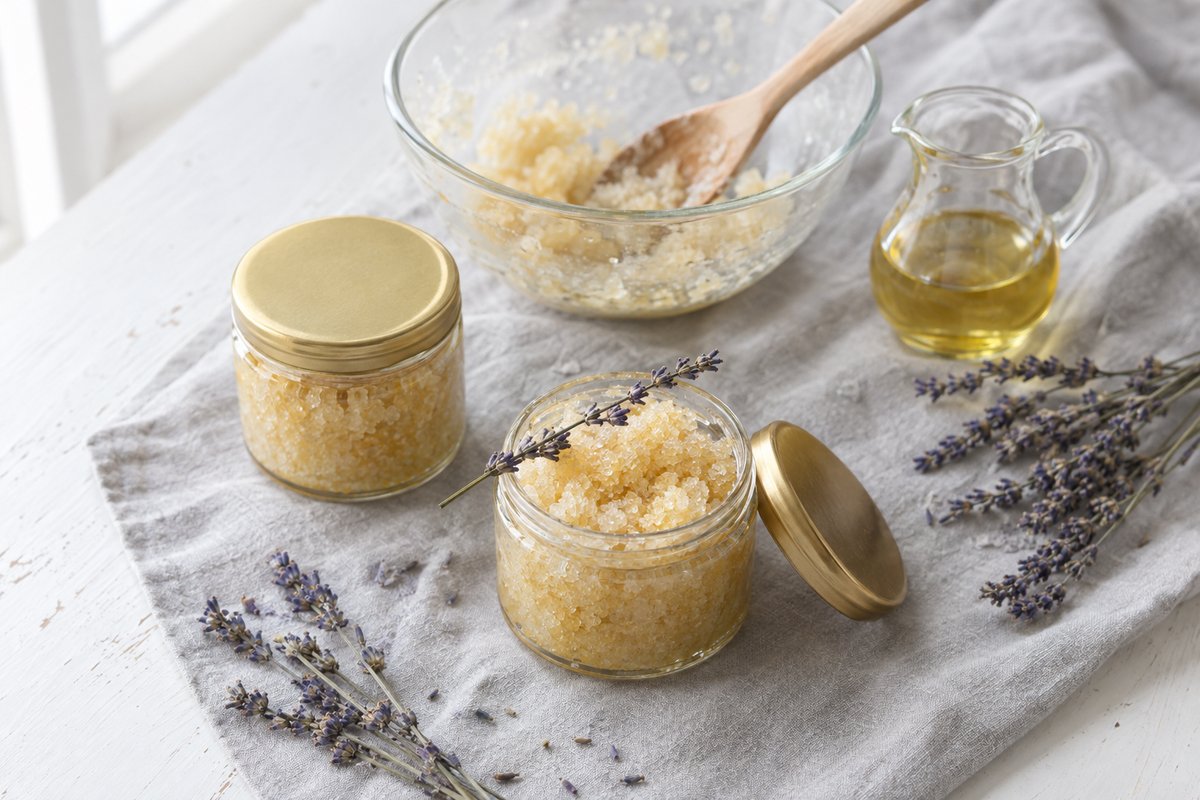
A homemade sugar scrub is the simplest body product you can make in a kitchen: two parts sugar to one part carrier oil, stirred together in a bowl, scented with a few drops of essential oil and spooned into small jars. The sugar lifts dry skin, the oil leaves a light softening layer behind, and the whole batch costs less than one shop-bought jar. One bowl makes five 4 oz (120 ml) gifts in about twenty minutes, which is why it turns up in so many holiday baskets, teacher gifts and shower favors.
In this post
What you need
Materials
| Ingredient | Quantity | Notes |
|---|---|---|
| Sugar | 2 cups (400 g) | White granulated, light brown or raw turbinado |
| Carrier oil | 1/2 to 3/4 cup (120 to 180 ml) | Fractionated coconut, sweet almond, jojoba or light olive |
| Vitamin E oil | 1/2 teaspoon (2.5 ml), optional | Antioxidant, slows the oil going rancid |
| Essential oil | 50 to 60 drops total | 20 to 25 drops per cup of base, never more |
| Jars | 5 x 4 oz (120 ml) | Glass or PET, screw lid |
| Labels | 5 | Waterproof or laminated |
Tools
- A medium glass or stainless mixing bowl, completely dry
- A wooden or silicone spoon, plus a second dry spoon for filling jars
- Measuring cups and spoons, or a kitchen scale
- A small jug for pouring the oil
- Paper towel and a wide-mouth funnel
Approximate cost
Two cups of sugar costs about $0.50. Carrier oil is the biggest variable, from roughly $1.00 for 3/4 cup of light olive oil to $2.50 for jojoba. Essential oil runs $0.50 to $1.50 for 50 drops and vitamin E about $0.20. A 4 oz glass jar with a metal lid is $0.80 to $1.20 bought by the dozen. That puts a finished jar at roughly $1.75 to $2.75, against $8 to $15 in a shop. Sugar and olive oil come from the supermarket, the other oils from the health food aisle, jars and labels from craft shops or online.
Before you start
Choose the sugar for the grit you want
White granulated sugar gives a medium, even grit that suits arms and legs and takes any color or scent cleanly. Light brown sugar is softer because the molasses coating rounds off the crystals, so it is the gentlest choice for sensitive skin. Raw or turbinado sugar has large amber crystals and the coarsest feel, good for heels and elbows but too rough for a whole-body scrub. Avoid powdered sugar, which turns to paste.
Choose the oil
Fractionated coconut oil stays liquid at room temperature, has almost no smell and spoons easily all year. Solid (virgin) coconut oil smells like coconut and sets firm below about 76°F (24°C), so the scrub is a hard block in a cool bathroom and soft in a warm one. Sweet almond oil is light and affordable, but it is a tree nut product and should not be gifted to anyone with a nut allergy. Jojoba is technically a liquid wax, slow to go rancid and the most expensive. Light (not extra virgin) olive oil is the budget choice; extra virgin smells too strongly of olives.
Safety and timing
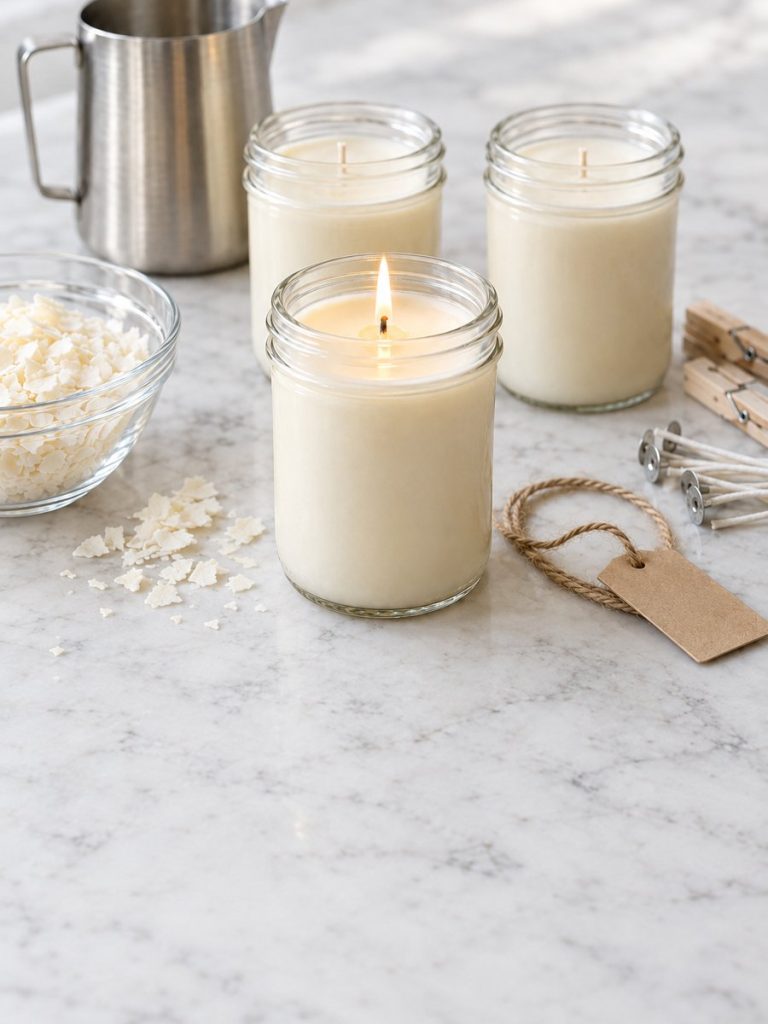
Essential oils are concentrated and must be diluted. For a body scrub that rinses off, the sensible ceiling is 1% of the total, and 20 to 25 drops per cup of base lands comfortably under that. Citrus oils (lemon, lime, bergamot, grapefruit) are phototoxic: treated skin can burn or darken in sunlight for up to 12 hours, so keep citrus scrubs for covered skin or use a steam-distilled or “FCF” version. None of these scrubs are for the face, where the skin is thinner and the sugar too harsh. Anyone pregnant, nursing or with a skin condition should check an essential oil before using it, and every recipient should patch test a pea-sized amount on the inner forearm and wait 24 hours. Mixing takes 10 minutes, jarring another 10. For a full gift basket, the mason jar soy candles use the same jars and labels.
Homemade sugar scrub, step by step
Step 1: Measure the sugar into a dry bowl
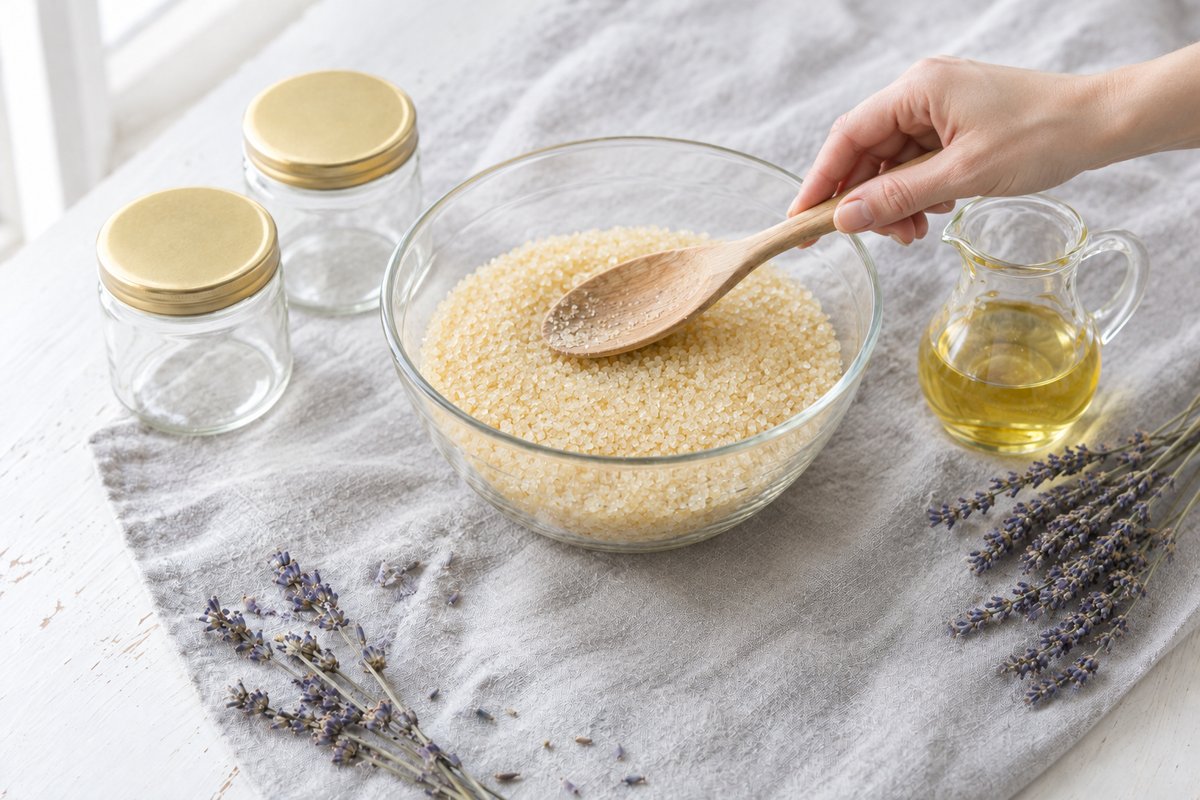
Wash the bowl and spoon in hot soapy water, rinse, dry them with a clean towel and leave them a few minutes to air dry. Any water left behind is the one thing that will shorten the life of the scrub, because bacteria and mold need moisture to grow. Measure 2 cups (400 g) of sugar into the bowl and break up any lumps with the back of the spoon now; lumps in brown sugar will not loosen once the oil is in. Level the top so you can see the surface change as the oil goes in.
Step 2: Add the oil a little at a time
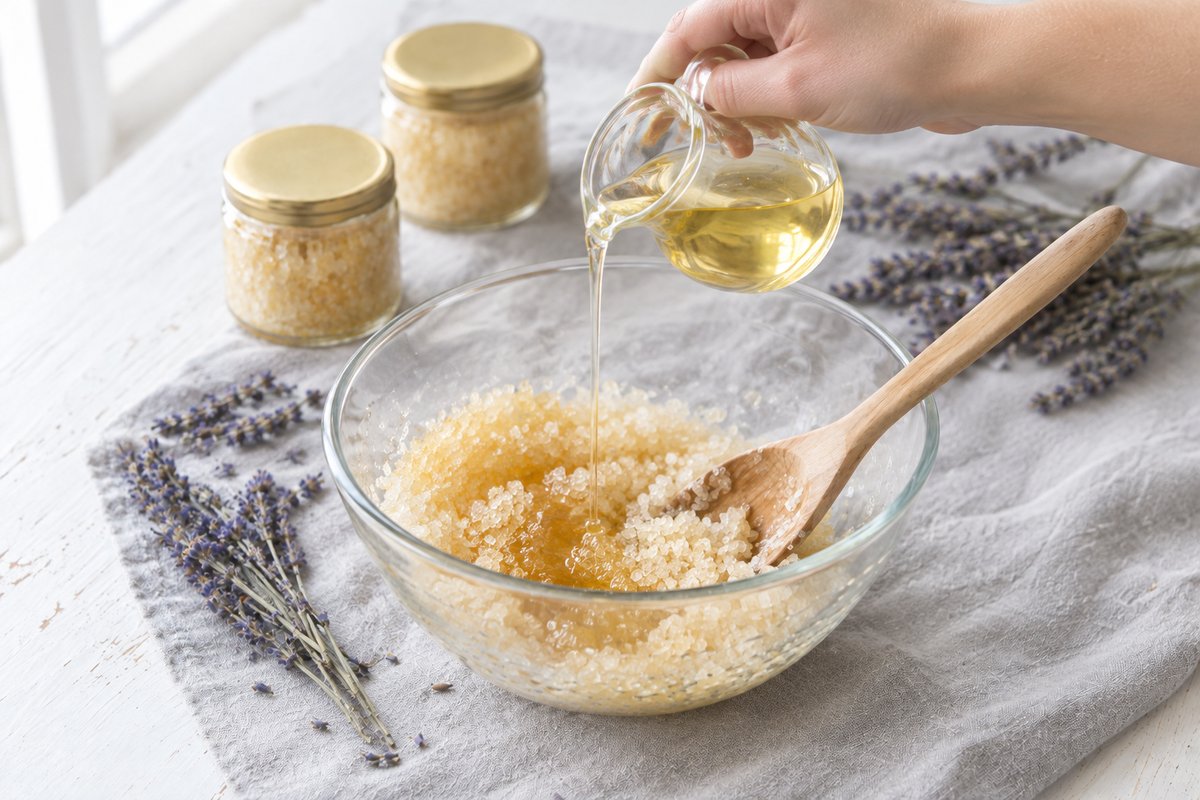
Pour 1/2 cup (120 ml) of carrier oil into the jug. Drizzle about a third of it over the sugar and fold it through with the spoon, scraping the bottom of the bowl so no dry pockets remain. Add the next third and fold again; the mix should now look like damp sand that holds together when pressed. Stop here for a firmer scrub that stays put on the skin, or add the rest of the 1/2 cup, and up to another 1/4 cup (60 ml), for a looser scrub that spreads easily. The oil should coat every crystal without pooling.
Step 3: Stir in vitamin E and the essential oil
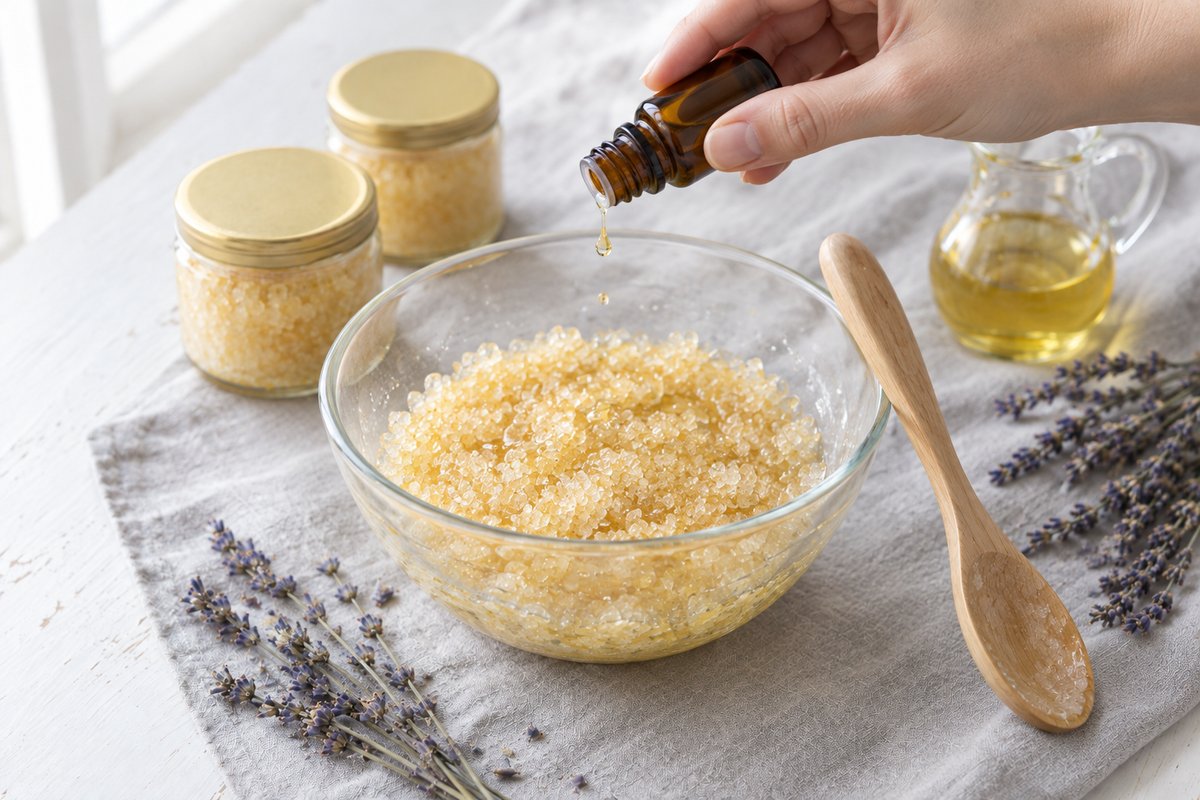
Add 1/2 teaspoon (2.5 ml) of vitamin E oil and stir it through. It is not a preservative and does nothing against bacteria, but it slows the carrier oil from oxidising and turning rancid. Count the essential oil in drops from the dropper insert: 50 to 60 drops for this 2 1/2 cup batch, or 20 to 25 per cup if you scaled the recipe. Add them in two or three places rather than one spot, then stir for a full minute so the scent spreads evenly. Scent builds as it sits, so err on the low side.
Step 4: Check the texture and adjust
Press a spoonful against the side of the bowl. A good scrub packs into a mound that holds its shape for a moment, then crumbles when nudged. If it slumps and oil shows at the bottom, stir in sugar 2 tablespoons (25 g) at a time until it firms up. If it is powdery and will not hold together, add oil a teaspoon (5 ml) at a time. Rub a pinch between two fingers: the grit should feel like fine sand, not gravel. Let the bowl rest for five minutes, since sugar keeps absorbing oil, then check once more.
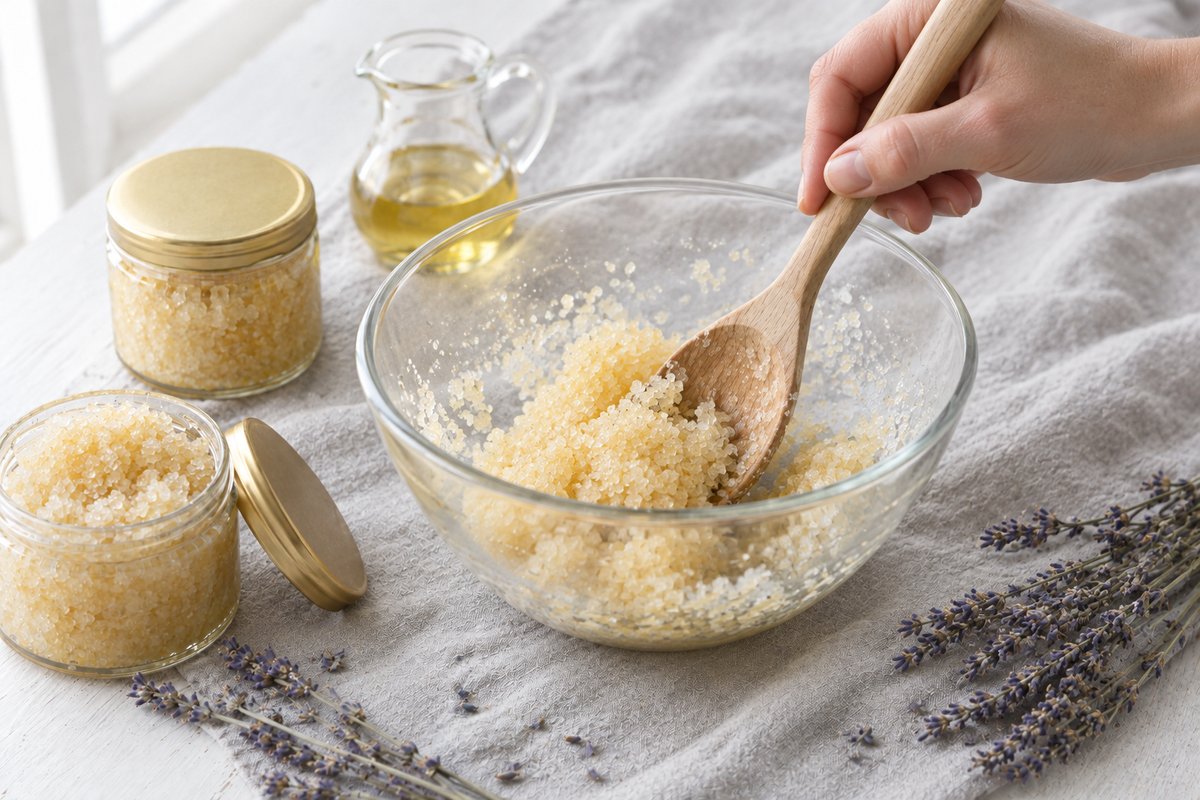
Step 5: Spoon into clean, dry jars
Wash the jars and lids in hot soapy water, dry them inside and out and let them stand until no droplets remain; a wipe with rubbing alcohol, then air dried, is a good extra step for gifts. Set the funnel in the first jar and spoon the scrub in with a clean dry spoon, tapping the jar on the table every few spoonfuls to settle it. Fill to about 1/4 inch (6 mm) below the rim so the lid does not press on the scrub. Wipe the rim and threads; grains caught in the thread will stop the lid sealing.
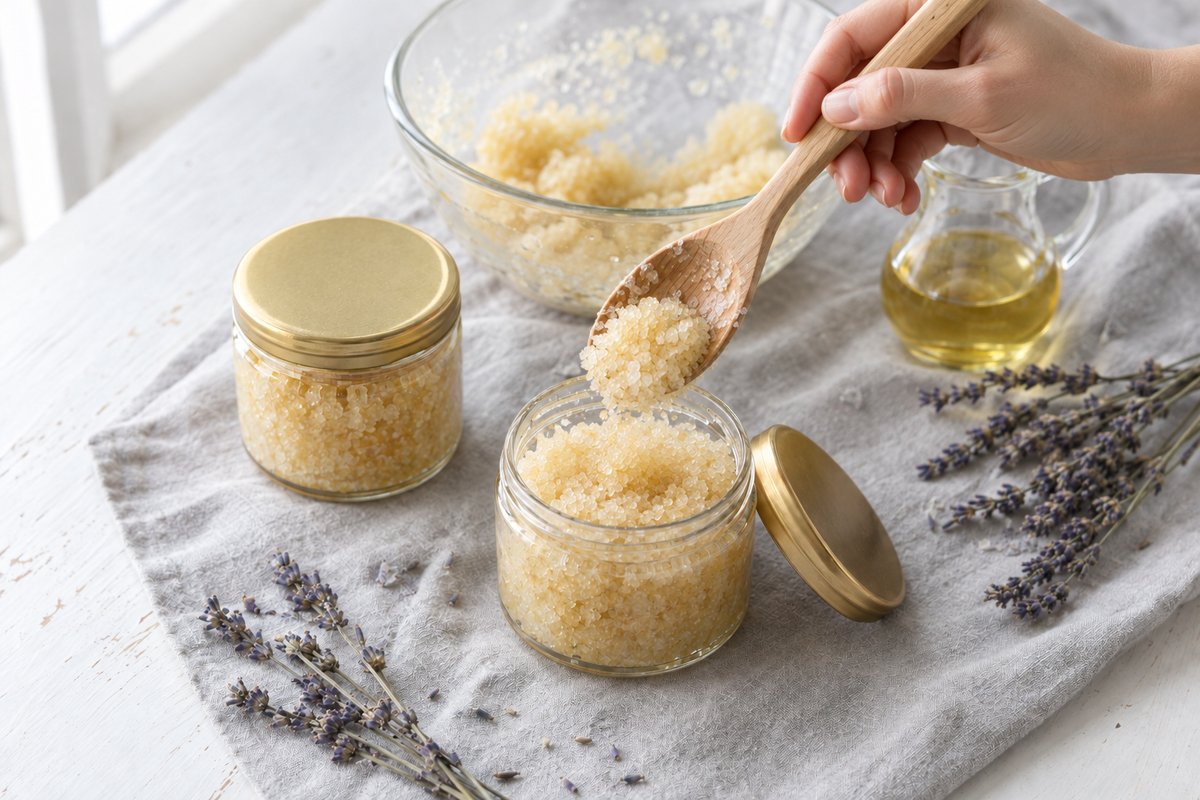
Step 6: Cap, label and finish for gifting
Screw the lids on firmly and wipe fingerprints off the glass. Each label should carry the scent, the date made, a use-by date 3 months on, and two lines of plain advice: “body only, not for face” and “shower floor will be slippery”. For a citrus scrub add “avoid sun on treated skin for 12 hours”; for almond oil add “contains tree nut oil”. A 2 inch (5 cm) round label fits a 4 oz lid; a 2 x 3 inch (5 x 7.5 cm) rectangle fits the side. Tie twine around the neck and tuck in a dried lavender sprig or a small wooden spoon.
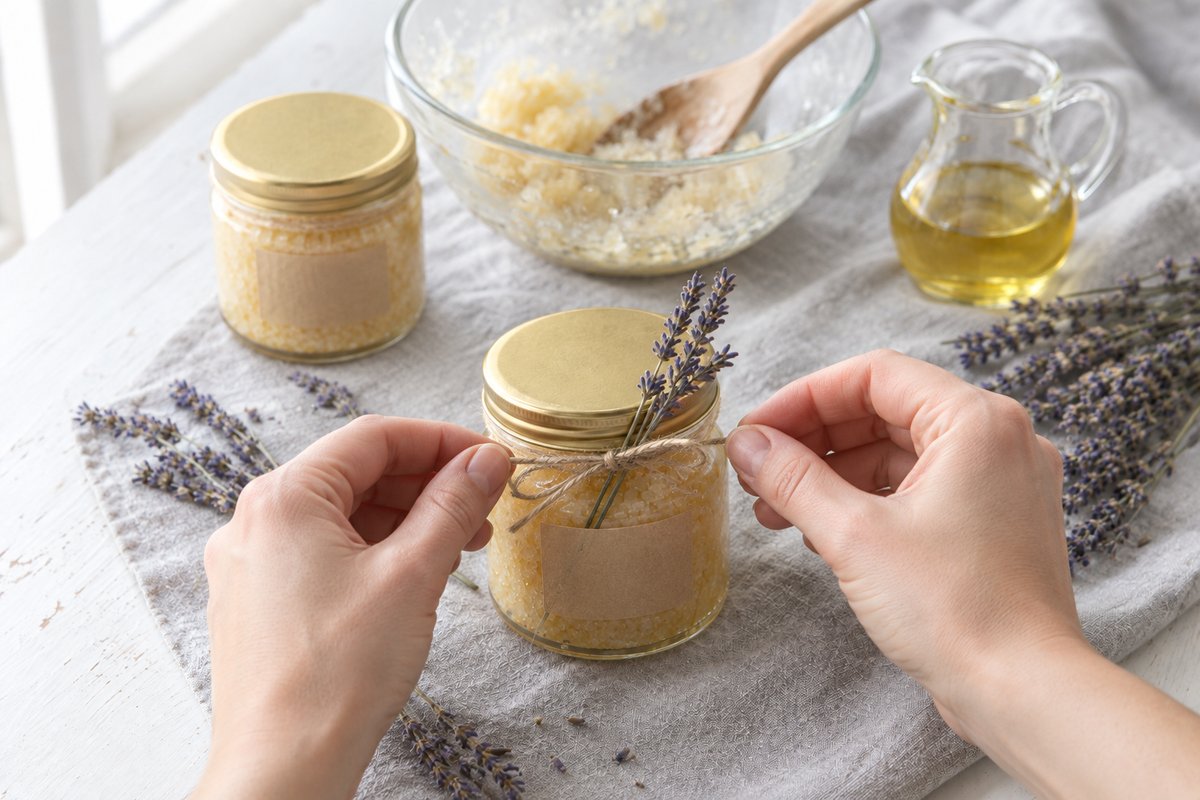
Tips for a better result
- Weigh the sugar. Brown sugar packs and white does not, so a cup of each is a different weight; 400 g keeps the oil ratio right.
- Keep everything bone dry. Bowl, spoon, jar, lid, hands. Water is the only ingredient that spoils this.
- Match the oil to the climate. Fractionated coconut or jojoba stays scoopable from 50°F to 90°F (10°C to 32°C); solid coconut oil sets rock hard in a cold bathroom and needs five minutes in a bowl of warm water to loosen.
Troubleshooting
Oil has separated to the top of the jar
Some settling is normal after a week; stir it back with a dry spoon. If a thick oil layer sits on top from day one, tip the batch back into the bowl and stir in 2 to 4 tablespoons (25 to 50 g) more sugar.
The sugar has dissolved into syrup, or there are dark spots
Water got in, almost always from wet hands or shower spray. Syrupy or spotted scrub cannot be rescued and should be thrown away, since bacteria and mold can now grow in it. Keep the jar out of the spray and use a dry spoon.
It smells like old crayons or paint
The carrier oil has gone rancid, which happens fastest with grapeseed, sunflower or old oil. Discard the jar. Next time use fresh oil, add vitamin E and keep the jar out of sunlight.
Skin stings or turns red after use
Rinse immediately with cool water. Either the essential oil was too strong, a “hot” oil such as cinnamon or peppermint was used, or the scrub went over freshly shaved or broken skin. Halve the drops in the next batch, choose a milder oil, and keep scrubs away from cuts and the face.
Variations
Each variation starts from the same 2 cups (400 g) sugar base; only the sugar type, scent and extras change.
- Vanilla brown sugar. Light brown sugar, fractionated coconut oil, and 2 teaspoons (10 ml) of vanilla extract in place of essential oil. The softest of the set and a safe choice for sensitive skin.
- Lemon. White sugar, jojoba oil, 50 drops of lemon essential oil and the zest of one lemon, dried on a plate for 24 hours first so it carries no moisture. Lemon is phototoxic, so label it for evening use.
- Peppermint candy cane. Make the white base with 30 drops of peppermint (it feels cold on skin, so keep it low). Tint half the batch with 2 to 3 drops of red skin-safe colorant and spoon alternating white and red layers into the jar, pressing each gently so the stripes stay crisp.
- Lavender. White or brown sugar, jojoba oil, 50 drops of lavender essential oil and 1 tablespoon of dried culinary lavender buds, which look pretty but do collect in the drain.
- Coffee. Replace 1/2 cup (50 g) of the sugar with finely ground dry coffee (not used grounds, which are wet). Use coconut oil and skip the essential oil. It can stain light grout.
- Pumpkin spice. Light brown sugar, fractionated coconut oil, 1 teaspoon ground cinnamon and 1/2 teaspoon each ground ginger and nutmeg, no essential oil. Cinnamon is warming, so patch test first.
How to use, store and gift it
In the shower, wet the skin, turn the water away, then scoop out a tablespoon with a dry spoon and rub it over arms, legs, hands and feet in small circles for a minute. Rinse with warm water and pat dry. Use it once or twice a week, keep it off the face and off broken or freshly shaved skin, and avoid citrus scrubs before sun exposure. The oil makes the shower floor slippery, so rinse it with hot water and a squirt of dish soap after each use.
Store the jar with the lid tight, away from sunlight and heat, on a shelf rather than inside the shower. With no water in it the scrub needs no preservative and keeps 2 to 3 months, or up to 6 if it stays perfectly dry and contains vitamin E.
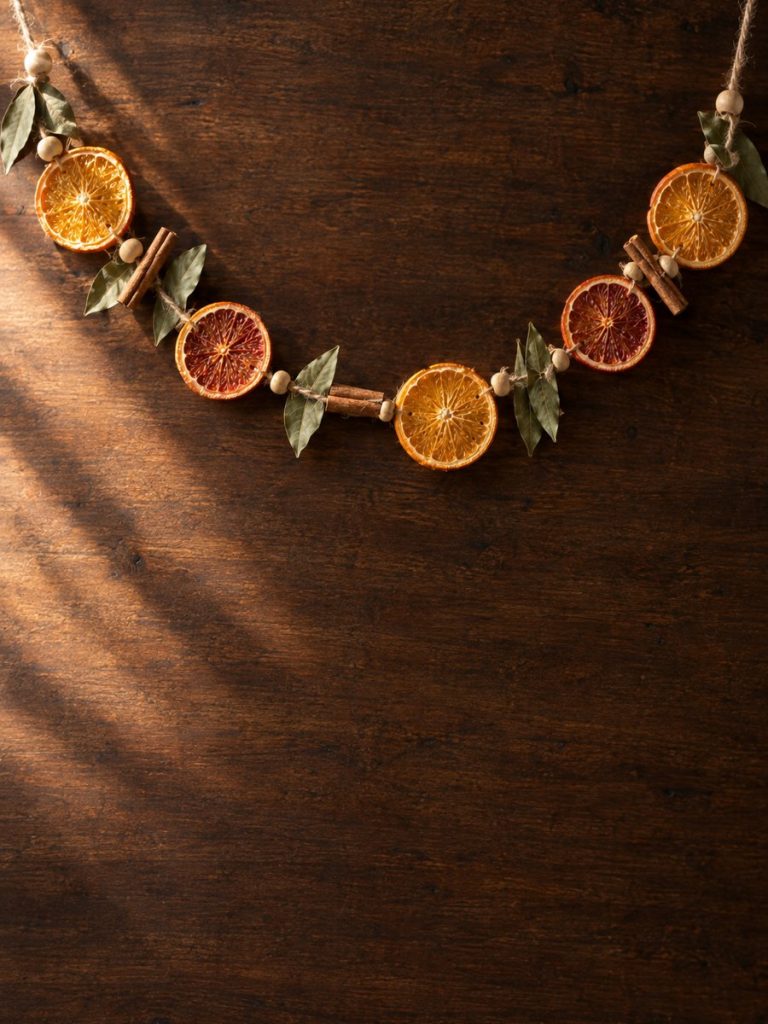
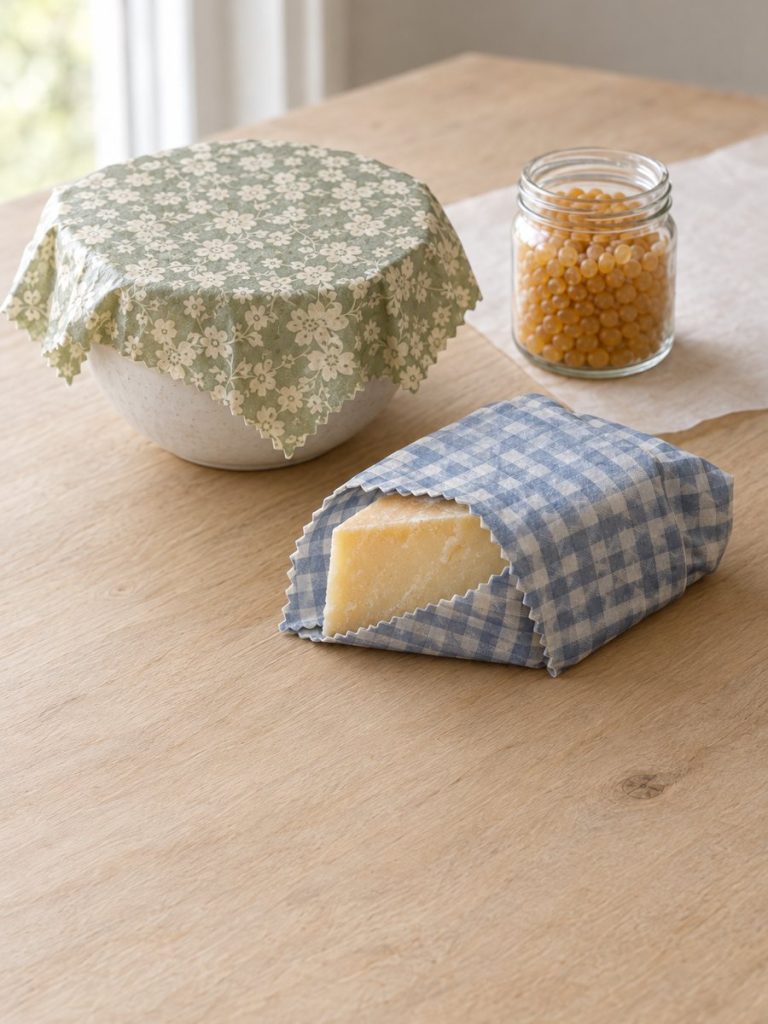
A trio of 4 oz jars in three scents, tucked into a small box with shredded paper and a wooden scoop, is the classic presentation. For a bigger basket, pair the jars with beeswax wraps or a dried orange slice garland, and make the scrub in the two weeks before giving.
Frequently asked questions
What is the ratio of sugar to oil in a sugar scrub?
Two parts sugar to one part oil by volume, so 2 cups (400 g) sugar to 1/2 to 3/4 cup (120 to 180 ml) oil. Start with less oil and add more only if the scrub will not hold together.
How long does homemade sugar scrub last?
Two to three months at room temperature as long as no water gets into the jar. Vitamin E and a stable oil such as jojoba can stretch that to six months. Once water gets in, use it within a week or throw it away.
Can a sugar scrub be used on the face?
No. Sugar crystals are too sharp for facial skin and can cause tiny tears and irritation, and the essential oil level suitable for the body is too high for the face.
How many drops of essential oil go in a sugar scrub?
About 20 to 25 drops per cup (240 ml) of finished scrub, which keeps the dilution under 1%. Use 10 to 15 per cup for peppermint, cinnamon, clove and other oils that feel hot or cold on skin.
Why does the scrub need to be kept dry?
Sugar and oil give bacteria and mold nothing to grow in, which is why the scrub needs no preservative. Water dissolves the sugar into a syrup that can support growth within days, so a dry spoon and a tight lid are the whole preservation plan.
Is sugar scrub safe during pregnancy?
The sugar and carrier oil are fine. Some essential oils are not recommended in pregnancy, including clary sage and rosemary, so a jar for a pregnant friend is best made unscented or with vanilla extract.
More to make
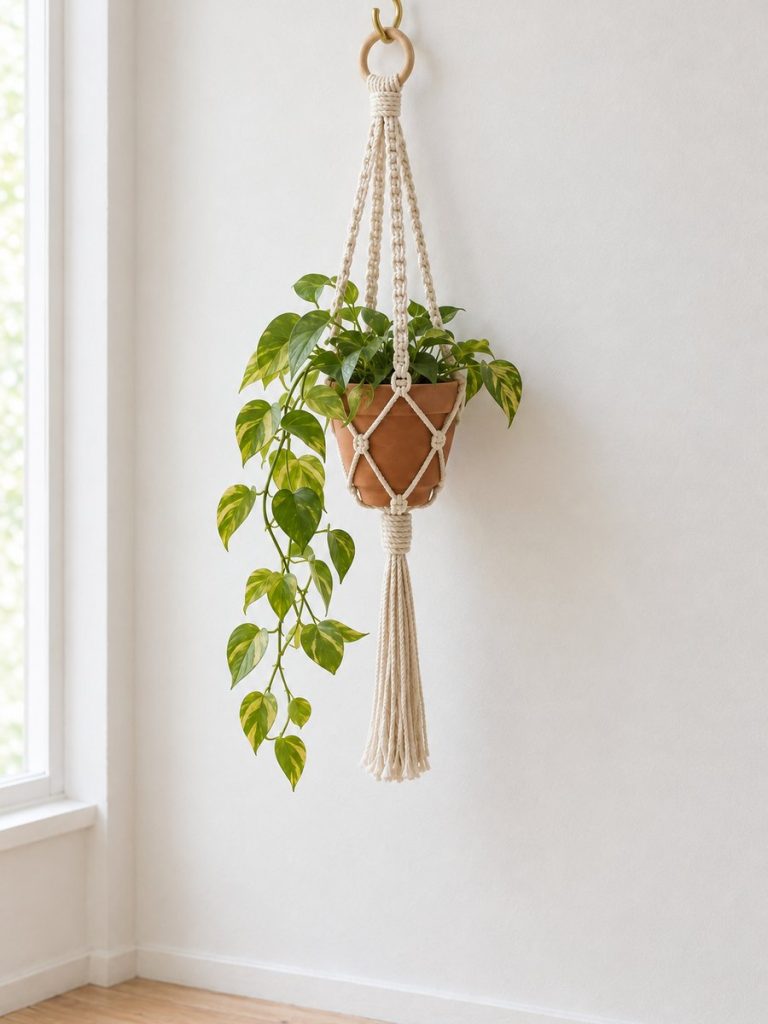
Once the jars are filled, the same afternoon can turn out mason jar soy candles, beeswax wraps, a dried orange slice garland, salt dough ornaments or a macramé plant hanger for the same basket. For something slower, the how to crochet guides start from the first stitch.